Alleviating suffering for zambia’s working donkeys
With your continued support, the Zambezi Working Donkey Project (ZWDP) made more positive changes to the lives of working donkeys in Zambia during November. Their vision is a Zambia where working donkeys are freed from suffering and treated with compassion.
Read their full report below:
Summary
With help from your generous support, November was another busy month for the team. A total of 203 donkeys received treatment, exceeding the monthly target by 42%. In November, 203 donkeys were dipped, 73 donkeys were dewormed and 29 donkeys received wound treatments. The team conducted five mobile clinics, follow-up visits and field checks in various villages. Last month, 66 donkey owners were also engaged in education. In addition, 14 humane harnesses were issued to replace cruel ox yokes.
Mobile Clinics & Veterinary Care
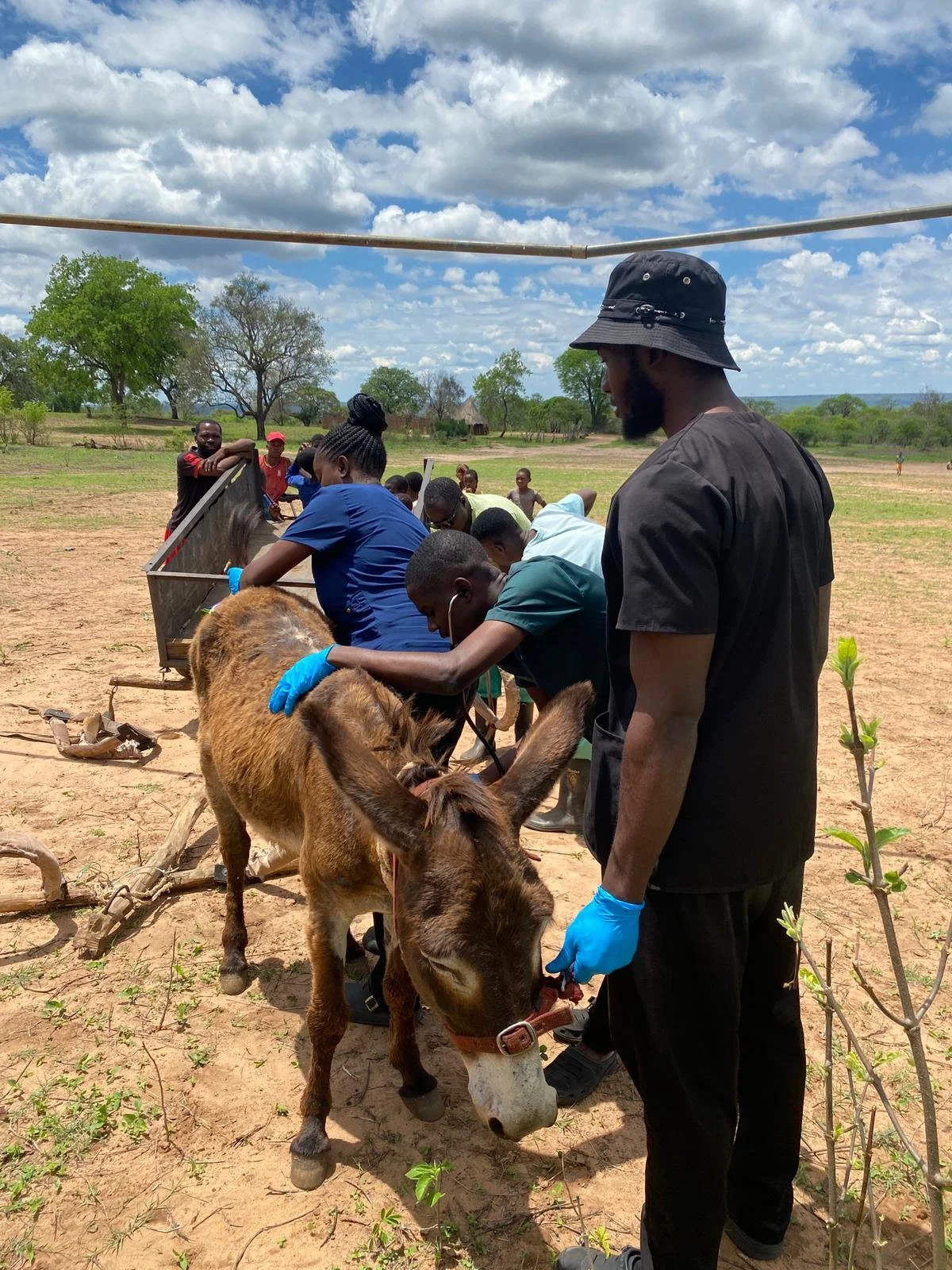
At the five mobile clinics, donkeys received mostly preventive veterinary treatment. Three mobile clinics were conducted at Libuyu market to enable more donkeys to attend from various villages.
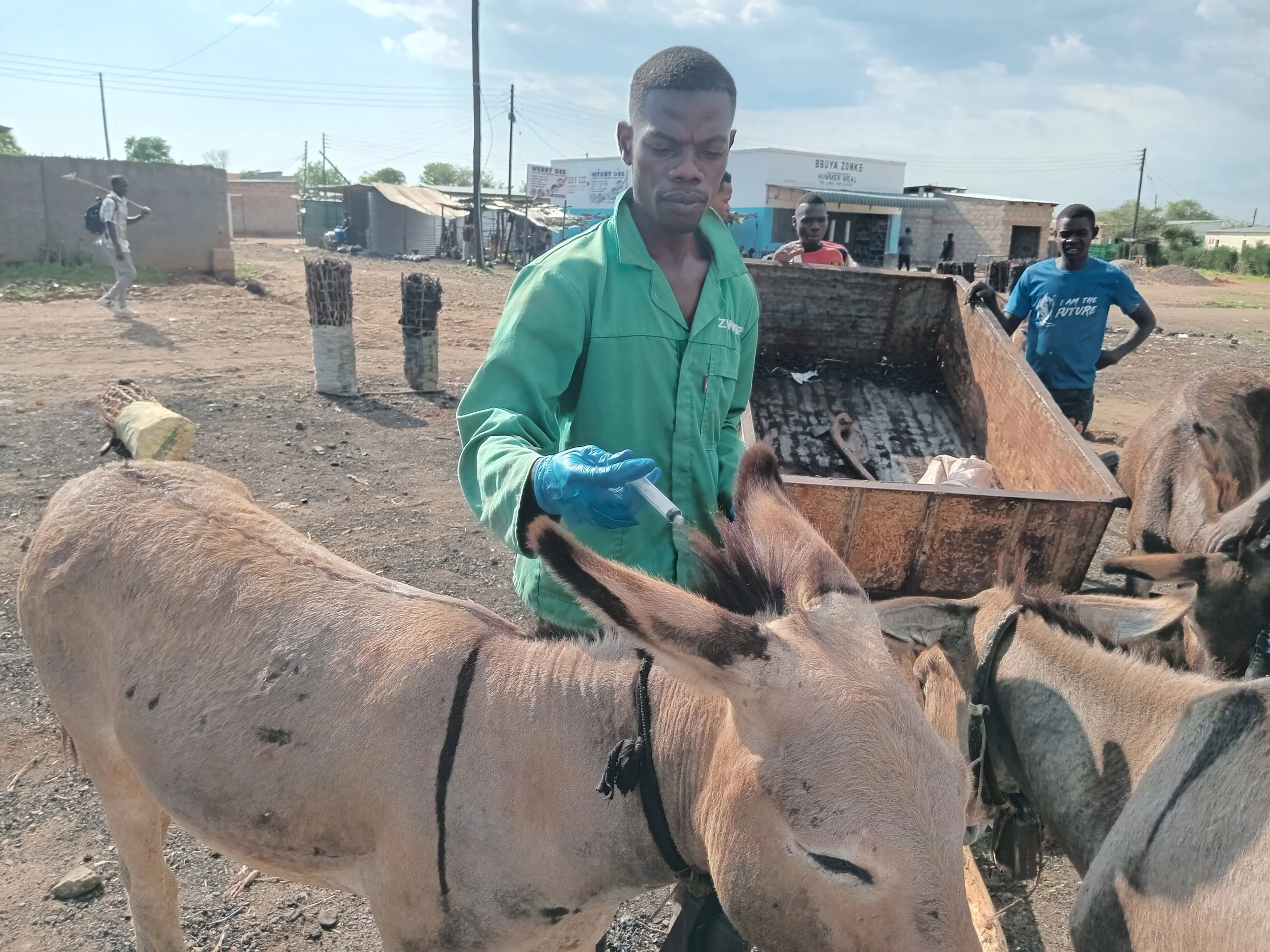
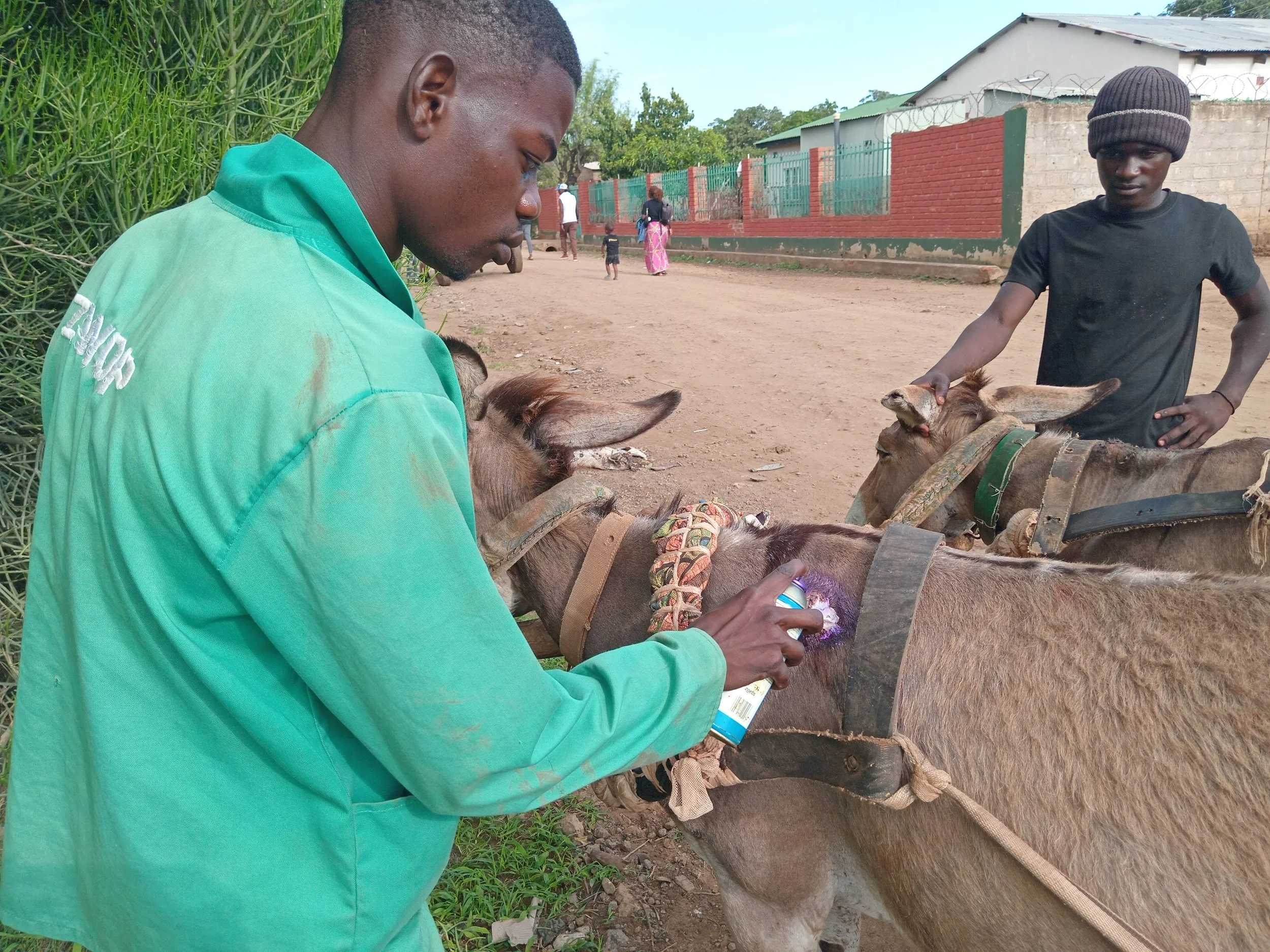
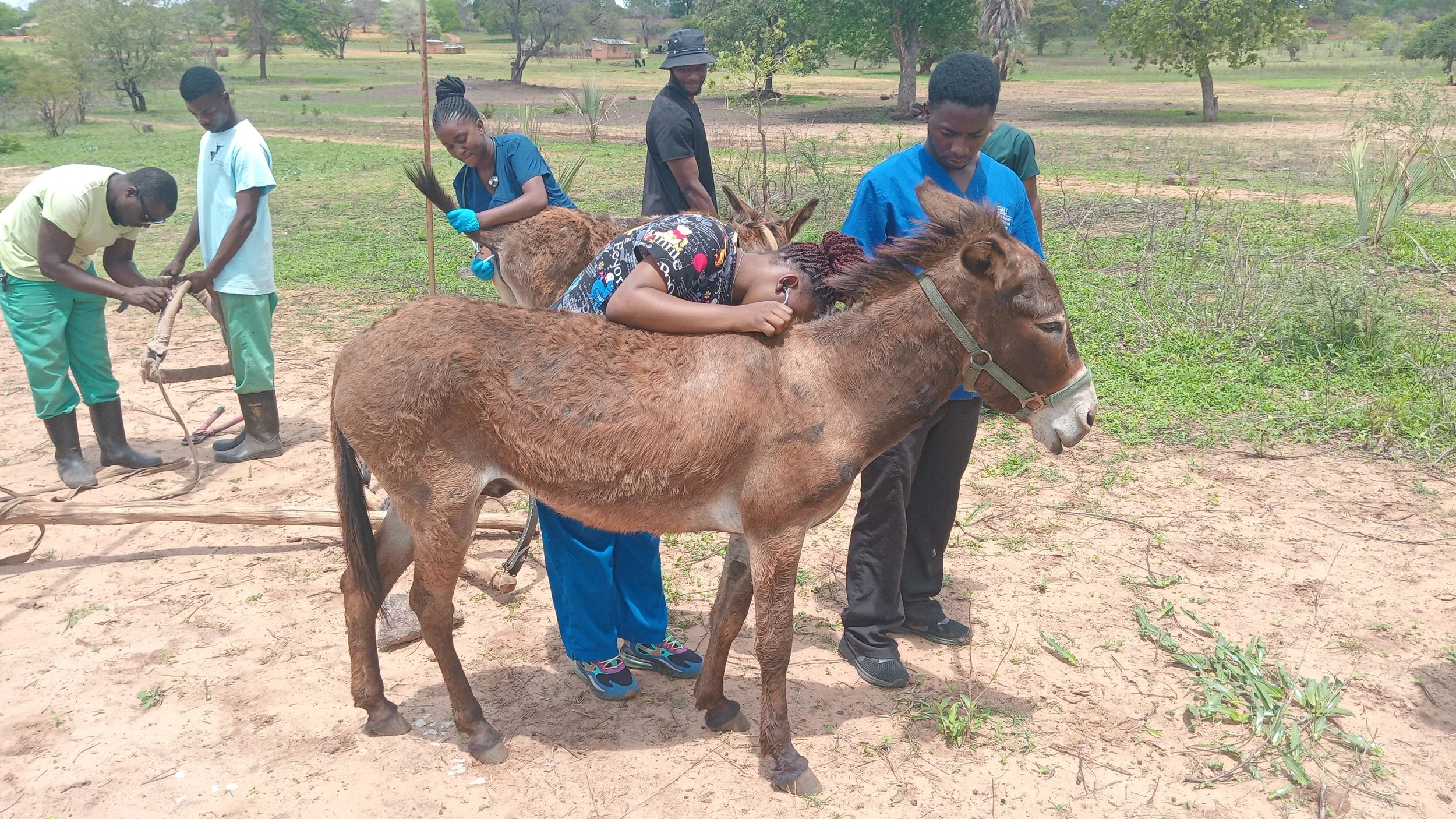
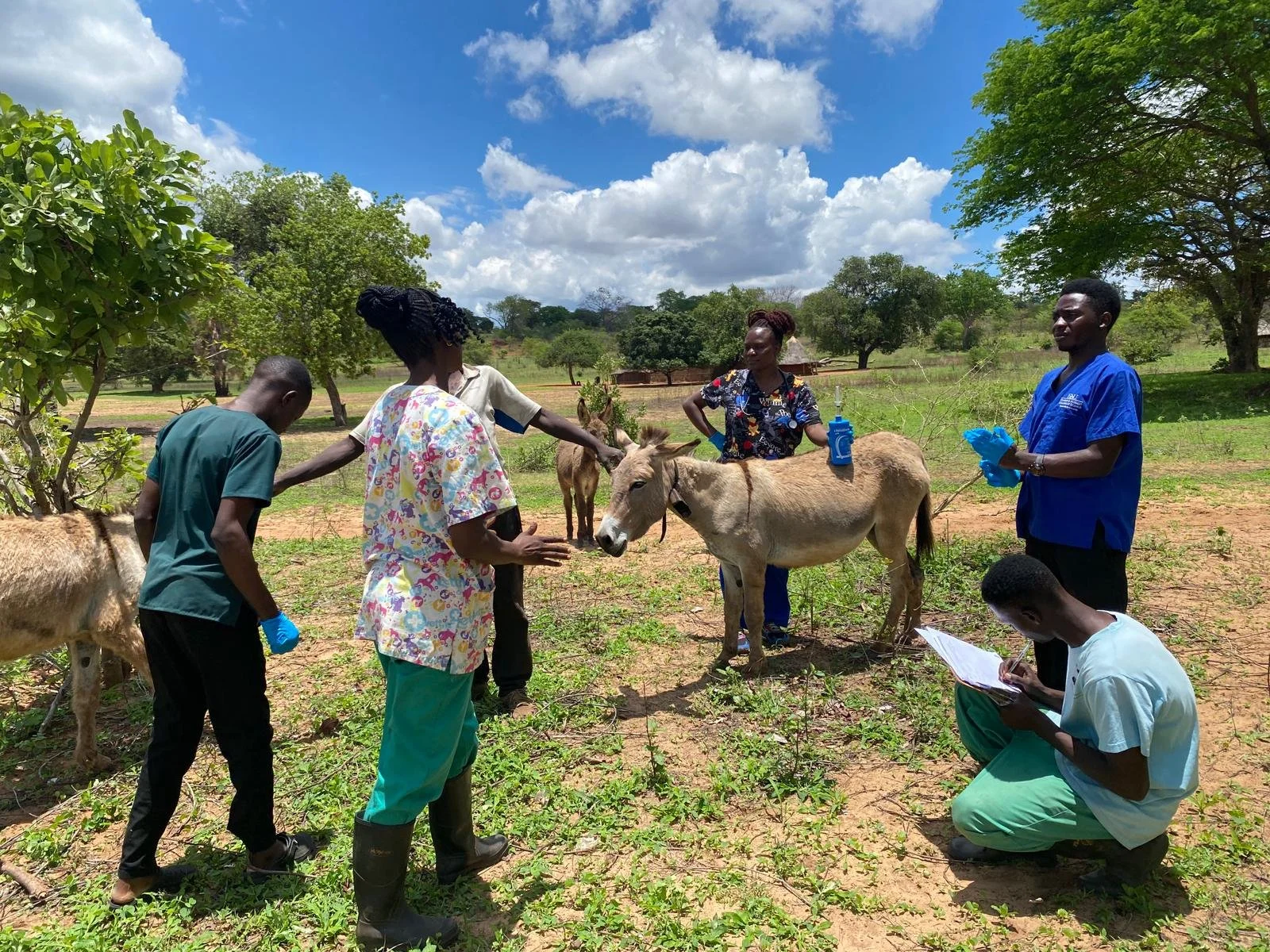
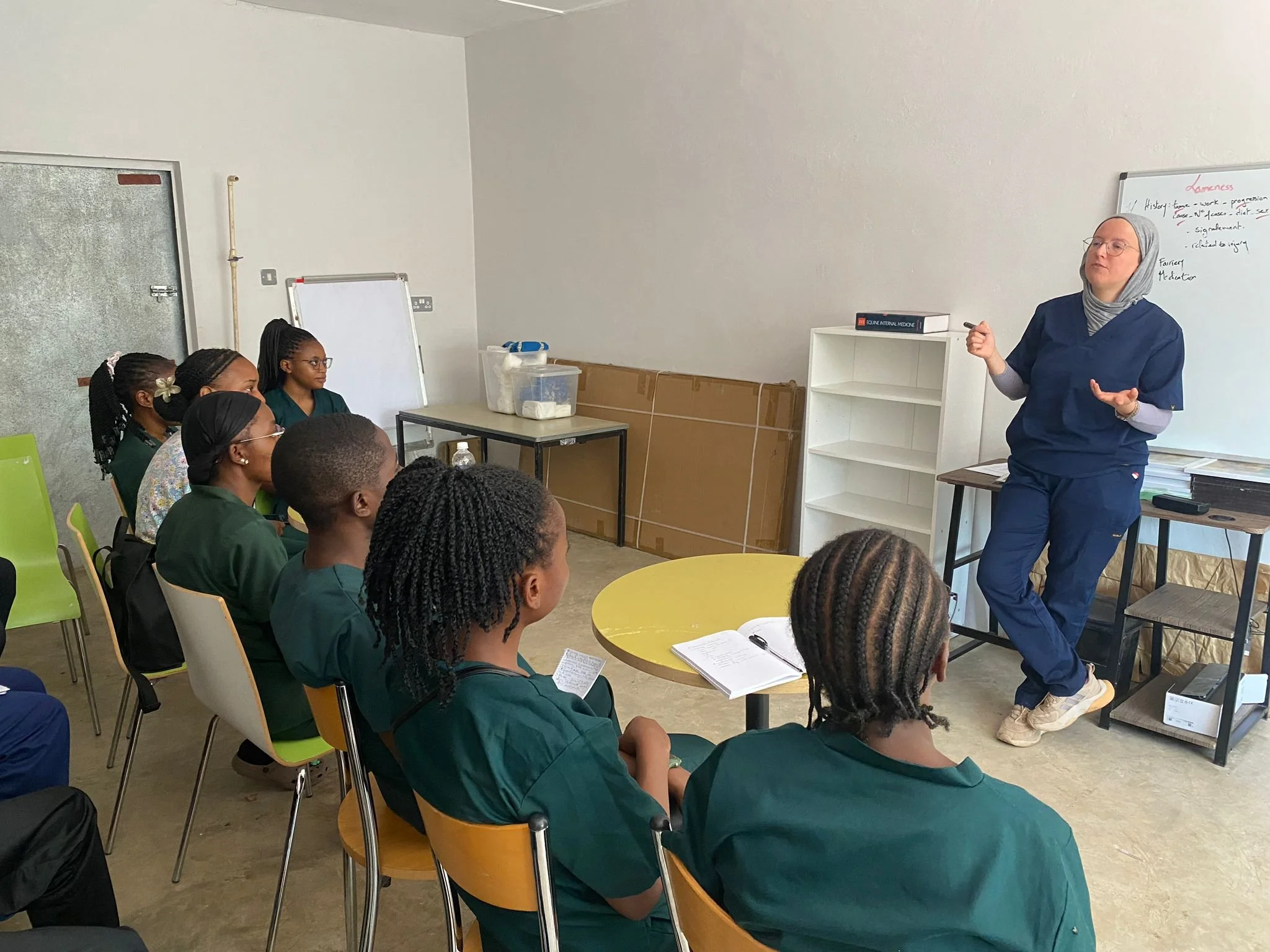
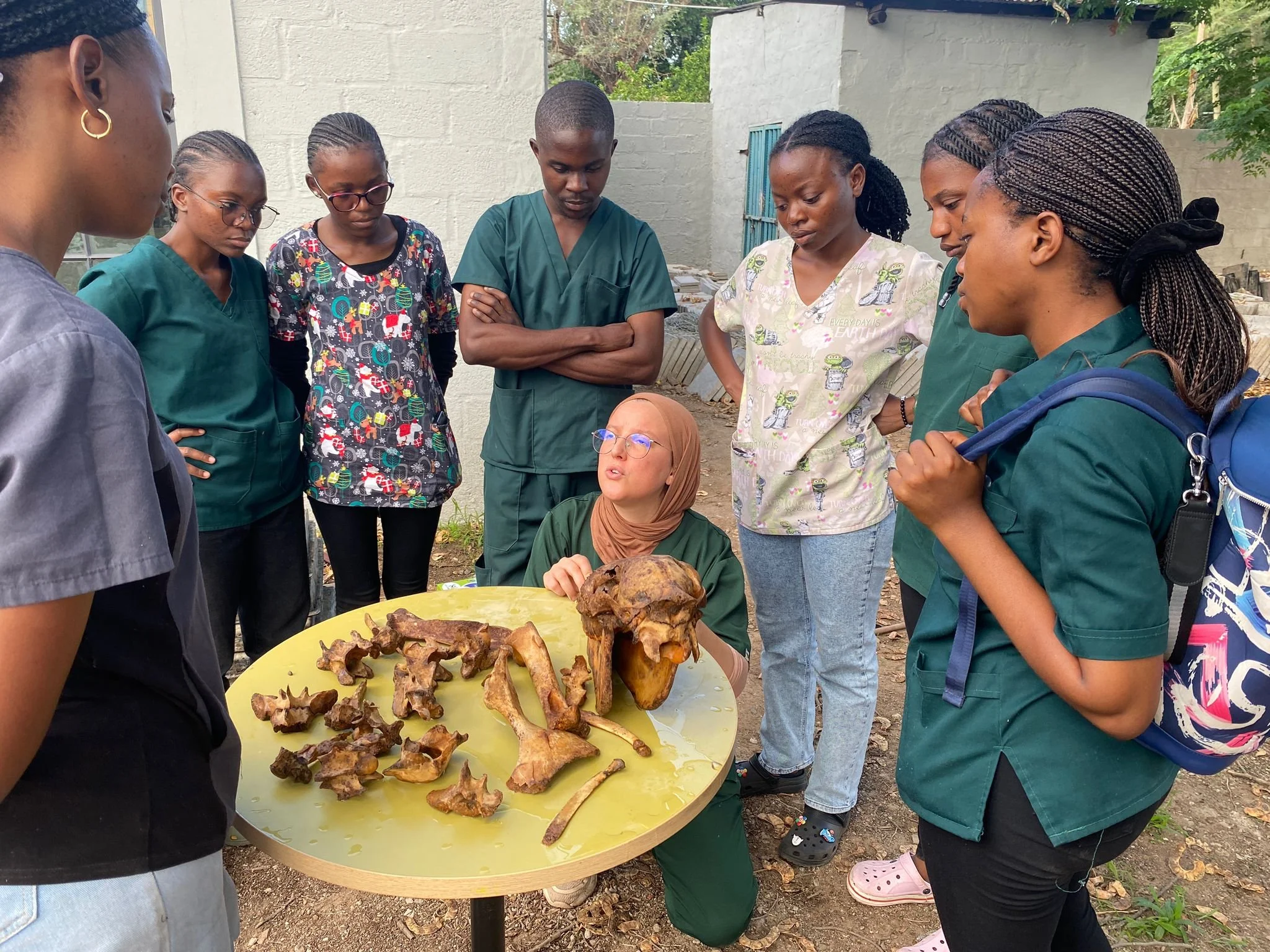
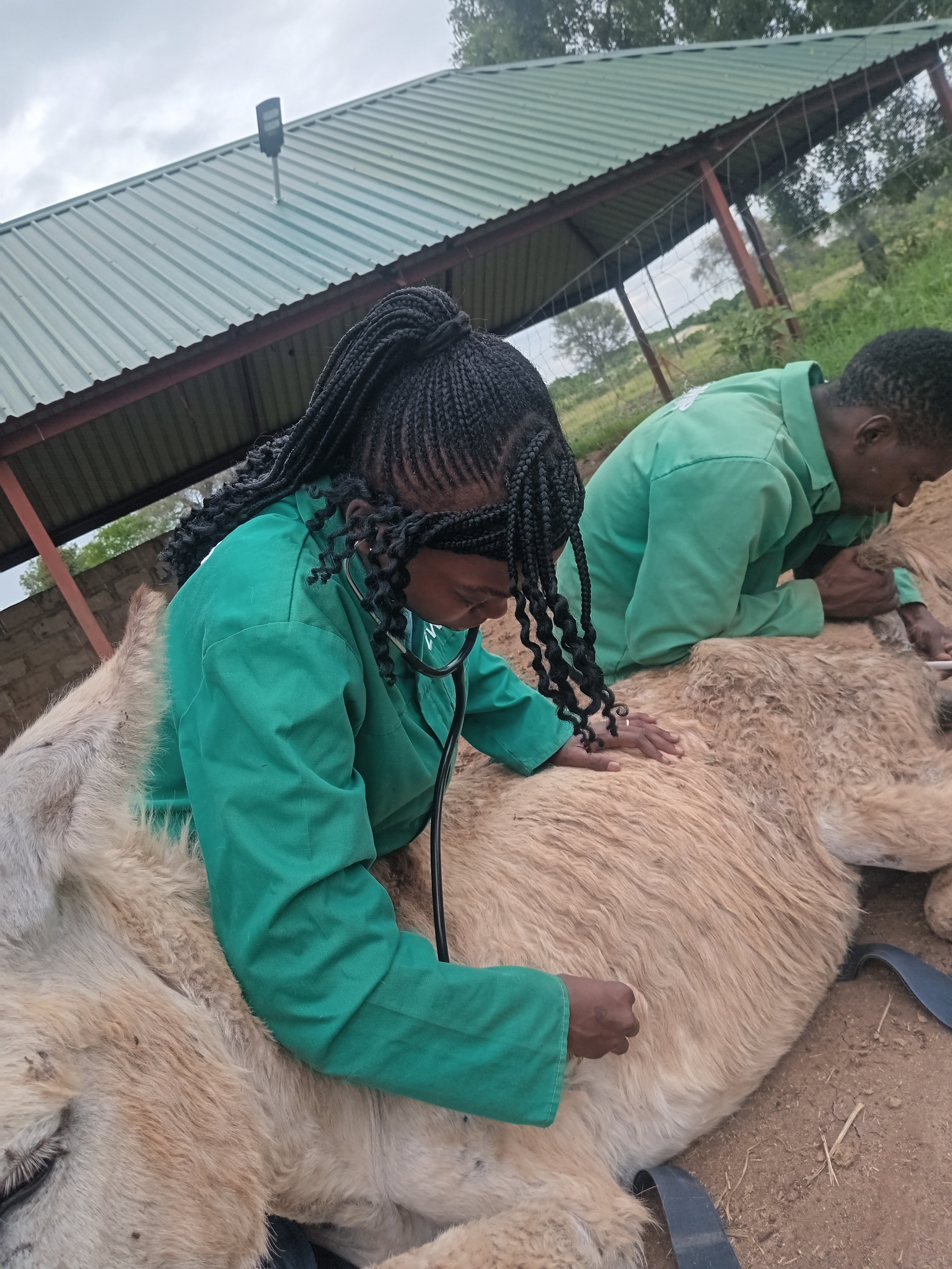
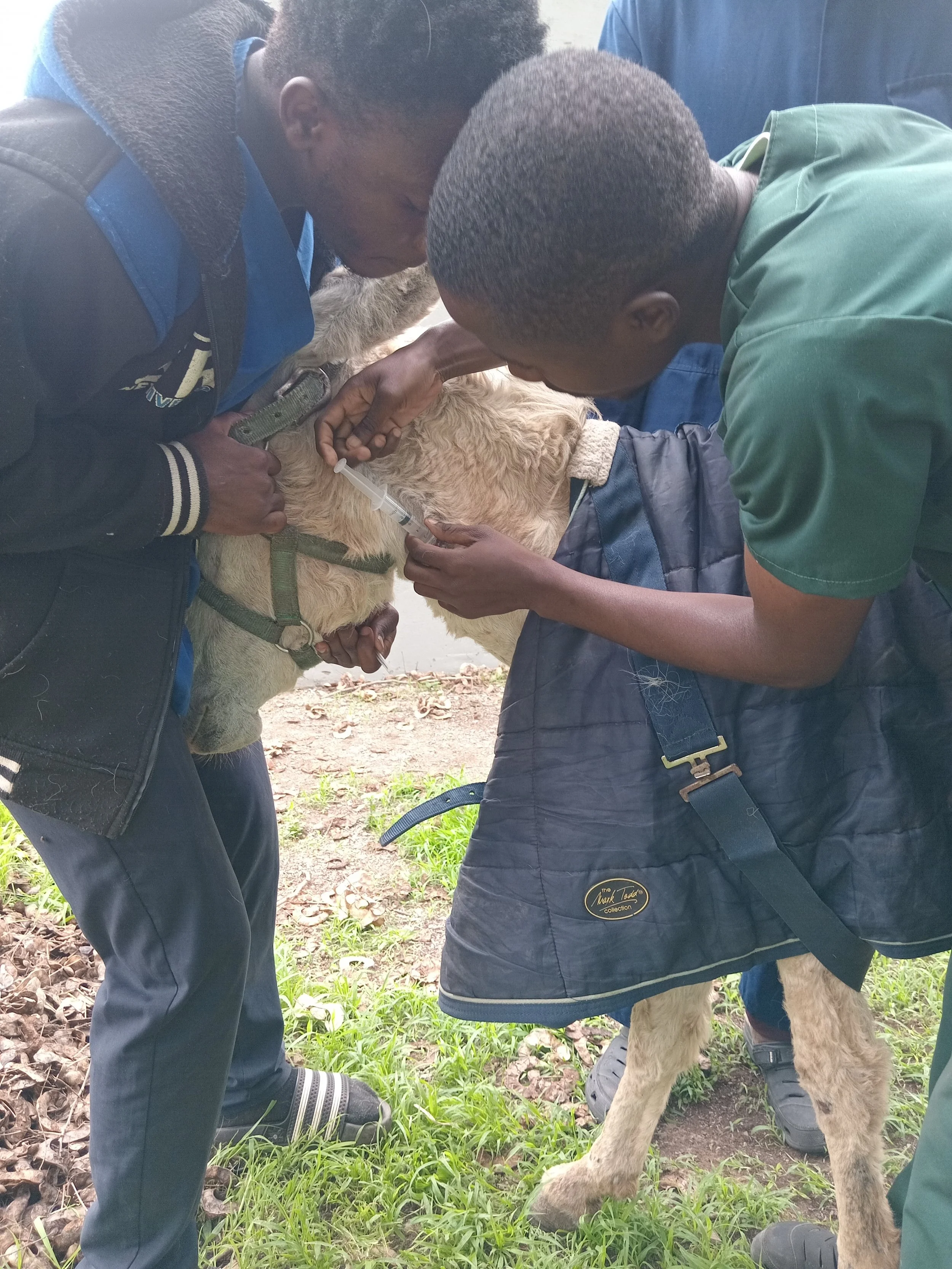
We had five veterinary students accompany us to two mobile clinics. They had the opportunity to practice the theory taught at university. The students were actively involved in the clinic activities, including donkey and owner registration, donkey handling, clinical examination, dipping, deworming and wound treatment. In addition to the veterinary activities, the team modified scotch carts to replace ox yokes with humane harnesses.
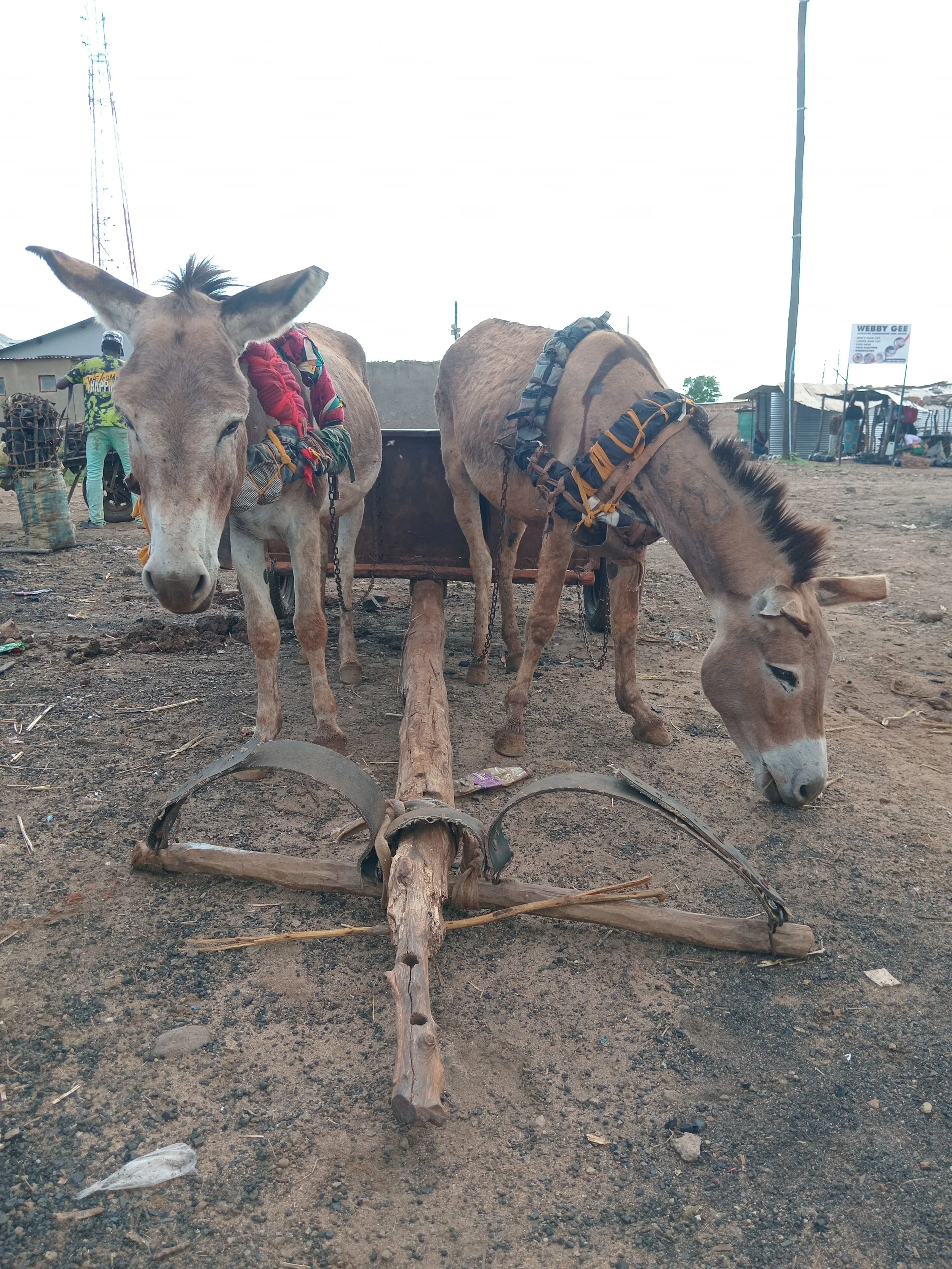
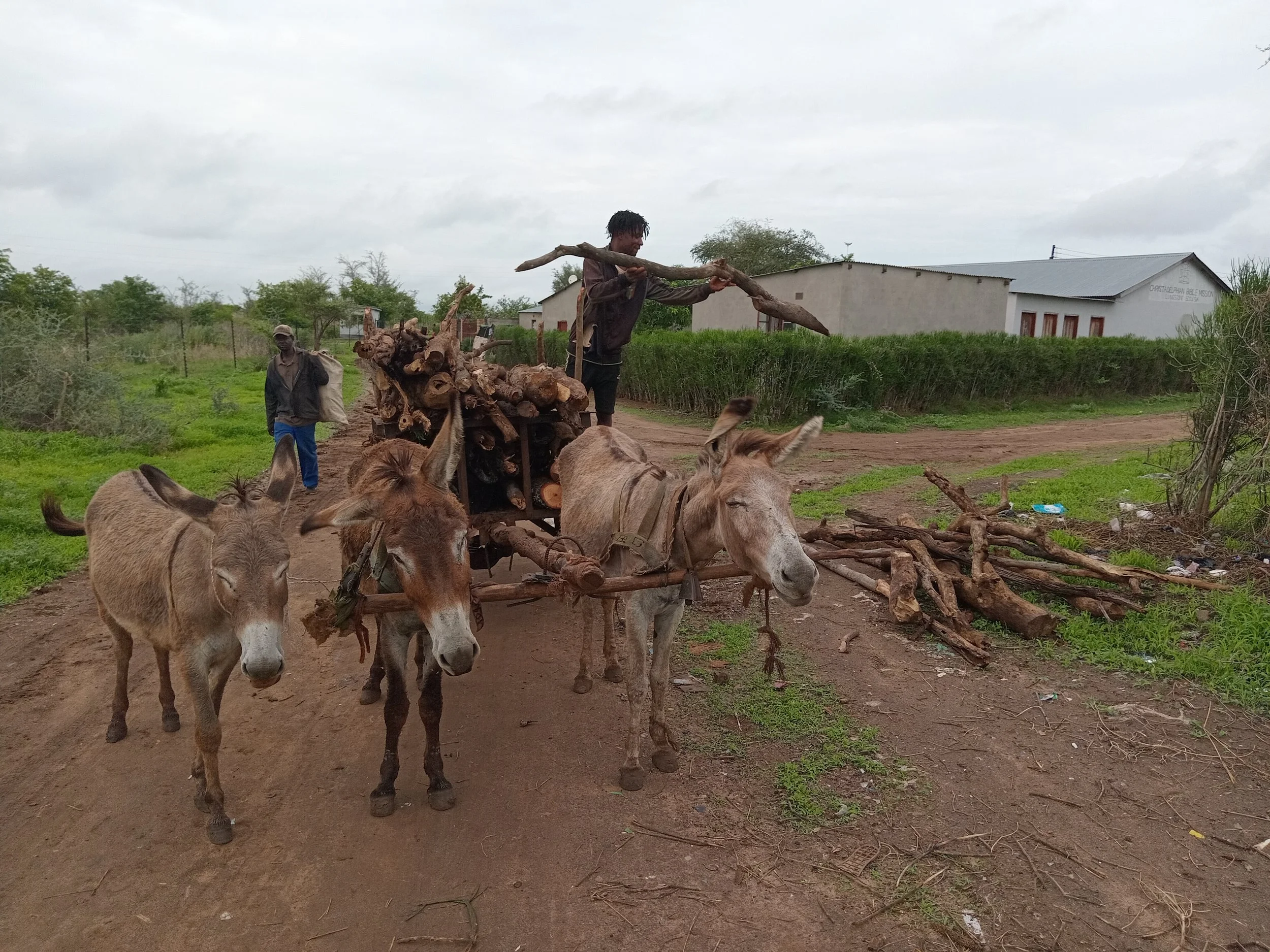
Many of the donkey owners we met at Libuyu market were compliant with animal welfare standards, except for one donkey owner who was charged for overloading his scotch cart. This owner was educated about the dangers of overloading scotch carts to donkey welfare and gladly offloaded the extra weight.
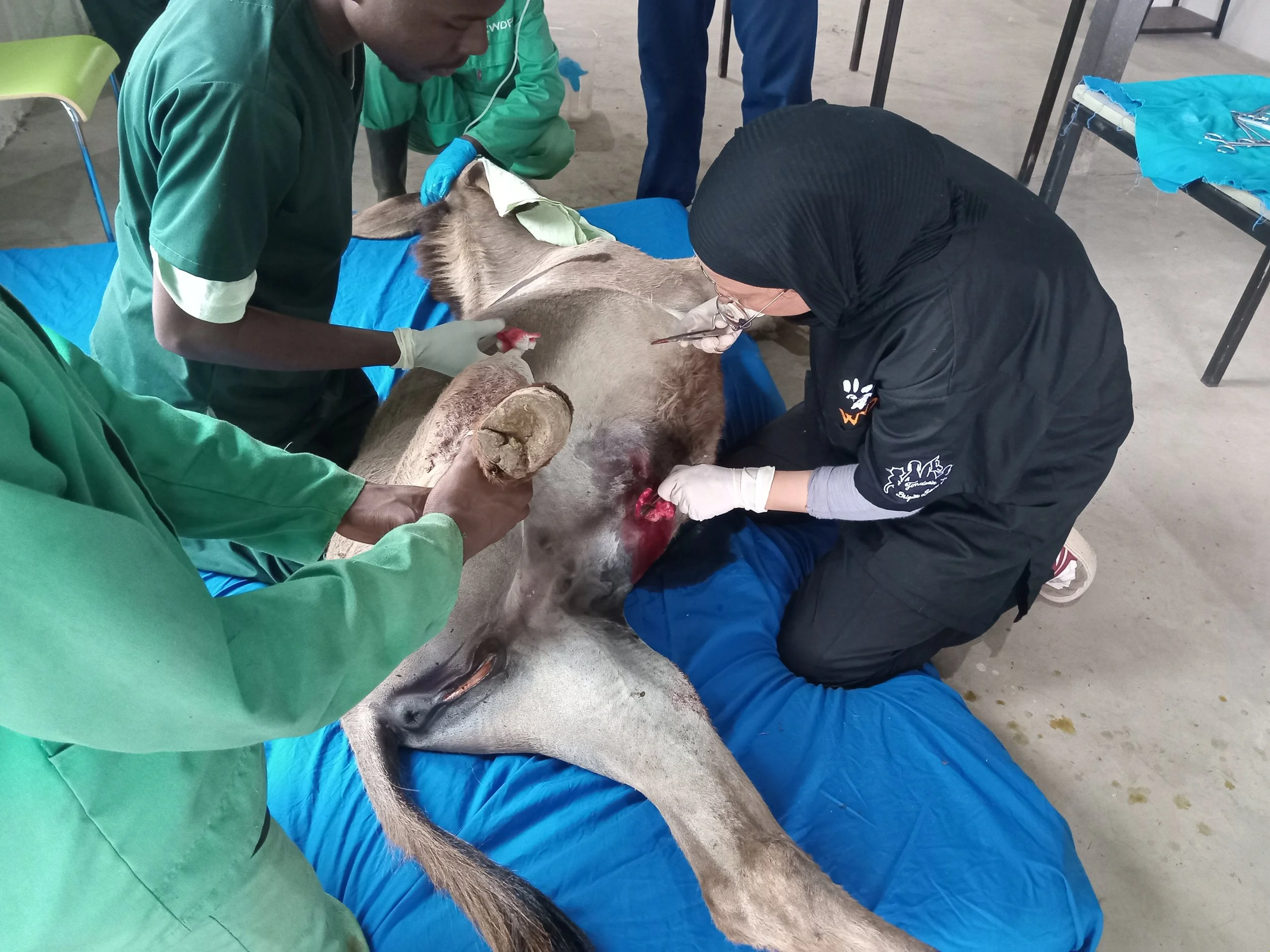
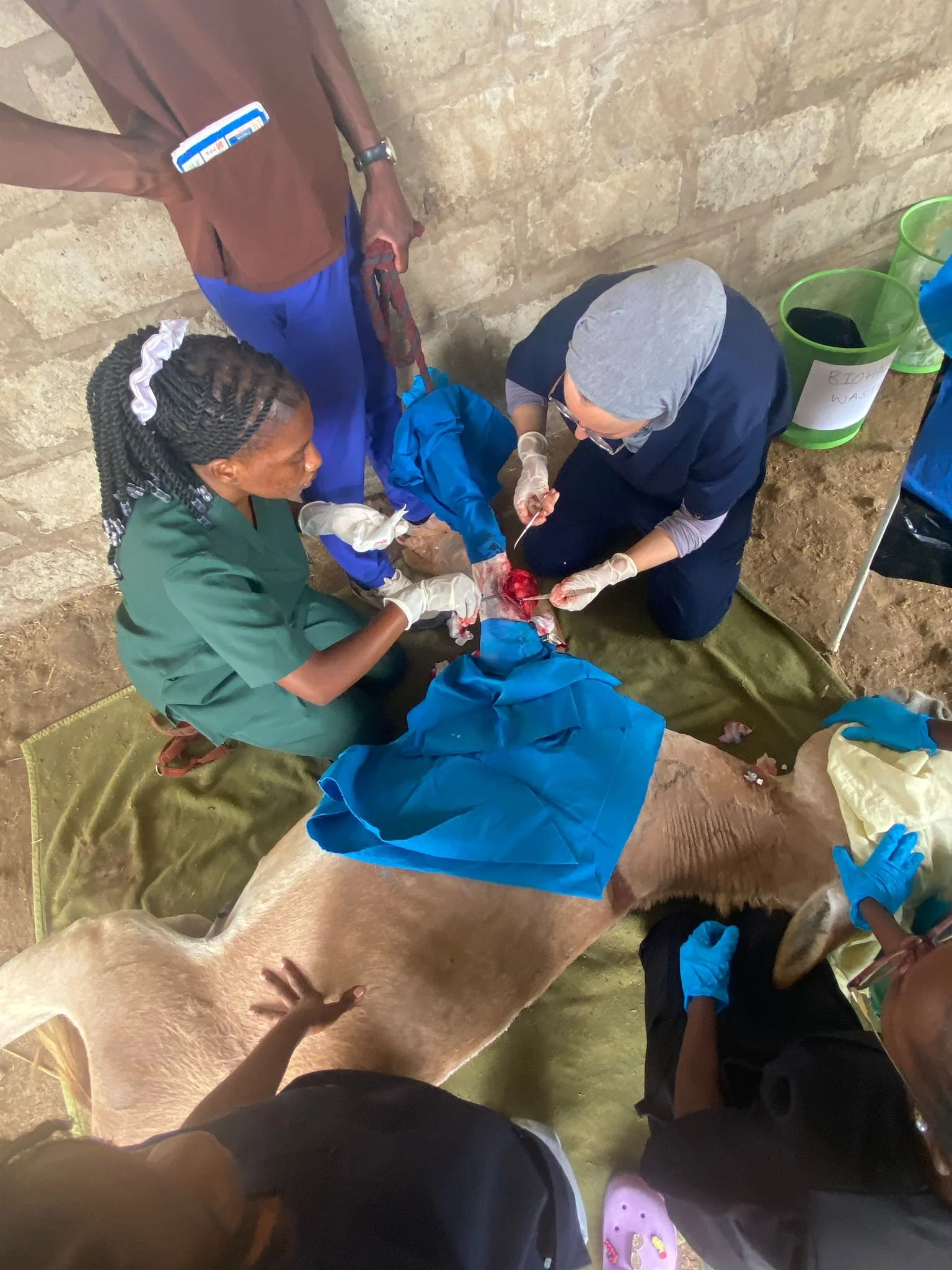
Alongside our field activities last month, we had a number of activities lined up at our rescue and rehabilitation centre, Maramba Farm. This included five surgeries and training for 11 Zambian veterinary students. The surgeries included three castrations for our recent permanent rescues - Transport, Luyando and Jack - who are now ready to join the main herd. Two additional surgeries were conducted to excise masses from our rescued donkey, Msimbi, and to excise a mass from another one of our rescues called Champion. All surgeries conducted were successful and the patients are recovering well.
Emergency Cases
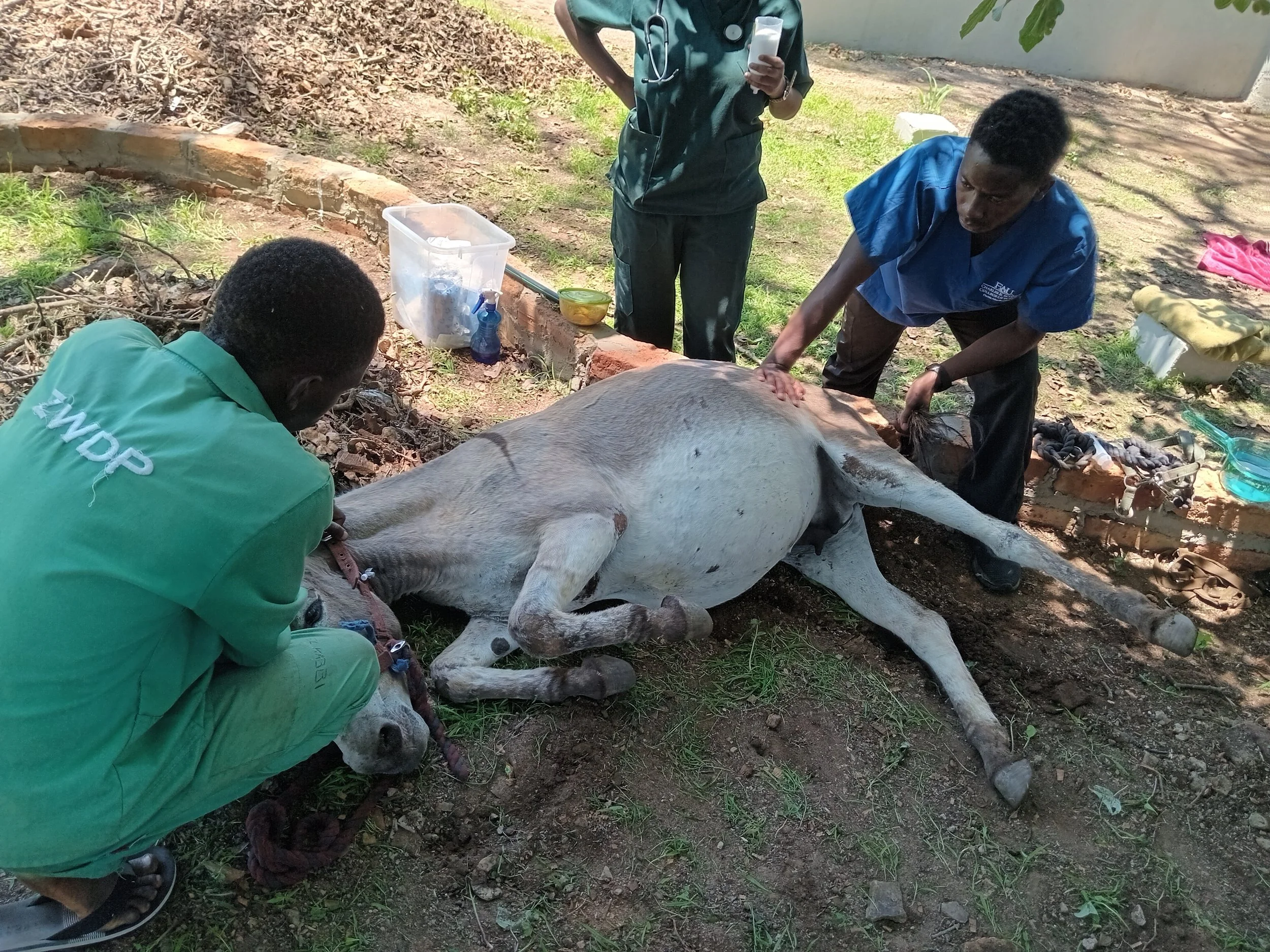
One of our emergencies in November was for a donkey called Choolwe. Her owner reported she had lost her pregnancy the night before and he came to ZWDP seeking help. When the team arrived, Choolwe was bloated from prolonged recumbency and was having difficulties breathing. After a number of attempts, Choolwe was able to get back on her feet and was taken to Maramba Farm. Unfortunately, she deteriorated the next day and euthanasia was required to relieve her from suffering. It makes us sad to think Choolwe may have suffered from a pregnancy complication and could possibly have been saved if the owner had reported the situation sooner. Despite this, Choolwe’s case was a good learning experience for the veterinary students and when they graduate, they will know how to help donkeys in emergency situations like Choolwe’s.
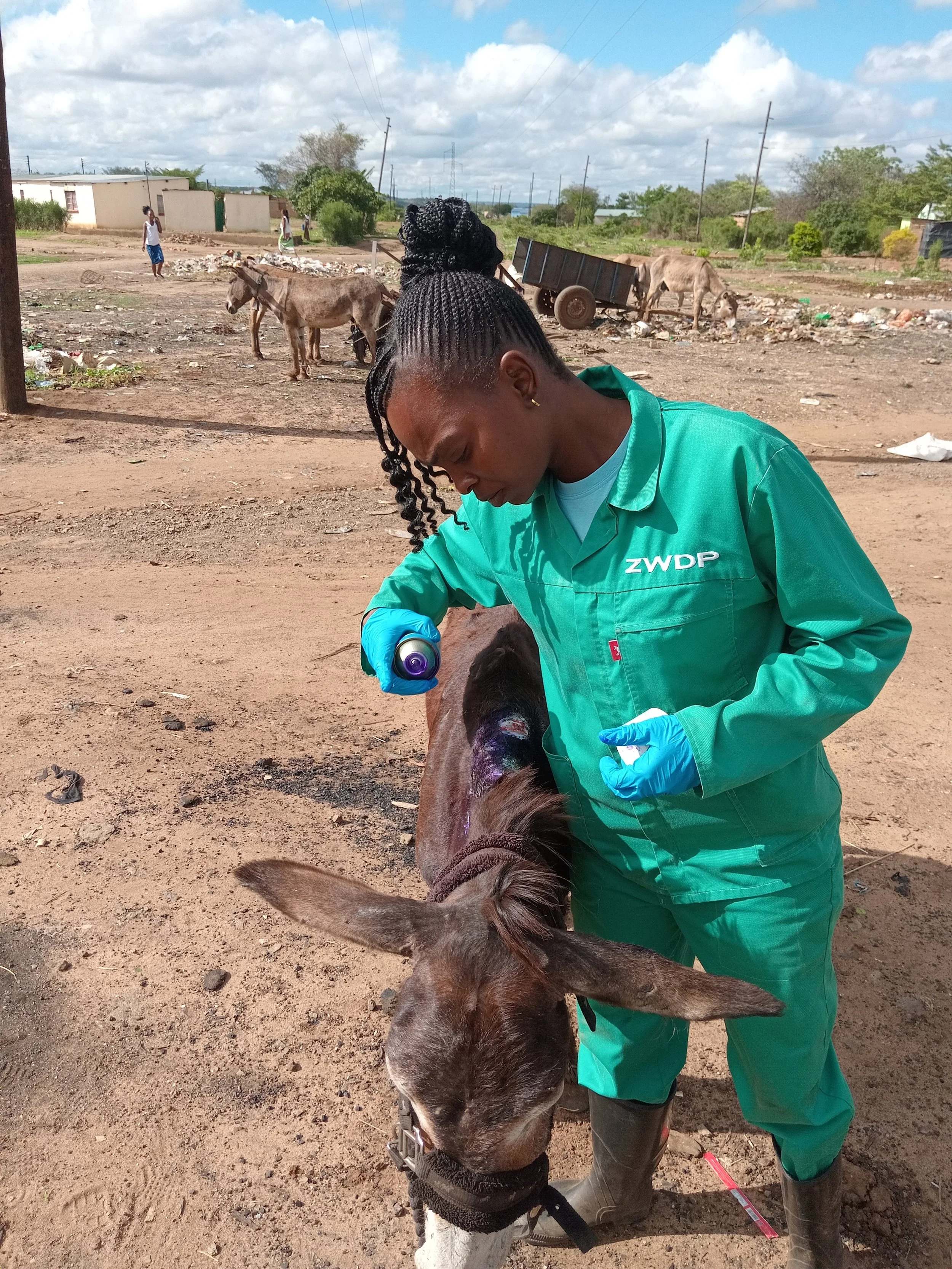
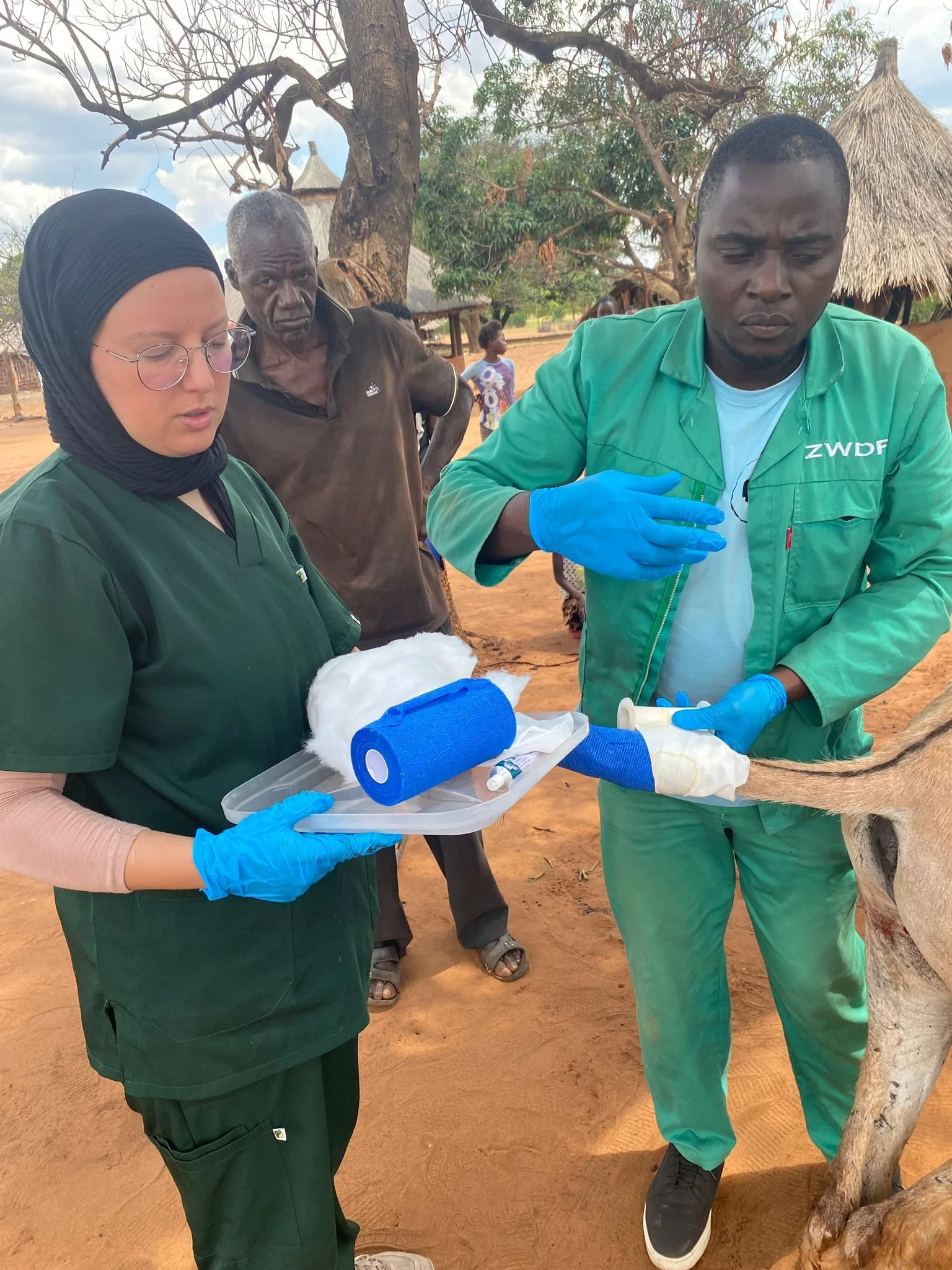
Another emergency call-out took place for a donkey in a nearby village. This donkey had been bitten by another donkey, resulting in a large wound on his tail. We were concerned that he had fractures, however, a clinical examination of his tail ruled out this possibility. He immediately received wound treatment and pain medication. His bandage was changed regularly by our supervisor during his field checks, and this donkey is improving already.
Rescue
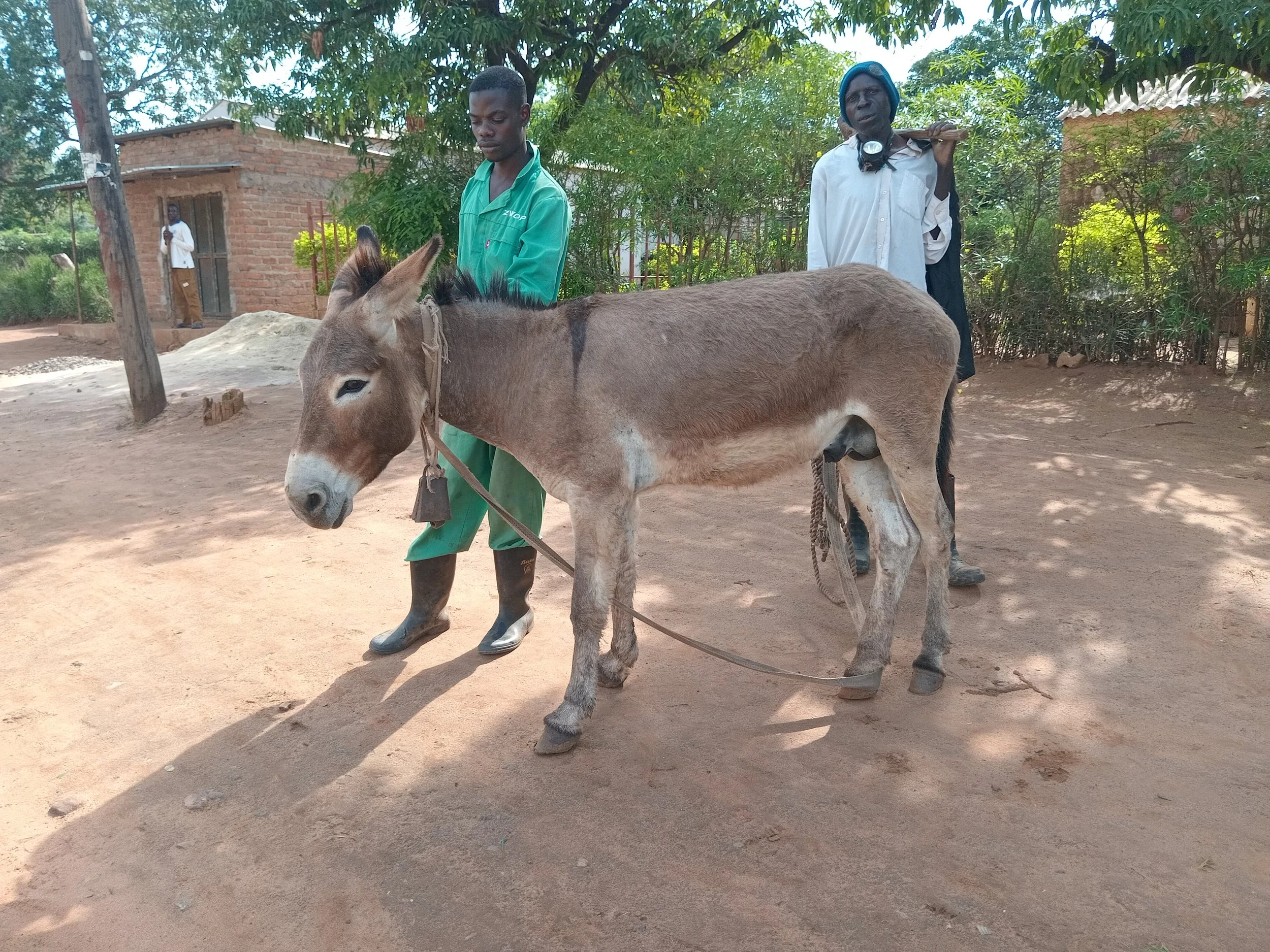
Last month, we rescued a donkey called Ngunduzani. We met Ngunduzani and his owner on their way to Maramba Farm on our way back from a mobile clinic at Libuyu market. The owner explained his donkey was injured eight months ago after being tied to a rope overnight. His right hind leg had become entangled and an injury resulted when the donkey attempted to release his leg from the rope.
A clinical examination revealed signs typical of coxo-femoral joint luxation of his right hip joint, accompanied by atrophied muscles in the affected limb. The disruption of this joint often results in arthritis and subsequently osteoarthritis. Nguduzani’s atrophied muscles in the affected limb are attributed to disuse of his limb due to the pain involved. Since this occurred eight months ago, the extent of damage would require complicated surgery, which we don’t currently have the facilities for. Ngunduzani is currently on daily pain medication to alleviate the pain as we seek consent from the owner to euthanise him.
Sanctuary
The 28 rescued donkeys currently at Maramba Farm are going well. Champion, the donkey who underwent surgery to excise a mass from his left front leg, fully recovered and was returned to his owner. His case served as a good learning experience for the veterinary students who will use the skills learnt to help working donkeys in the near future.
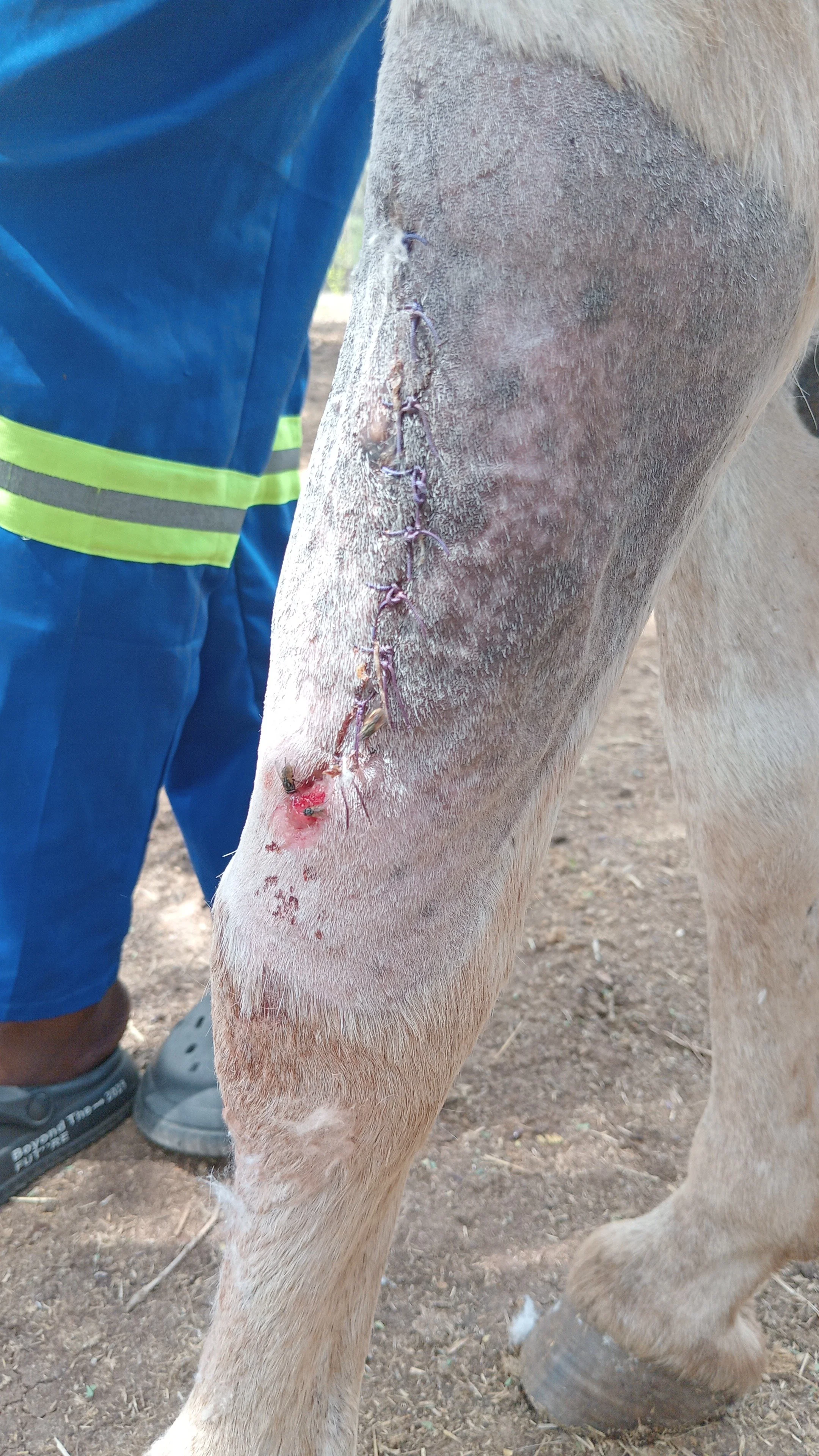
Transport and Luyando have been healing well. Transport is still resting and we have been monitoring his healing fracture using x-rays. Luyando’s coronet wound healed well and our concerns about infection did not materialise.
The other donkey called Champion, whom we previously suspected had a displaced patellar, showed no bone abnormalities on x-ray. Further investigations of the affected leg revealed a problem with the soft tissues in the area. It turned out that Champion had been suffering from the rupture of a major muscle in his affected limb. With the right amount of rest, Champion has a chance at healing fully.
Two of our other recent rescues, Sadic and Zebra, were returned to their owner after his sons completed training at Maramba Farm. This training was meant to develop empathy for working animals, following their father’s claims that the poor condition of his donkeys was caused by his children. We are confident that this abuse will not reoccur in this family. Sepa, on the other hand, who was in the poorest condition and is elderly, was not returned to them and has now permanently retired. With your wonderful support, Sepa will spend her golden years at Maramba Farm.
On a sadder note, one of our recent permanent retirees called Jack passed away. He was 25 years old and a clinical examination revealed he suffered from heart disease. The findings revealed his heart was failing because one of his major valves was weak due to old age.
With you by their side, ZWDP will continue to treat, rescue and rehabilitate many working donkeys in need.