restoring the health, dignity & spirits of rescued elephants
At the Wildlife Rescue and Rehabilitation Centre (WRRC) in Kolar, India, your donations are supporting rescued elephants and giving them far more peaceful, dignified lives.
See how your generous support is improving wellbeing and quality of life for these gentle giants:
Summary:
India is home to nearly 4,000 captive elephants-many of whom live under deeply distressing conditions. Torn from the wild at a young age, these elephants are often separated from their families, subjected to harsh training practices, and forced into environments that offer little in the way of proper nutrition, medical care, or social interaction. This results not only in physical ailments but also in long-term psychological trauma.
Captive elephants, much like humans, are social beings who naturally thrive in herds. Deprived of this fundamental social structure, their innate behaviours begin to fade, leading to emotional, cognitive, and physical deterioration—much like the impact of solitary confinement on humans. The consequence is a life marked by fear, stress, and suffering.
Rehabilitation is not just a compassionate response—it is a critical intervention. Providing rescued elephants with sanctuaries where they can heal, express natural behaviours, and bond with other elephants is essential for their well-being. These facilities offer enriched environments, proper veterinary care, and the opportunity to recover from years of neglect and abuse.
Our efforts have been focused on advancing the rehabilitation and care of these majestic animals—working to restore their dignity, health, and natural spirit, while also raising awareness about the urgent need for humane treatment of all captive elephants in India.
Veterinary Care:
Due to their harsh lives of neglect and abuse, most of the rescued elephants at WRRC have multiple health concerns. These include:
Chronic foot issues
Foot interdigital dermatitis
Epilepsy
Chronic abscesses
Seizures
Osteoarthritis
Dry skin
Indigestion / bloating
Chronic tusk infections
Recurrent eye infections
Reduced mobility
Poor vision
Behavioural changes due to anxiety / pain
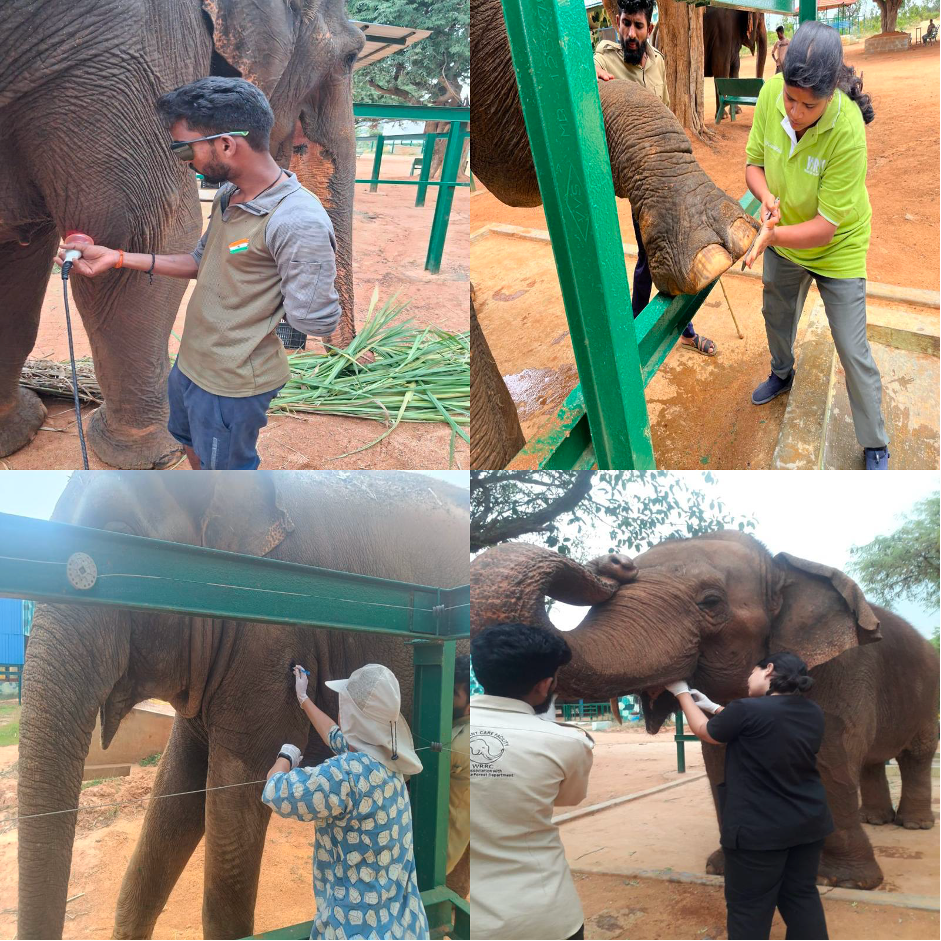
The elephants are given regular, individualised veterinary care to treat these conditions, including appropriate medications, foot and nail management, tusk care, skin treatments, laser therapy and wound care.
Feeding:
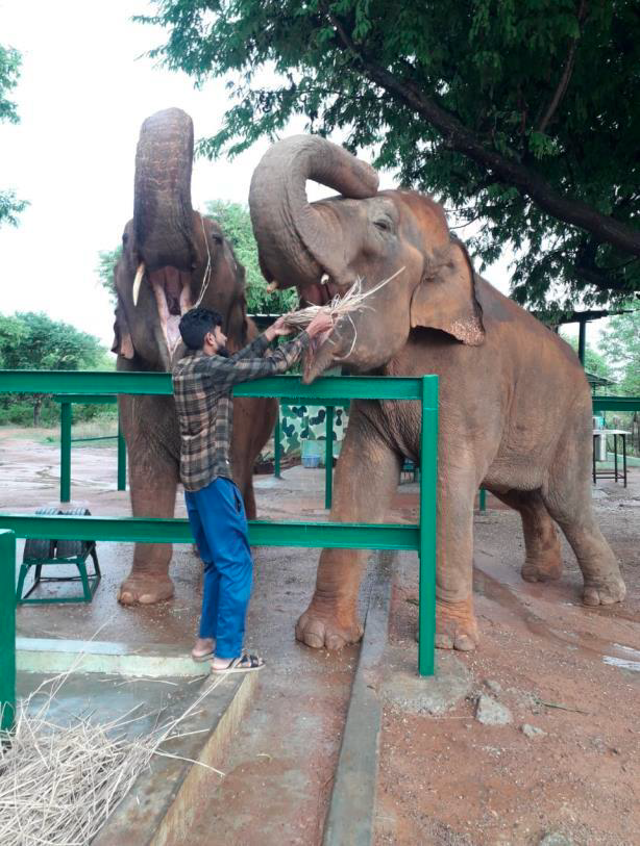
All elephants at the facility follow a structured and balanced daily feeding schedule designed to meet their nutritional and behavioral needs. The day begins with 6 kg of sprouts (alternating between green gram and Bengal gram) provided at 7:00 AM, followed by 200 grams of jaggery and two coconuts at around 7:15 AM. By 7:30 AM, a fresh mix of seasonal fruits and vegetables is served—typically 5–6 kg per elephant.
From 8:00 AM to 4:00 PM, elephants have access to green fodder such as grass or banana stems (around 70–100 kg per elephant). In the evening, another round of fruits and vegetables is offered at approximately 4:20 PM (only for Lakshmi), followed by ragi balls at 6:15 PM— 10 kg for Lakshmi and 5 kg for Gowri. Night feeding consists of around 100 kg of grass for all elephants and continues till 10:30–11:00 PM.
Lakshmi receives an increased quantity of fruits and vegetables (10 kg in the morning and again in the evening) and has access to 20 kg of grass or 8 banana stems during the day, in addition to her night ration. This enhanced diet is tailored to her size and health requirements.
Enrichment Activities:
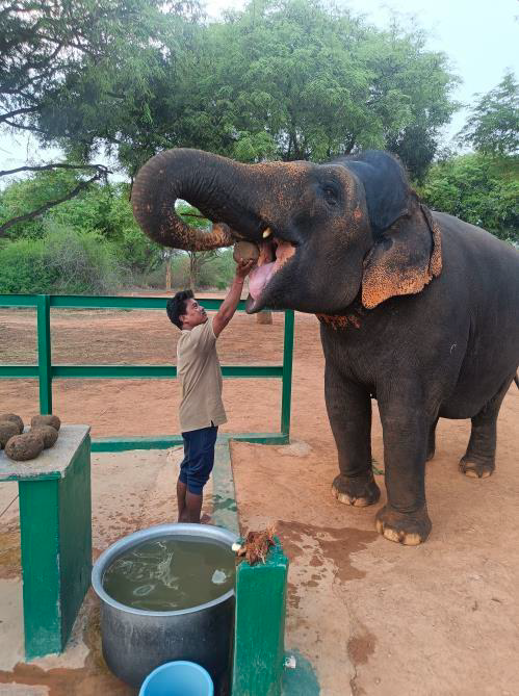
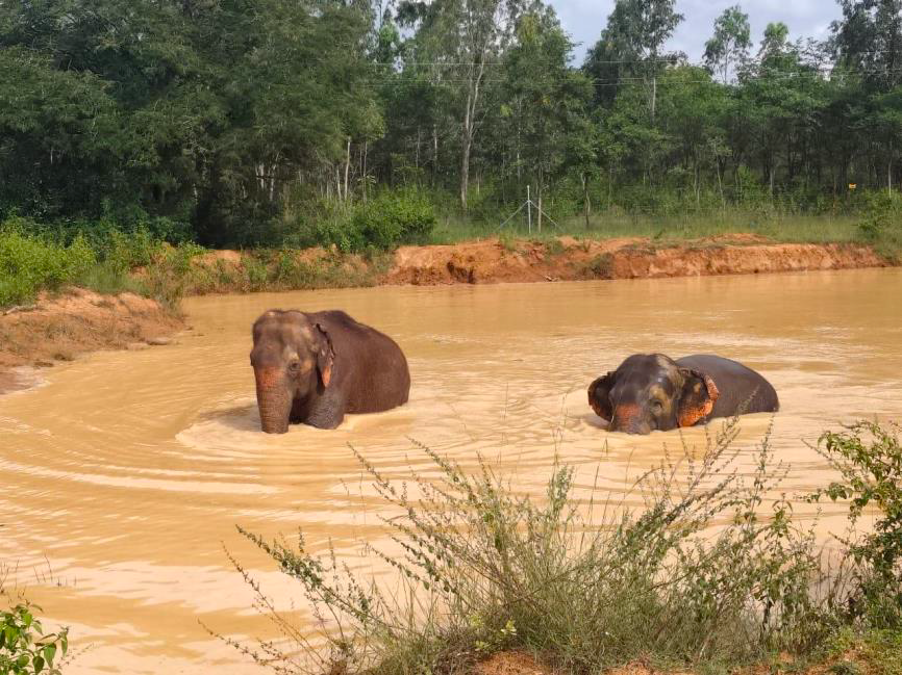
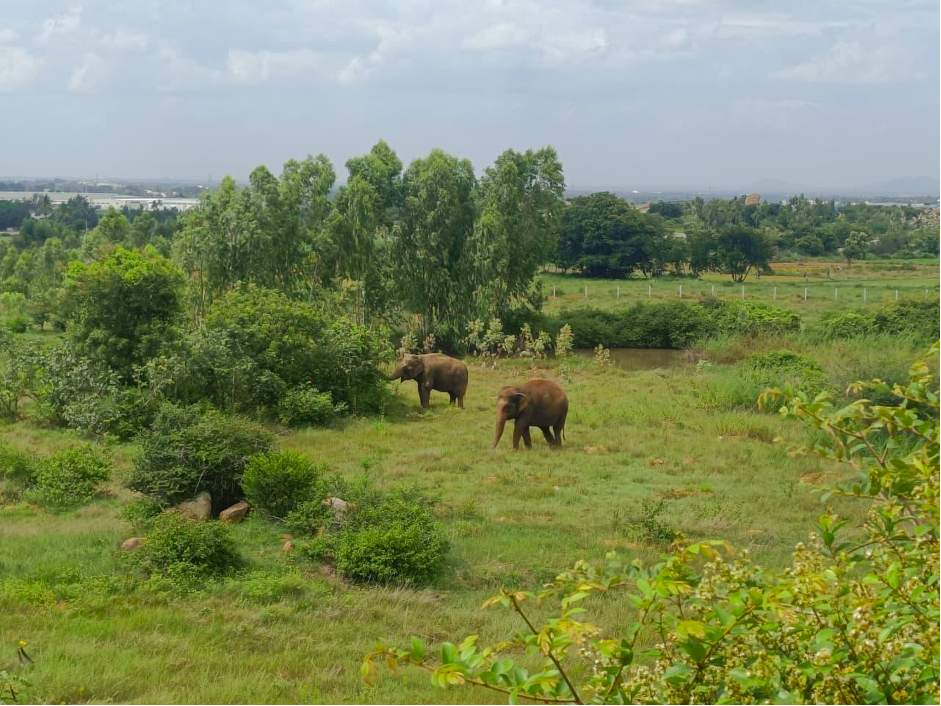
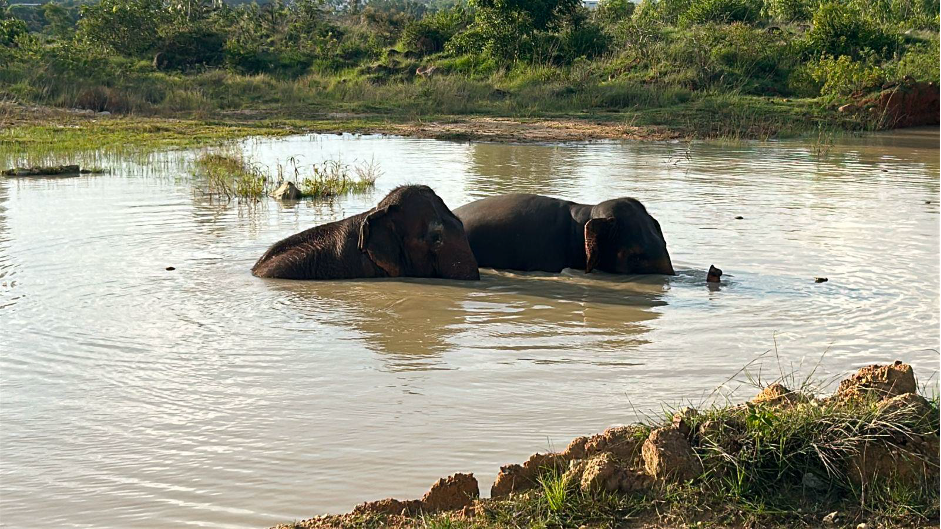
Enrichment activities at the Elephant Care Facility are intentional and structured interventions aimed at enhancing the physical health, psychological well-being, and expression of natural behaviours in captive elephants—particularly those undergoing rehabilitation after prolonged periods of neglect, injury, abuse, or inadequate care.
In the wild, elephants spend most of their day grazing, socialising, walking, bathing, and interacting with diverse stimuli in their environment. Captive conditions often limit these behaviours due to space constraints, predictable routines, and the psychological impact of trauma. Enrichment at the facility seeks to bridge this gap by simulating key aspects of the wild and encouraging instinctive, species-appropriate behavior.
Conclusion:
The October–December 2025 quarter reflects steady and meaningful progress in the rehabilitation and long-term care of captive elephants at the Elephant Care Facility in Kolar. Despite the complex and chronic health challenges presented by many individuals—ranging from epilepsy, osteoarthritis, chronic foot and tusk infections to behavioural stress—the project has ensured consistent medical intervention, careful monitoring, and adaptive management tailored to each elephant’s needs.
Over the last quarter, most elephants showed positive trends in weight gain or stabilisation, improved wound healing, and better management of chronic conditions through regular foot care, targeted veterinary treatments, and structured supplementation protocols. Cases requiring intensive care—such as recurrent abscesses, seizure management, tusk root infections, and mobility limitations—were addressed through a combination of diagnostics, medication, laser therapy, supportive care, and stress-reduction strategies. Follow-up blood work and clinical monitoring indicate improved physiological parameters in several individuals, reinforcing the effectiveness of the treatment approach.
Equally important, the facility’s emphasis on balanced nutrition, enriched environments, and routine-driven care has contributed to improved behavioural stability and overall well-being. The structured feeding regime and enrichment activities have enabled elephants to engage in natural foraging, movement, and exploratory behaviours—critical components in psychological rehabilitation for animals recovering from long-term captivity and trauma.
This quarter underscores the importance of sustained, individualised care in restoring dignity and quality of life to captive elephants.
With your ongoing support, WRRC remains committed to strengthening rehabilitation outcomes while serving as a model for humane captive elephant care in India.