a bright outlook for donkey welfare in malawi
Our partner group, the Lilongwe Society for the Protection and Care of Animals (LSPCA), are dedicated to improving working donkey welfare through proper veterinary care, owner education and behaviour change, and humane equipment.
See how your generous donations are positively impacting lives in Malawi:
1. Introduction
In December, the LSPCA team conducted two mobile clinics in Mitundu and Dzenza, where 133 donkeys were examined and 51 received treatment. Common issues included poor body condition, exhaustion, and cart- or harness-related wounds, particularly among animals burdened with heavy workloads.
To complement clinical visits, the team conducted 20 individual questionnaires and five focus groups with 51 owners and herders, gathering insights on workload, harness use, wound management, and challenges in balancing donkey welfare with livelihood pressures. Notably, five respondents reported drought-related constraints, while some households experienced donkey theft, thereby affecting follow-up care.
Engagement with Assistant Government Veterinary Officers reinforced observations from the community, and highlighted the importance of ongoing training and behaviour change.
Despite seasonal and environmental challenges, these activities demonstrated measurable progress in owner awareness, early wound detection and adoption of improved harnessing practices, providing a strong foundation for continued welfare interventions in 2026.
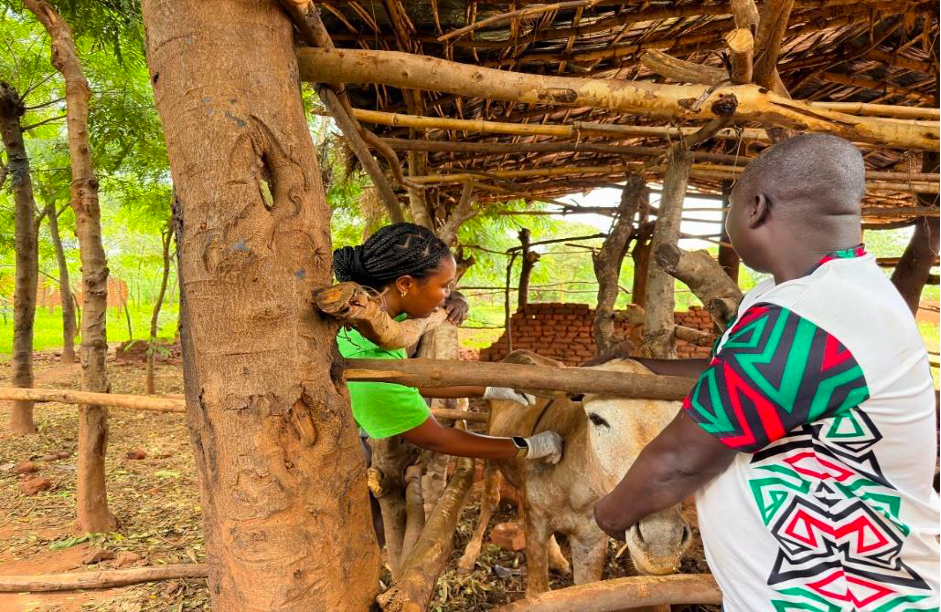
LSPCA staff providing treatment to a donkey
2. Mobile Veterinary Clinic
December was shaped by irregular rainfall patterns and seasonal pressures. Following initial rains in November, precipitation stopped for nearly two weeks, delaying crop establishment. When the rains resumed in December, farming activities intensified rapidly as households rushed to complete planting and early crop management before further weather changes. This created a sharp increase in demand for donkey labour, requiring continued clinical support alongside monitoring.
Two mobile clinics were conducted in Mitundu and Dzenza, providing both as clinical outreach and follow-up visits. A total of 133 donkeys were examined, with 51 receiving treatment. These visits allowed the team to observe the donkeys directly and evaluate any changes since previous interventions.
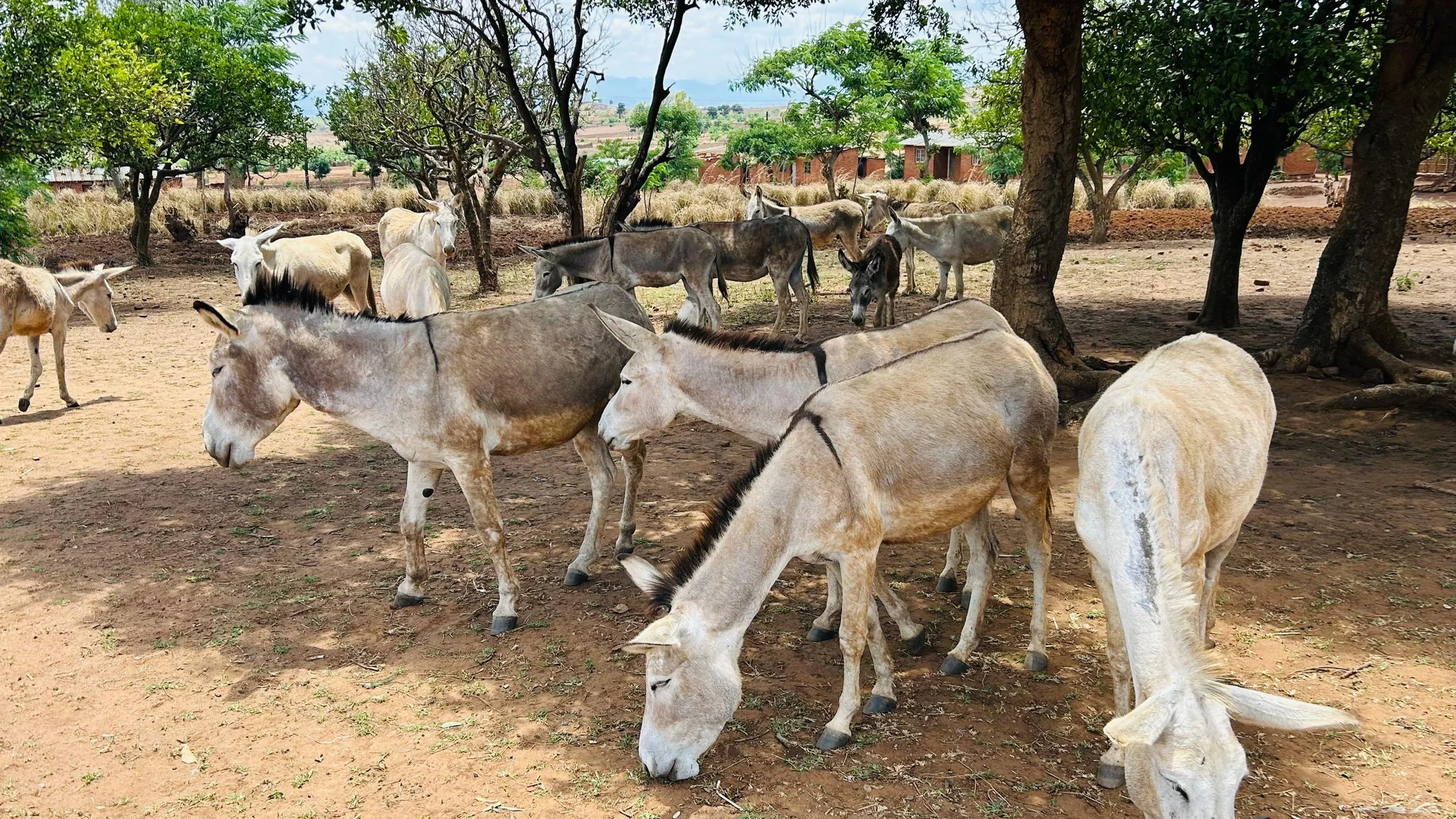
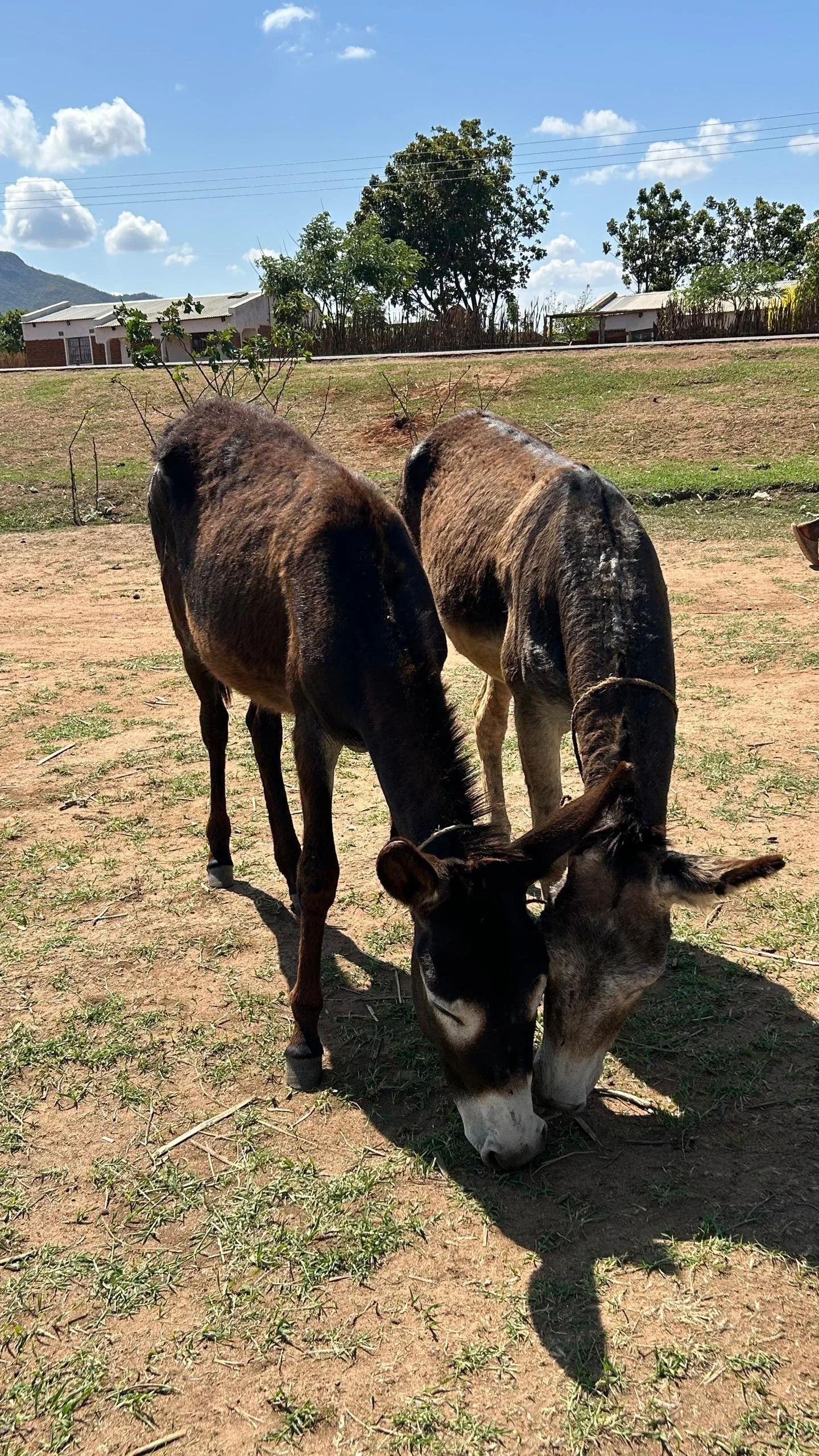
Overall, many donkeys showed poor body condition, signs of exhaustion and effects of overwork, reflecting the high labour demands placed on them.
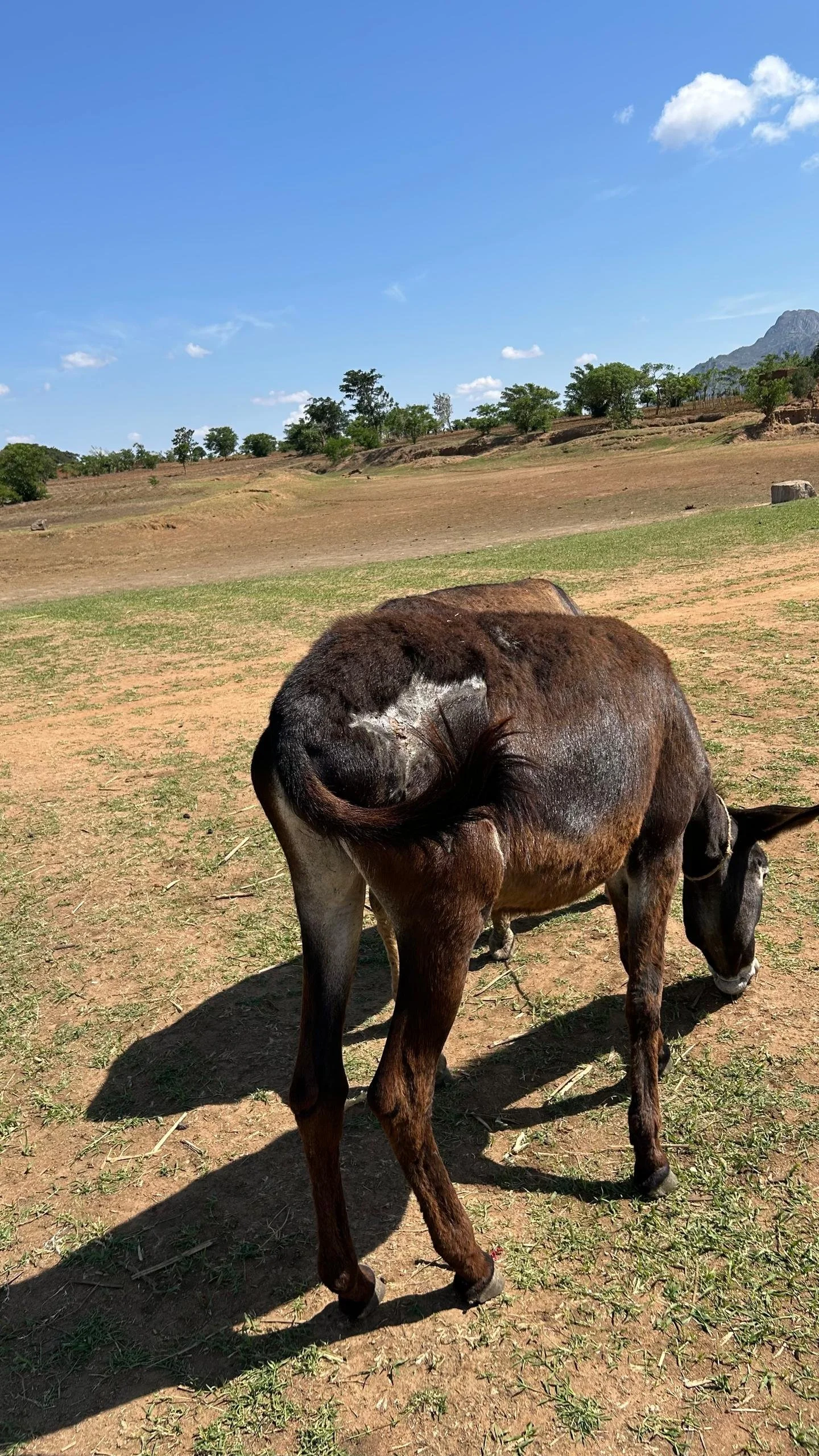
During these visits, the team encountered 12 donkeys with delayed wound healing, reopened sores, and new cart/harness-related injuries. Many of these animals had been treated earlier in the season but had returned to heavy workloads after the resumption of farming activities.
In response, the team provided additional wound care and worked with owners to implement practical, context-appropriate solutions. These included improving padding with locally-available materials, adjusting harness fit to reduce pressure, and reorganising workloads by sharing tasks between animals where possible.
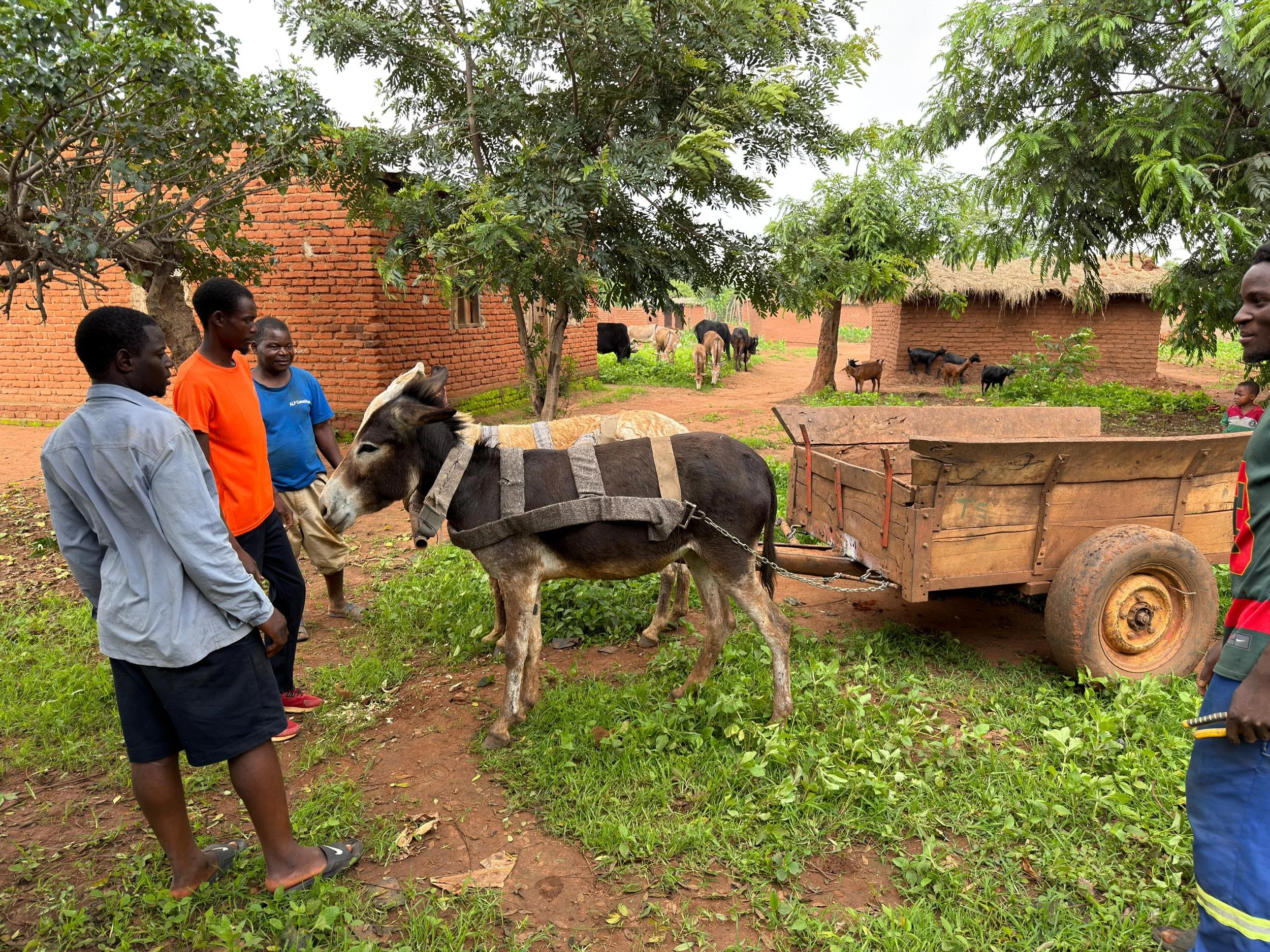
In households with multiple donkeys, owners were encouraged to rotate animals to allow short recovery periods rather than continuous work. Where full rest was not feasible, the team suggested working during cooler early mornings or late afternoon hours, as well as brief rest breaks during the day to reduce strain and prevent further injury.
Owners were also shown simple daily inspection and cleaning techniques that could be completed quickly before or after field work. These practical adaptations were well received, as they acknowledged livelihood realities while still prioritising donkey welfare.
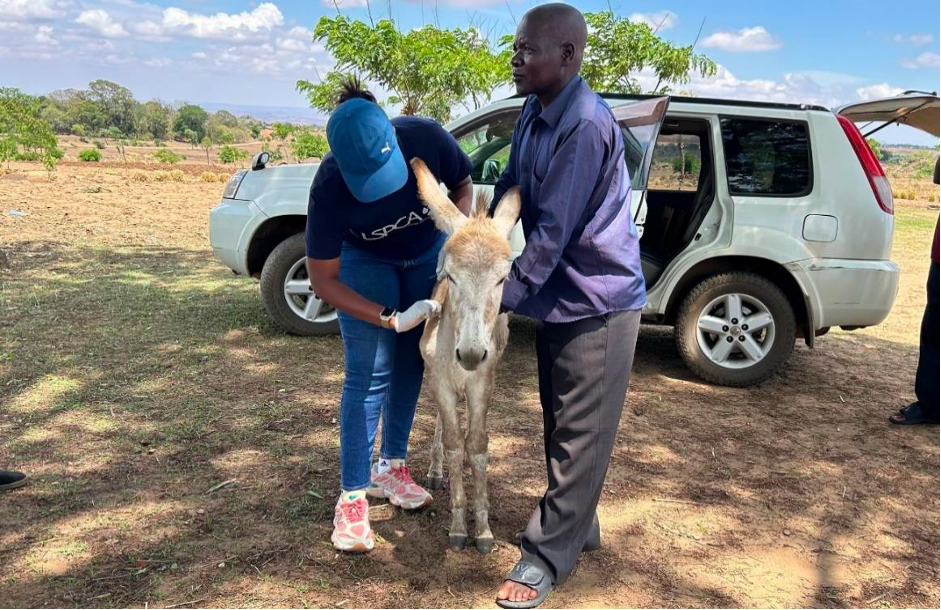
Donkey receiving welfare assessment during December’s mobile clinic
3. Monitoring, Questionnaires and Focus Group Assessments
Monitoring and evaluation activities were conducted throughout December and extended into early January across all four project areas. The primary focus of these visits was to review previously treated donkeys, assess the ongoing use of improved harnesses and cart adjustments, and gather feedback on owner and herder experiences.
Two of these sessions, in Mponela and Dzenza, were conducted on the same day as the mobile clinic visits, allowing the team to combine clinical follow-up with monitoring and evaluation in a single field trip. This approach enabled timely assessment of donkey welfare and the practical application of interventions.
As part of this process, the LSPCA team also engaged Assistant Veterinary Government Officers during monitoring visits. This engagement provided an opportunity to validate community-level observations, gather technical feedback, and ensure alignment between project interventions and district-level animal health perspectives.
3.1 Respondent-Based Key Questionnaires
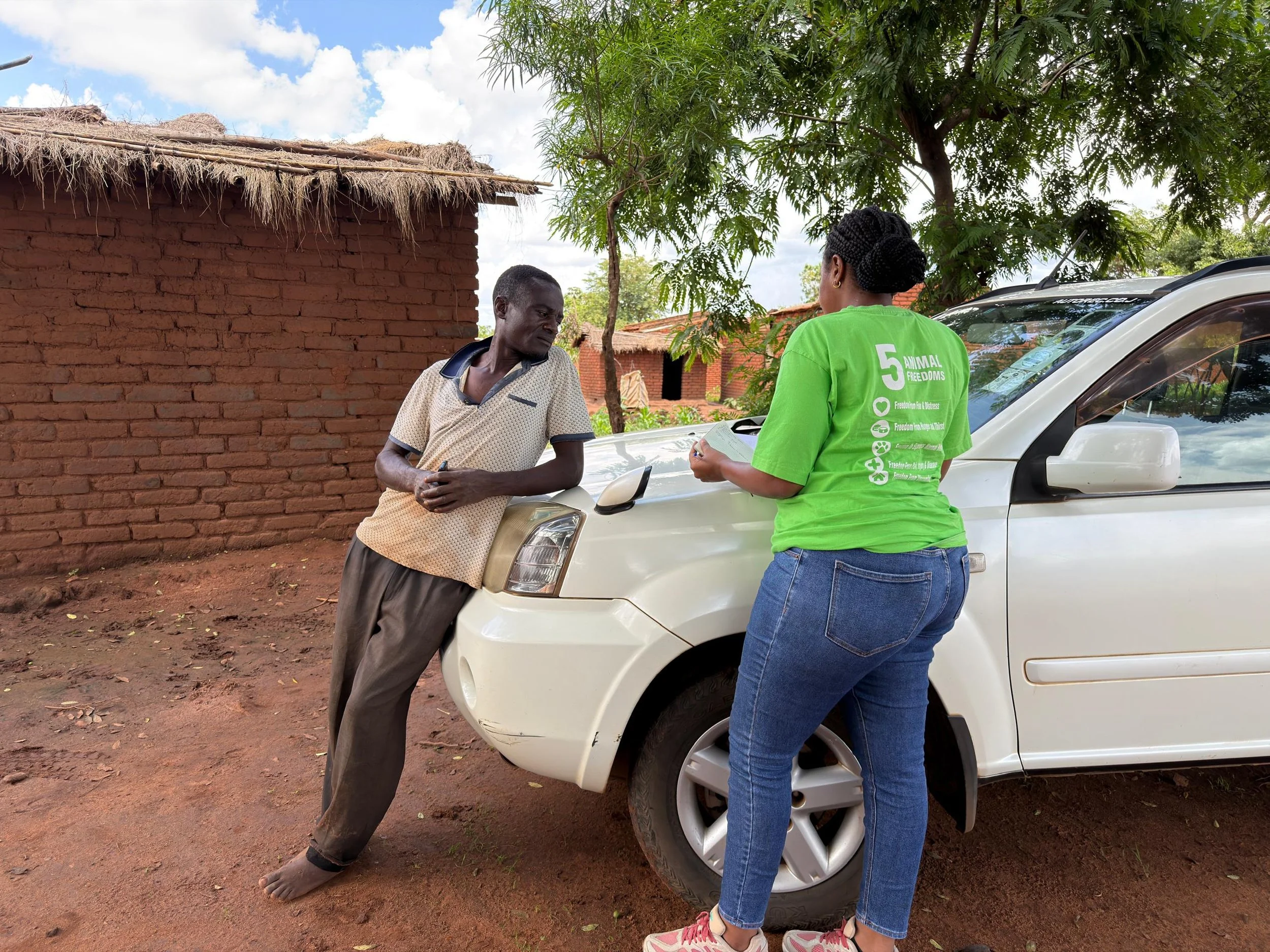
The team conducted 20 respondent-based key questionnaires with individual donkey owners and herders. These one-on-one discussions allowed for more detailed and honest reflection on daily practices and challenges. Questionnaires explored donkey workload patterns, wound healing progress, feeding practices, harness use, rest opportunities, and overall perceptions of donkey welfare since the introduction of project interventions.
Several owners described noticeable improvements in their ability to detect early signs of wounds, fatigue, and declining body condition. Many explained that they now routinely check common pressure points before or after work, particularly around the shoulders, withers, and girth areas. However, these same respondents also highlighted the difficulty of consistently applying rest periods during peak agricultural activity, when planting schedules are highly time-sensitive.
Five respondents additionally shared that the recent drought in their areas had further constrained their ability to apply welfare practices. In some cases, donkeys had to be loaned out for income and often returned ill, while others were required to work immediately after the rains to prevent further loss or hunger in the household.
These insights underscored the complex balance between livelihood pressures and optimal donkey care, highlighting that knowledge alone is not always sufficient to ensure welfare under challenging environmental and economic conditions.
Some owners noted that even when wounds were identified early, donkeys were still required to work to complete planting before additional rains. These responses helped the team understand the gap between knowledge and practice, particularly under seasonal and environmental pressures.

3.2 Focus Group Discussions with Owners and Herders
In addition to individual questionnaires, the team facilitated five focus group discussions, engaging approximately 51 owners and herders across the four project areas.
Focus group discussions created space for participants to openly share challenges, social pressures and practical realities that are not always captured in individual interviews.

Participants consistently demonstrated improved understanding of welfare concepts introduced earlier in the project, including the importance of early wound management, proper harness fit and workload management. However, discussions also revealed strong social and behavioural influences on practice. Some herders explained that they felt uncomfortable adopting new handling methods when working alongside others who continued using traditional systems.
Several participants noted that donkeys sometimes responded differently when sticks were no longer used, creating uncertainty for herders who had relied on these methods for many years. In some cases, fear of judgement from peers discouraged consistent use of improved harnesses or gentler handling approaches.
A small number of owners reported incidents of donkey theft. In these cases, animals who had previously benefitted from harness making, cart repairs or treatment were no longer available for work or follow-up, affecting both household livelihoods and project continuity.
Overall, the monitoring activities created an open and supportive space that enabled participants to freely share their challenges. These discussions also highlighted the environmental constraints they face and the difficulty of addressing them, particularly due to limited knowledge and capacity to manage both their own livelihoods and the welfare needs of their donkeys.
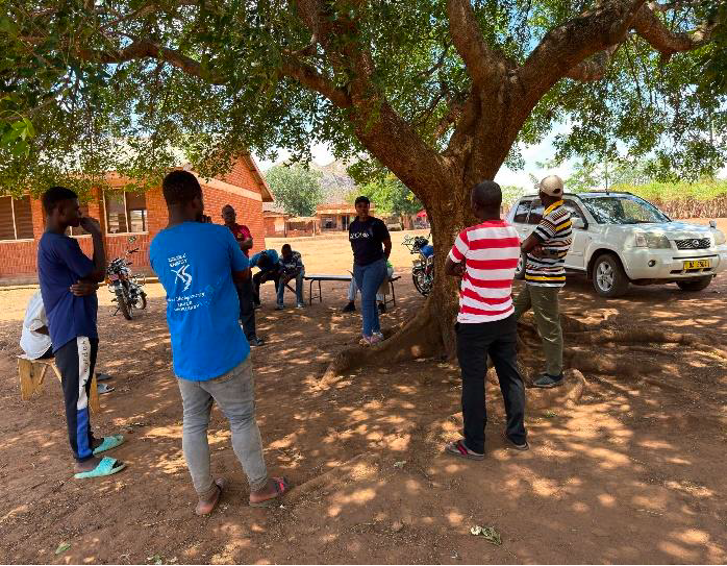
LSPCA field team facilitating a focus group discussion with donkey owners and herders
4. Government Veterinary Feedback and Collaboration
Assistant Government Veterinary Officers expressed satisfaction with the project’s focus on early disease detection, improved harnessing, and sustained engagement with donkey owners and herders. Officers reported noticeable improvements in wound awareness, handling practices, and owner confidence when discussing donkey health and welfare. They further noted that the project helped illuminate welfare aspects that owners and herders often overlook, despite the routine availability of veterinary officers within their areas.
In Mpingu, one officer emphasised that meaningful behaviour change requires continuous engagement and repeated reinforcement, particularly during peak farming periods when welfare practices are most challenging to maintain. Another officer underscored the importance of ongoing training, noting that effective implementation depends on owners fully understanding their responsibilities and the critical role they play in donkey welfare.
Both officers highlighted that behaviour change is gradual, and that sustained education, follow-up, and collaboration are essential to achieving lasting welfare improvements.
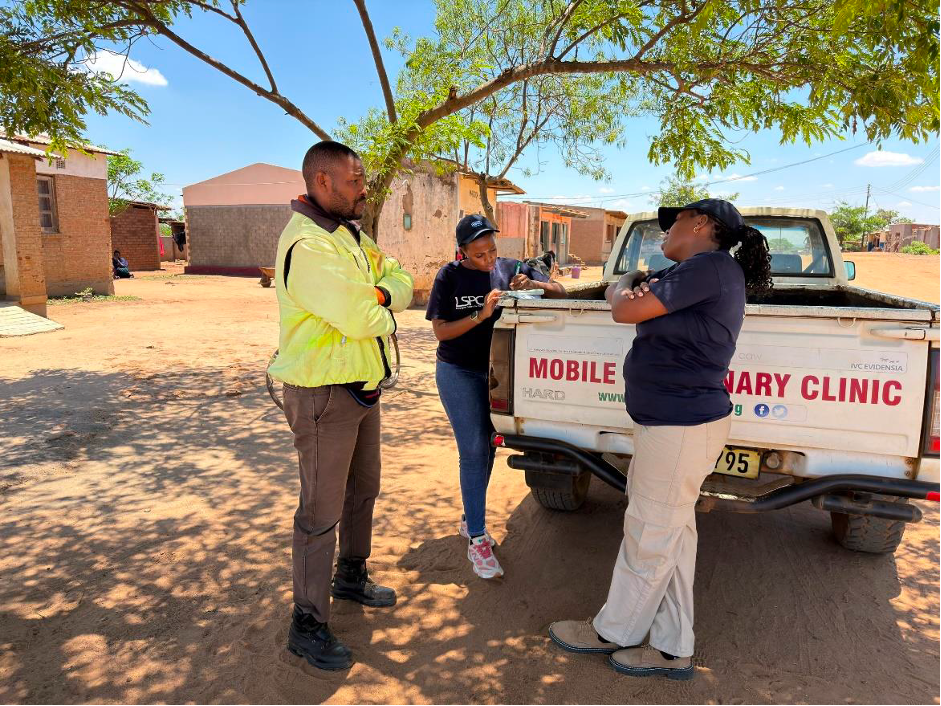
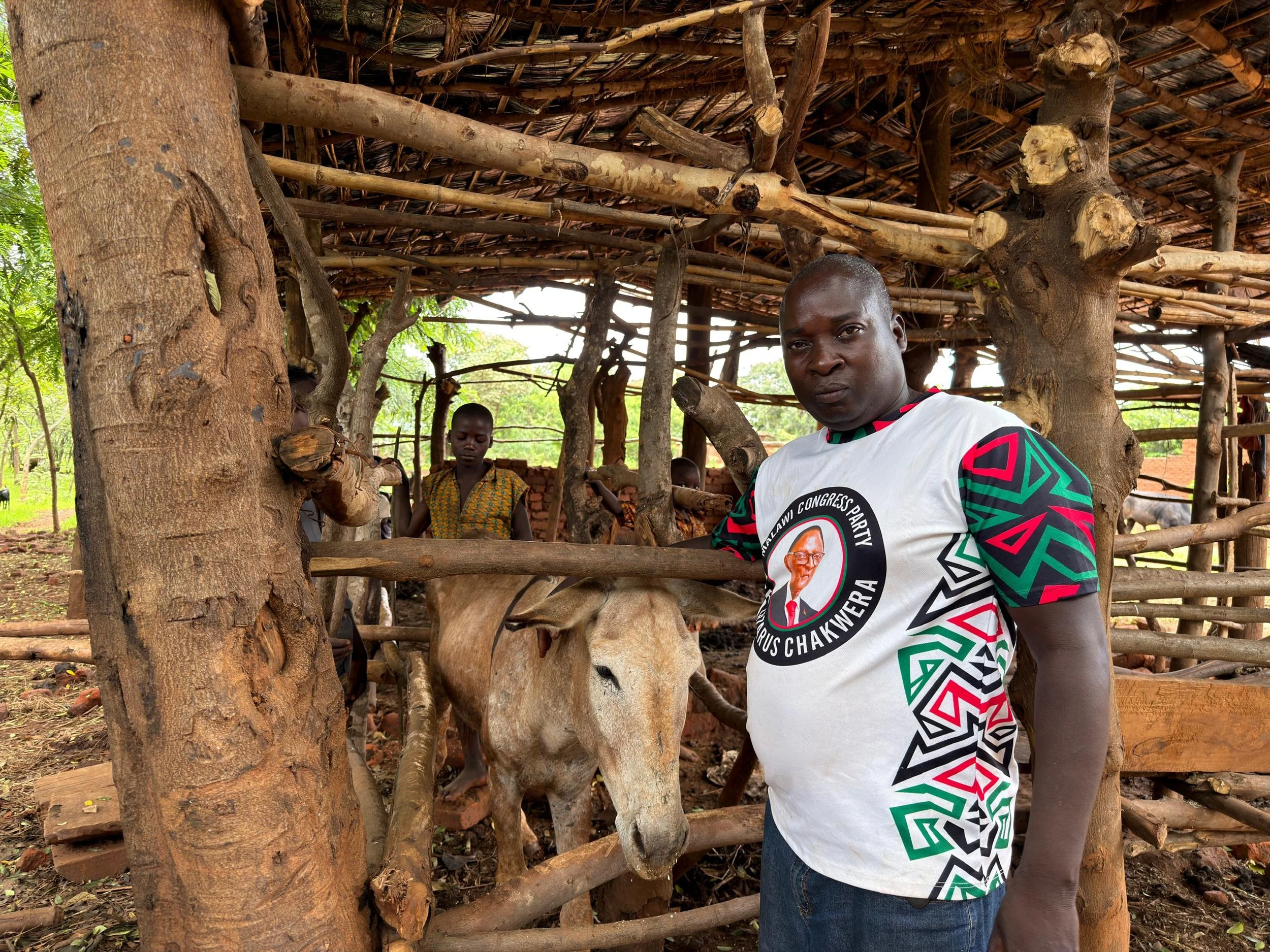
Assistant Veterinary Government Officer during joint monitoring visits with the LSPCA team
5. Harness Use and Behaviour Change Observations
A dedicated follow-up visit to Mitundu was undertaken with the specific objective of closing outstanding gaps and finalising all cart and harness attachments that were still under implementation.
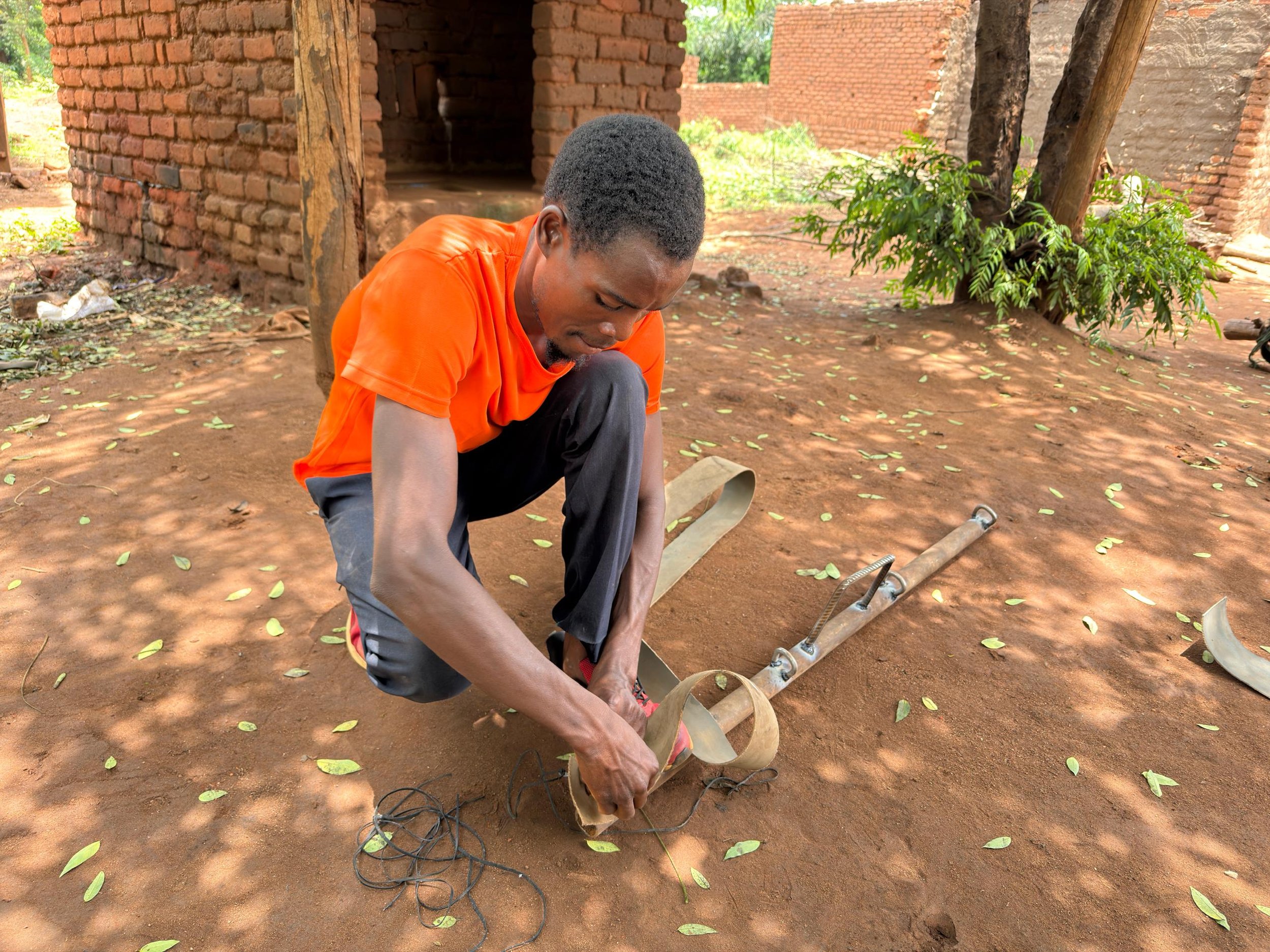
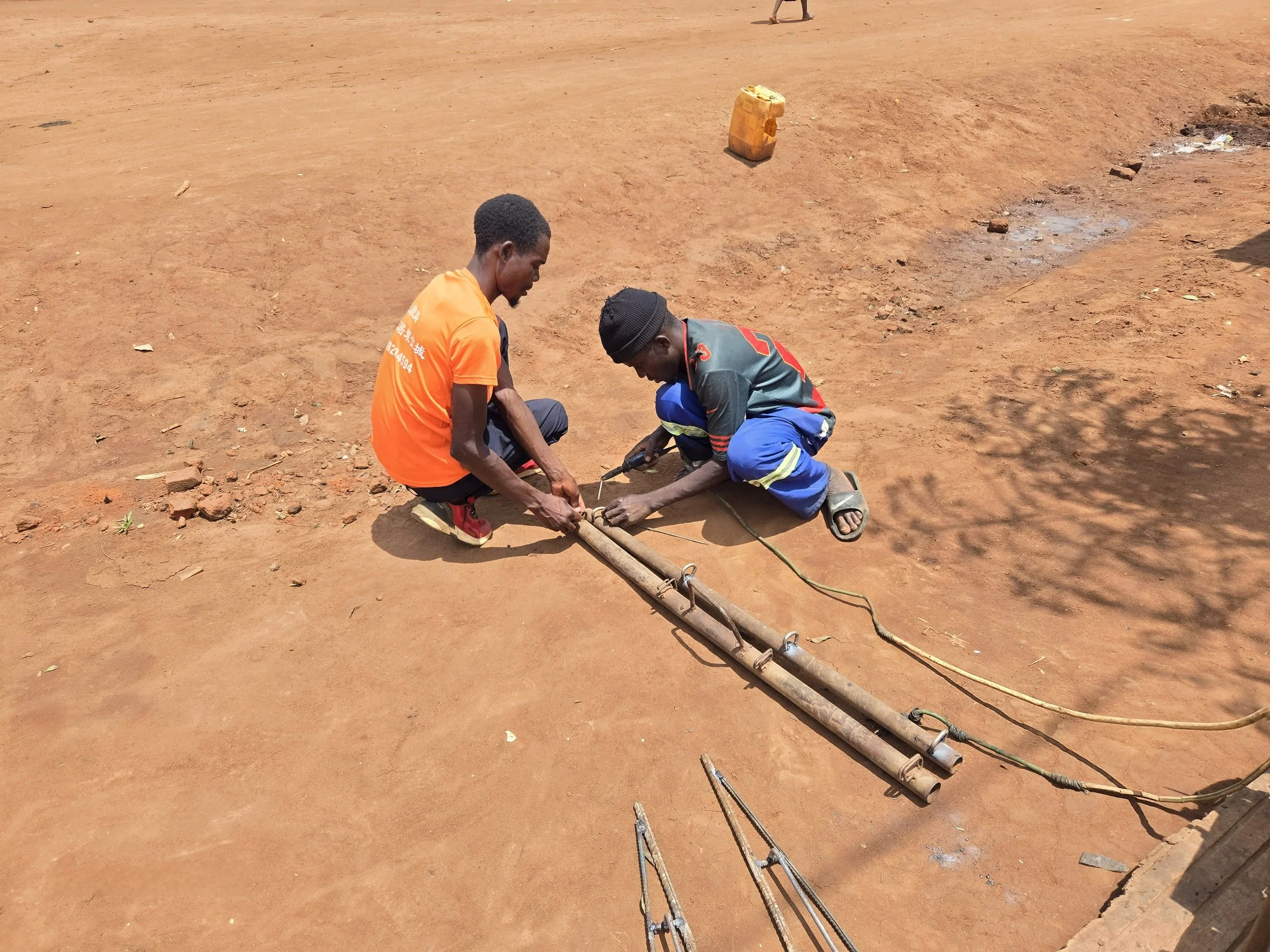
During this visit, two separate owners - each with two donkeys - had their cart and harness attachments successfully completed. The team also took the opportunity to assess how previously-supported owners were progressing with the use of both improved harnesses and carts.
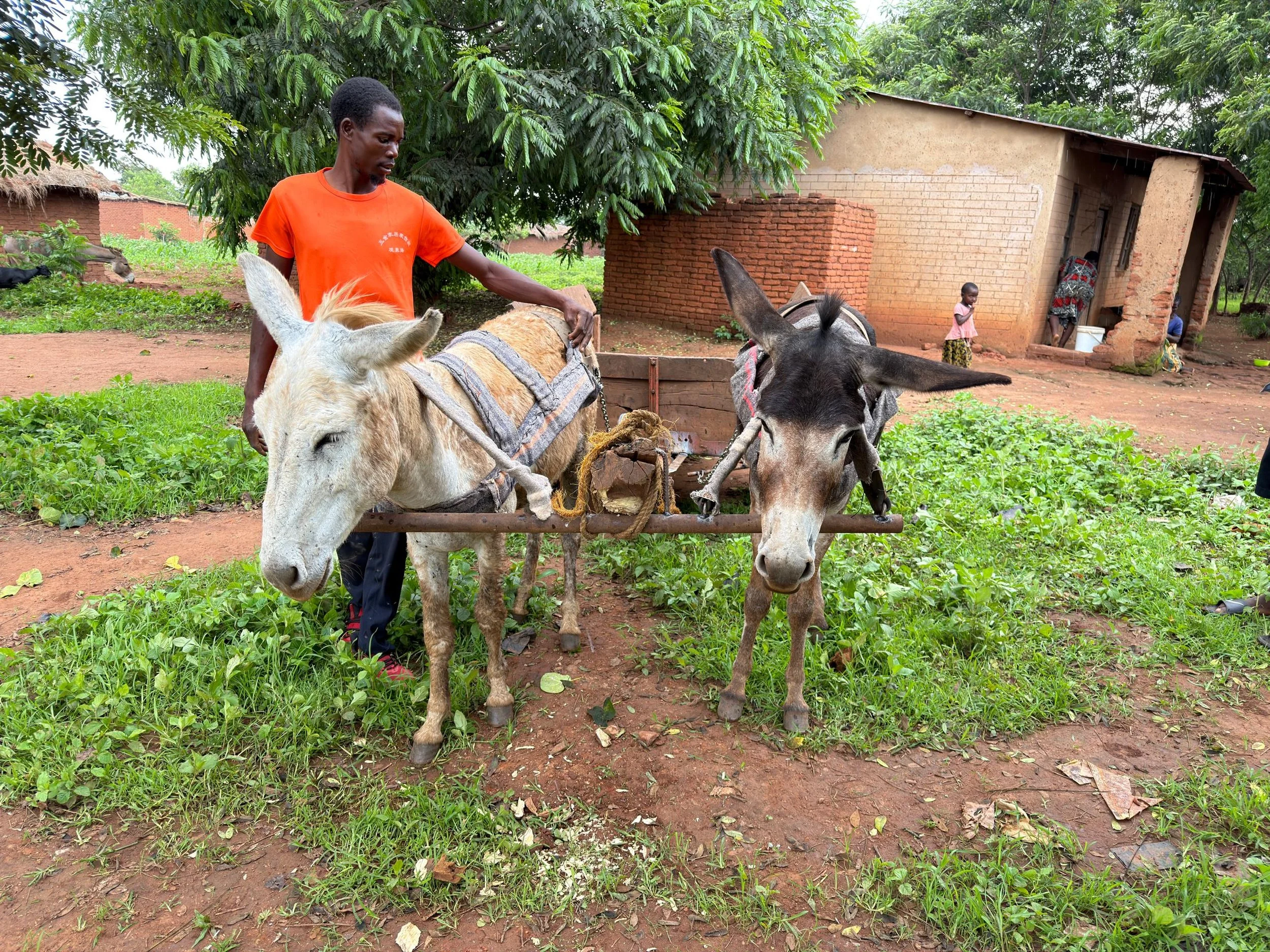
Owners demonstrated gradual adaptation to the improved harnessing systems, and where these were correctly fitted and consistently used, wounds were observed to be less severe with improved healing outcomes. The owners whose equipment was finalised during this visit expressed excitement and actively engaged in hands-on learning around basic maintenance and correct use.
Owners reported that the improved harnesses were helping to reduce wounds and discomfort when used correctly, but acknowledged that consistent application remains challenging during periods of heavy workloads.
They highlighted that practical demonstrations, repeated engagement, and clear messaging about owner responsibility are essential to maintaining progress. The visit reinforced shared expectations that donkey welfare improvements require time, continued training, and collaboration, and that short-term lapses should be anticipated as part of the broader process of long-term behaviour and mindset change.
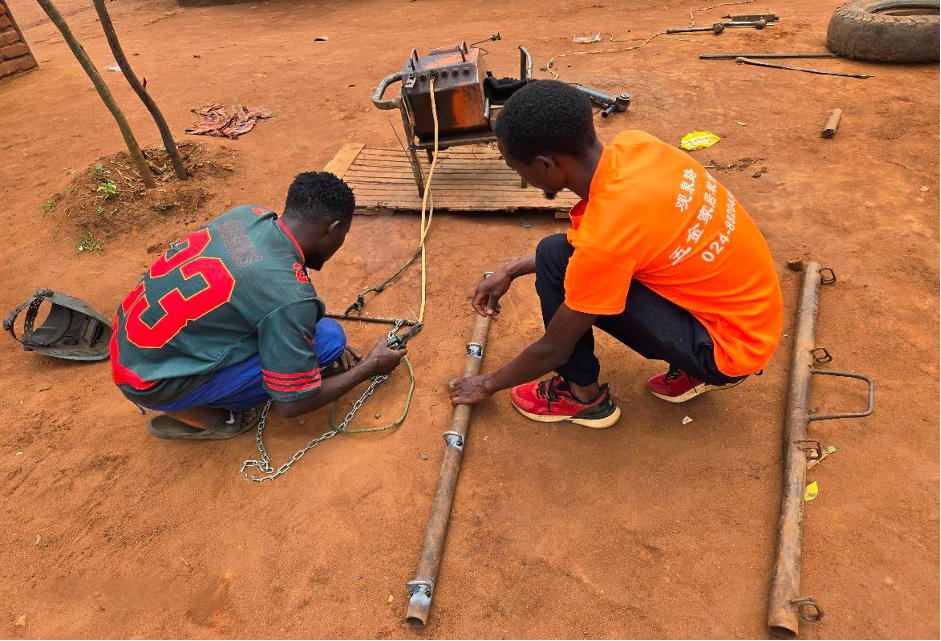
Craftsman and welder completing final cart and harness modifications
6. Challenges
December presented multiple overlapping challenges that impacted both project implementation and the conditions under which donkey owners and herders are living. Prolonged farm work, heavy seasonal rains, limited working days over the festive season, and economic pressures made it difficult for some households to rest their animals. In addition, incidents of donkey theft and the loss of animals to illness or injury further complicated timely follow-ups of ongoing cases.
These field-level challenges occurred against a broader national backdrop of crisis. In November 2025, the Government of Malawi declared a state of disaster in response to worsening food insecurity driven by prolonged dry spells and other climate-related impacts affecting multiple parts of the country.
As soon as the rains started, heavy rains and flooding affected large swathes of agricultural land, with reports citing tens of thousands of hectares under water and animal losses. While our project areas have not been as severely affected, ongoing flash floods and unpredictable weather patterns mean that the final impact on households, livestock, and donkey welfare remains uncertain.

7. Conclusion and Looking Ahead to 2026
The period from April to December 2025 demonstrated that improving working donkey welfare is a complex and non-linear process, shaped by seasonal demands, livelihood pressures, and gradual behaviour change. The project navigated a series of challenges and adaptations, from clinical delivery and harness interventions to monitoring, evaluation, and problem-solving during peak agricultural periods.
Clear progress was observed in owner awareness, early wound recognition, engagement with improved harnessing, and willingness to discuss welfare challenges openly. At the same time, the project highlighted the limits of short-term interventions within high-demand farming systems and the need for sustained follow-up.
Building on these lessons, implementation in 2026 will focus on training owners and lead farmers in improved daily care and humane handling, introducing and promoting pack saddles, strengthening community-based emergency response systems, providing mobile donkey clinics, and maintaining monitoring to support behaviour change.
Activities will be implemented across six Extension Planning Areas, including two new areas, which have been added to address gaps in veterinary support and welfare coverage. This approach aims to reinforce learning, promote routine adoption of good practices, and achieve more sustainable welfare outcomes across participating communities.
With your fantastic ongoing support, the LSPCA will no doubt continue to make great strides towards improving donkey welfare in 2026.