treatment camp provides a lifeline for sick working camels
With your generous support, Help in Suffering (HIS) recently held their annual Nagaur Camel Treatment Camp. The camp was highly impactful, providing much-needed veterinary care and guidance for camel owners.
Many owners expressed heartfelt gratitude and were deeply appreciative of the services provided through this camp.
Introduction
In Nagaur - a town in Rajasthan - a large fair is held each year. Here, people gather to trade animals like camels, horses, oxen and more. HIS organised a special camp during this fair from February 21-26 to help sick camels.
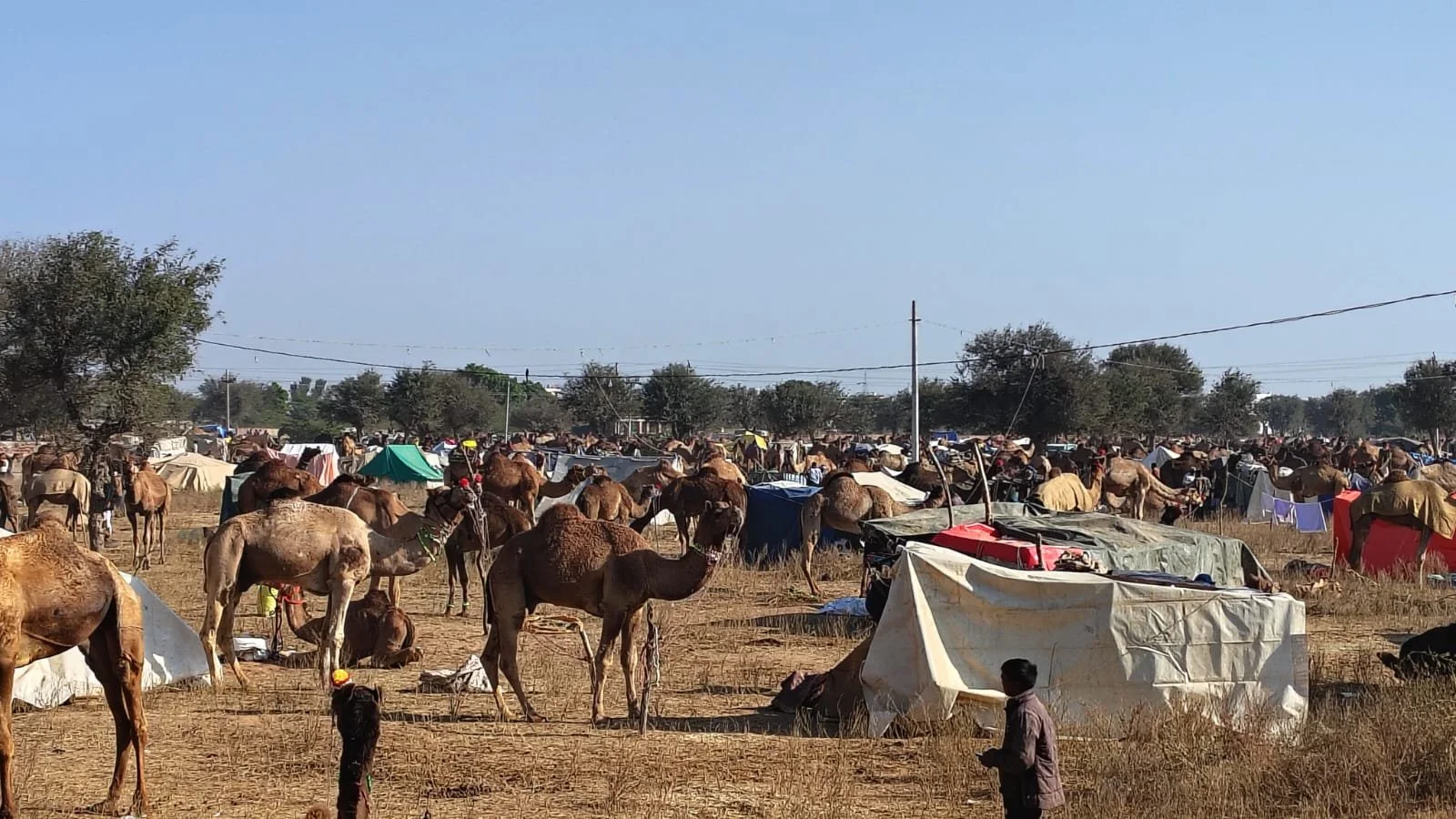
Large gathering of camels
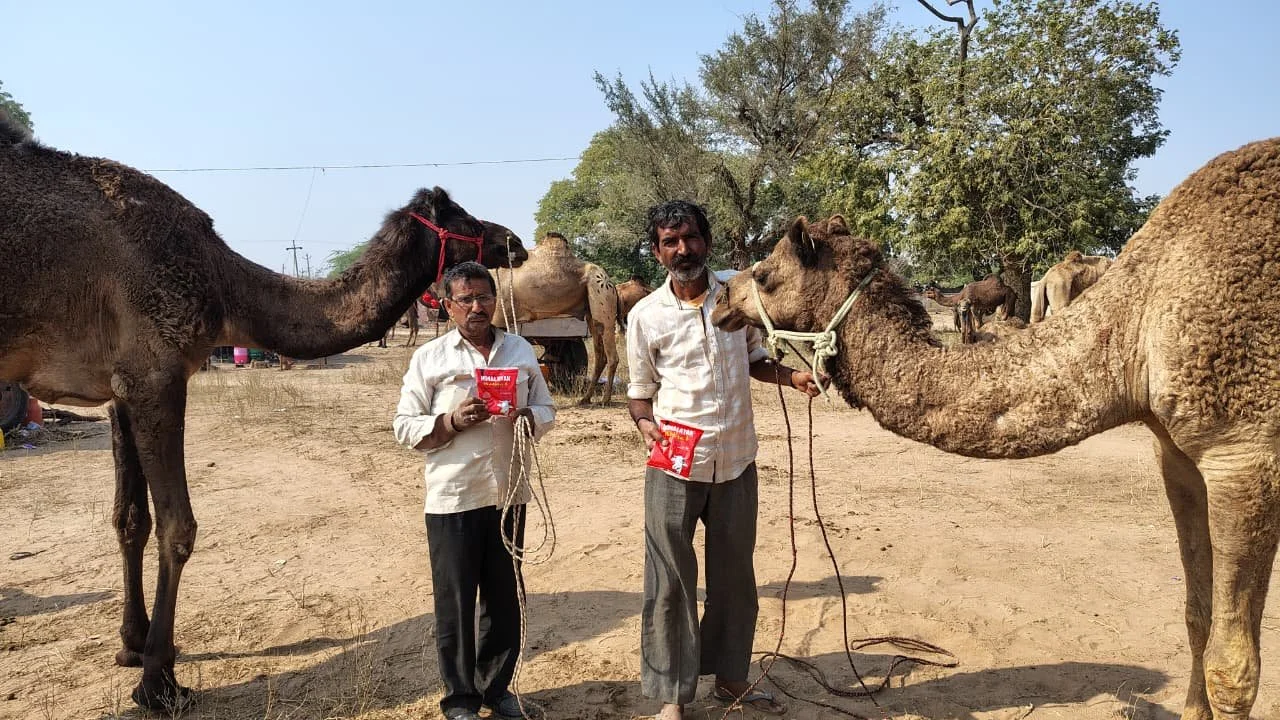
Camel owners with the oral medicine they received after treatment
Team
Our team included two vets - Dr Abhinav Swami and Dr Himanshu Burman - and five assistants: Rajendra, Bhagwan Das, Lalchand, Deepak and Dharamraj.
What We Did
We set up a treatment tent among the camels and provided veterinary care to a total of 472 sick camels. Many of them were suffering from gastrointestinal problems and various types of wounds.
Out of these, 300 camels were dewormed to control internal parasitic infections. Their owners were advised to repeat deworming every three months to maintain good health and prevent reinfection.
We also treated several cases of indigestion and diarrhoea, which are common during fairs due to sudden dietary changes, irregular feeding, long-distance travel, and stress. Our team provided appropriate medication and guidance for owners on proper feeding and management practices.
This year we saw an outbreak of upper respiratory tract infections. A large number of camels suffered from thick nasal discharge, fever, coughing and loss of appetite.

Assistant, Rajendar, administering laxatives in a case of impaction
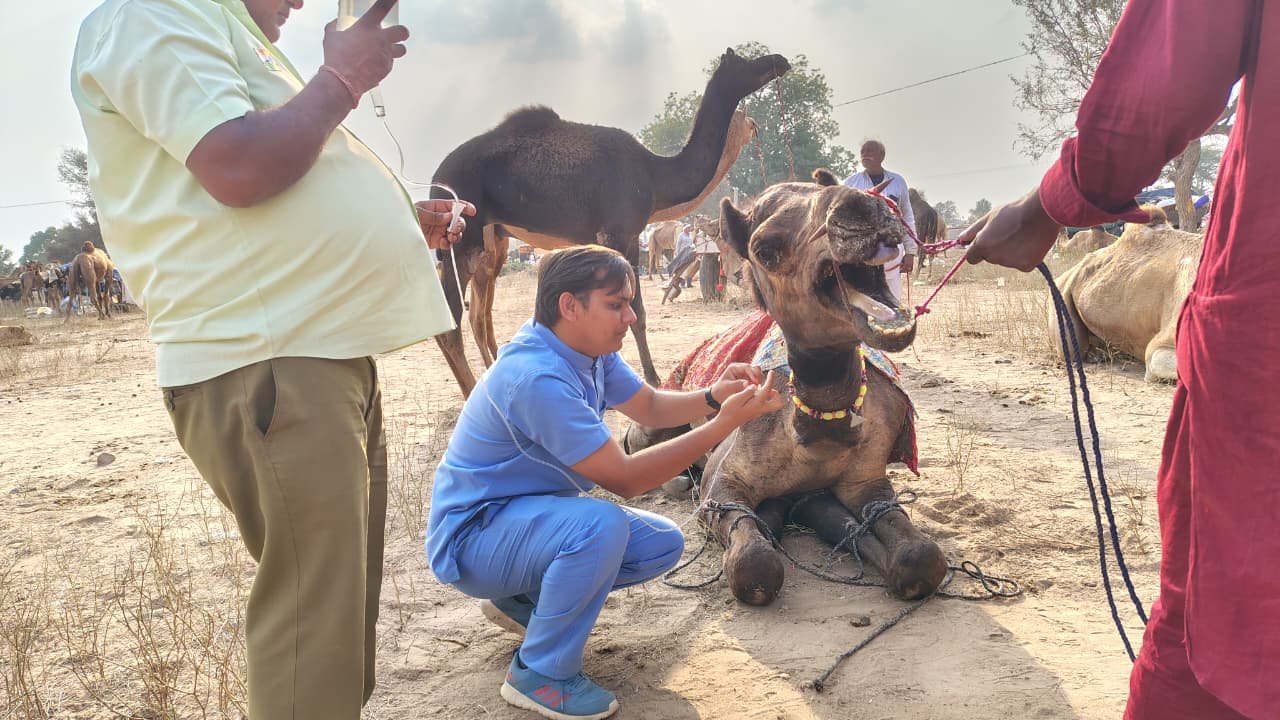
Dr Himanshu giving an IV injection to a camel with impaction
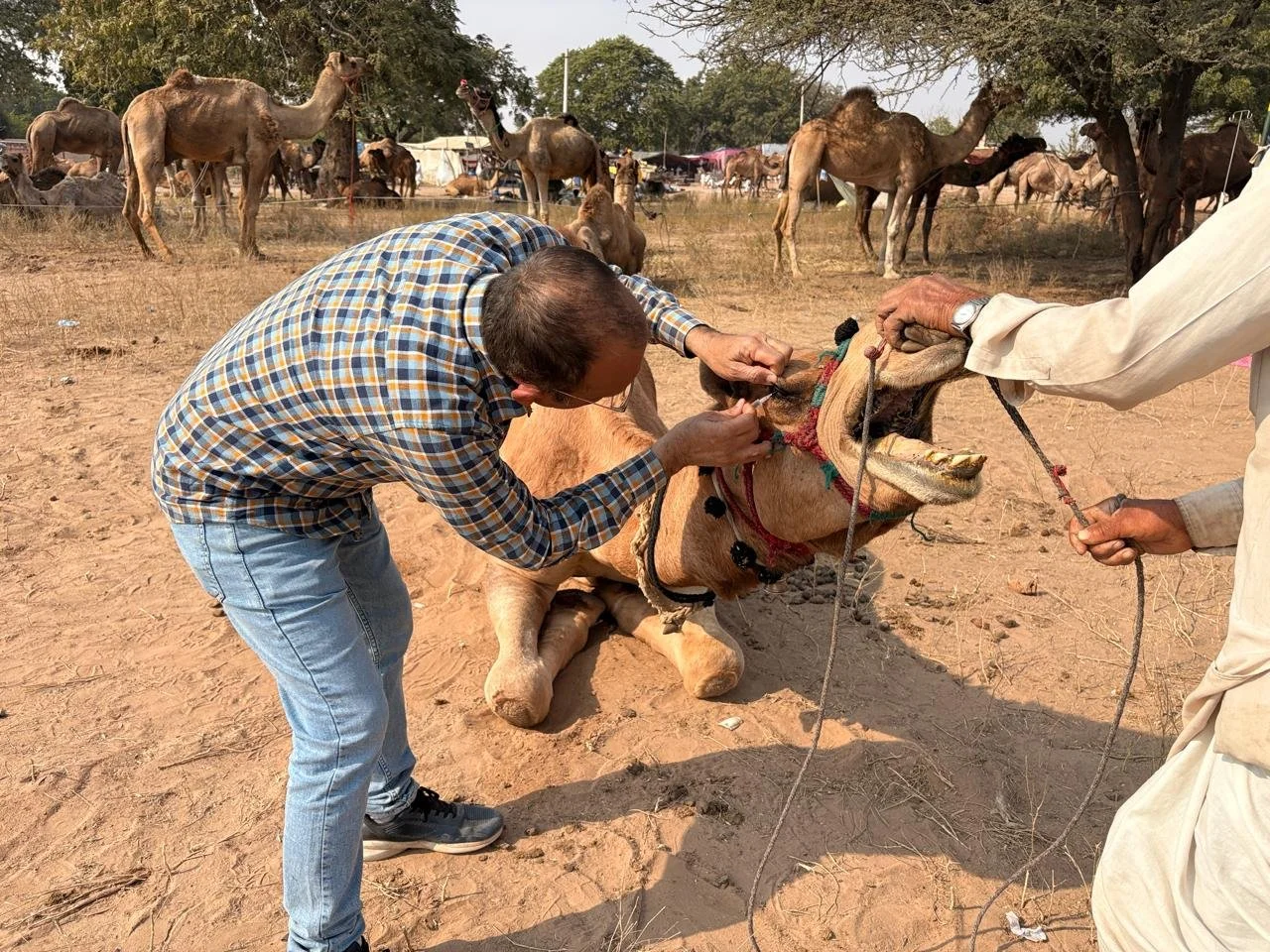
Dr Abhinav Swami administering a sub-conjunctival injection to treat corneal opacity
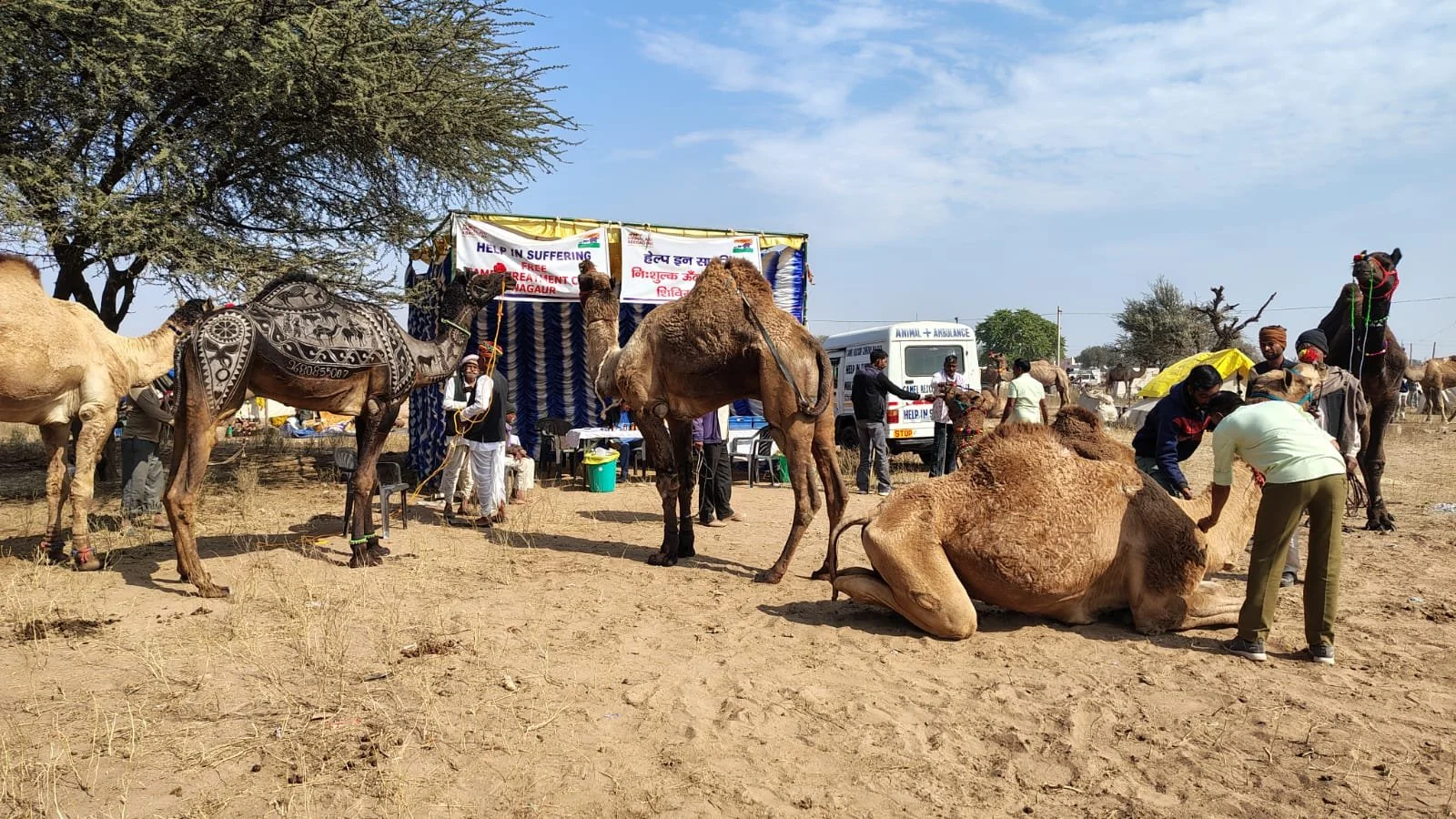
Our camp surrounded by camels waiting for their turn
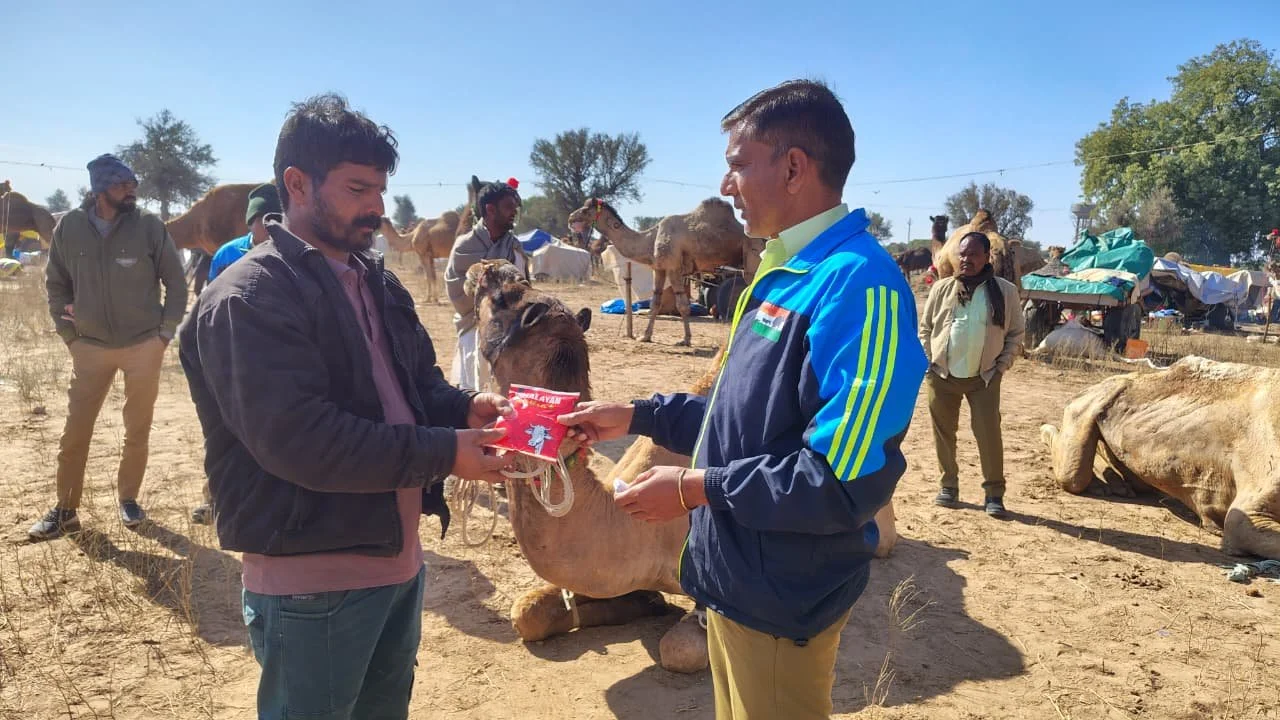
Assistant, Lalchand, issuing medicines to be used at home
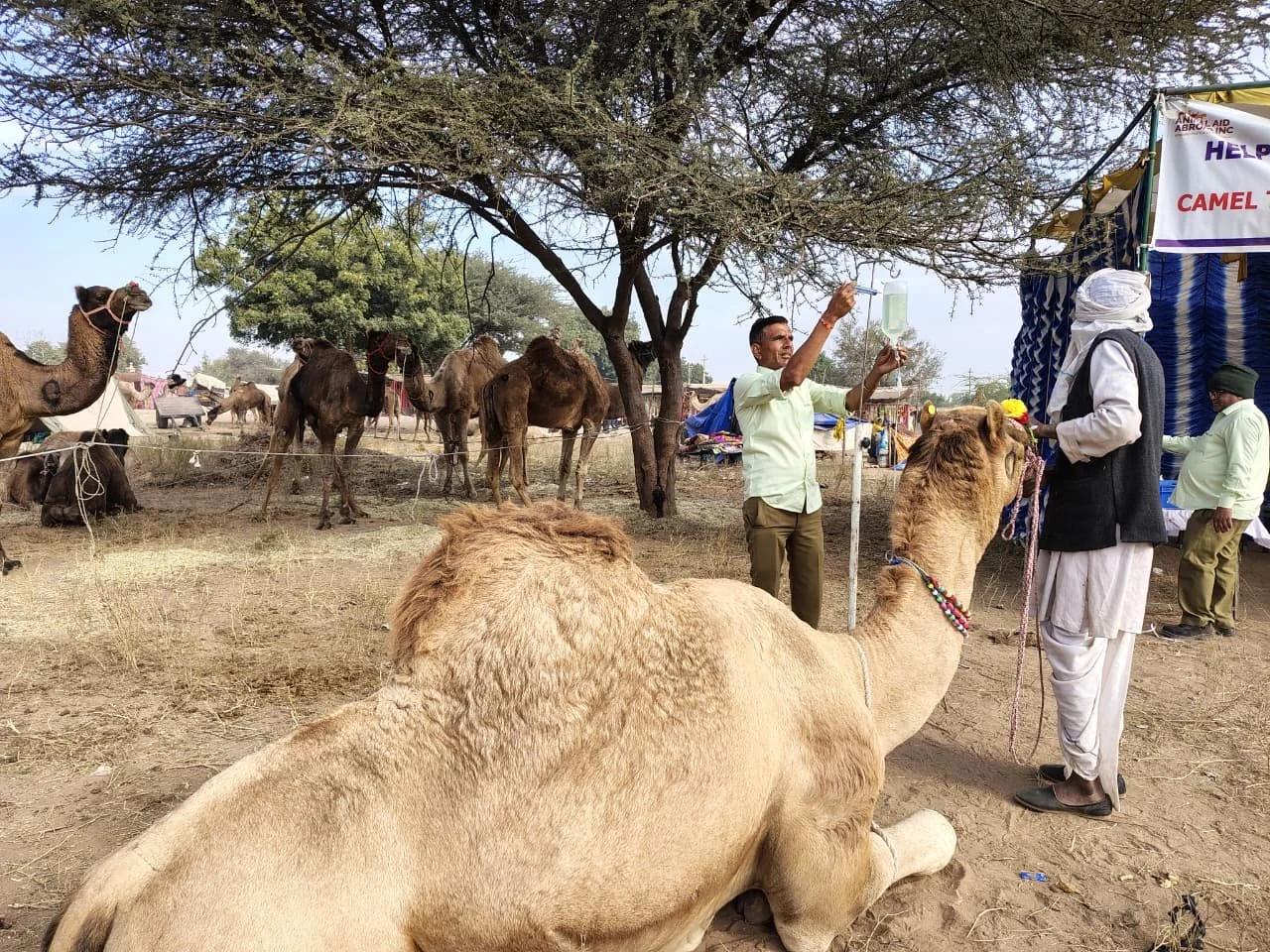
Intravenous fluid administration to treat diarrhoea
Wound Care and Infections
We treated many camels suffering from painful saddle sores, chest pad wounds, and nose injuries caused by metal and wooden pegs. The wounds were cleaned, dressed, and properly medicated to prevent infection and promote healing. We also educated owners about using safer plastic nose pegs to prevent future injuries.
In addition, several camels were treated for mange and other skin infections, helping to relieve severe itching and discomfort. Your contribution directly reduced suffering and improved the overall welfare of these animals.
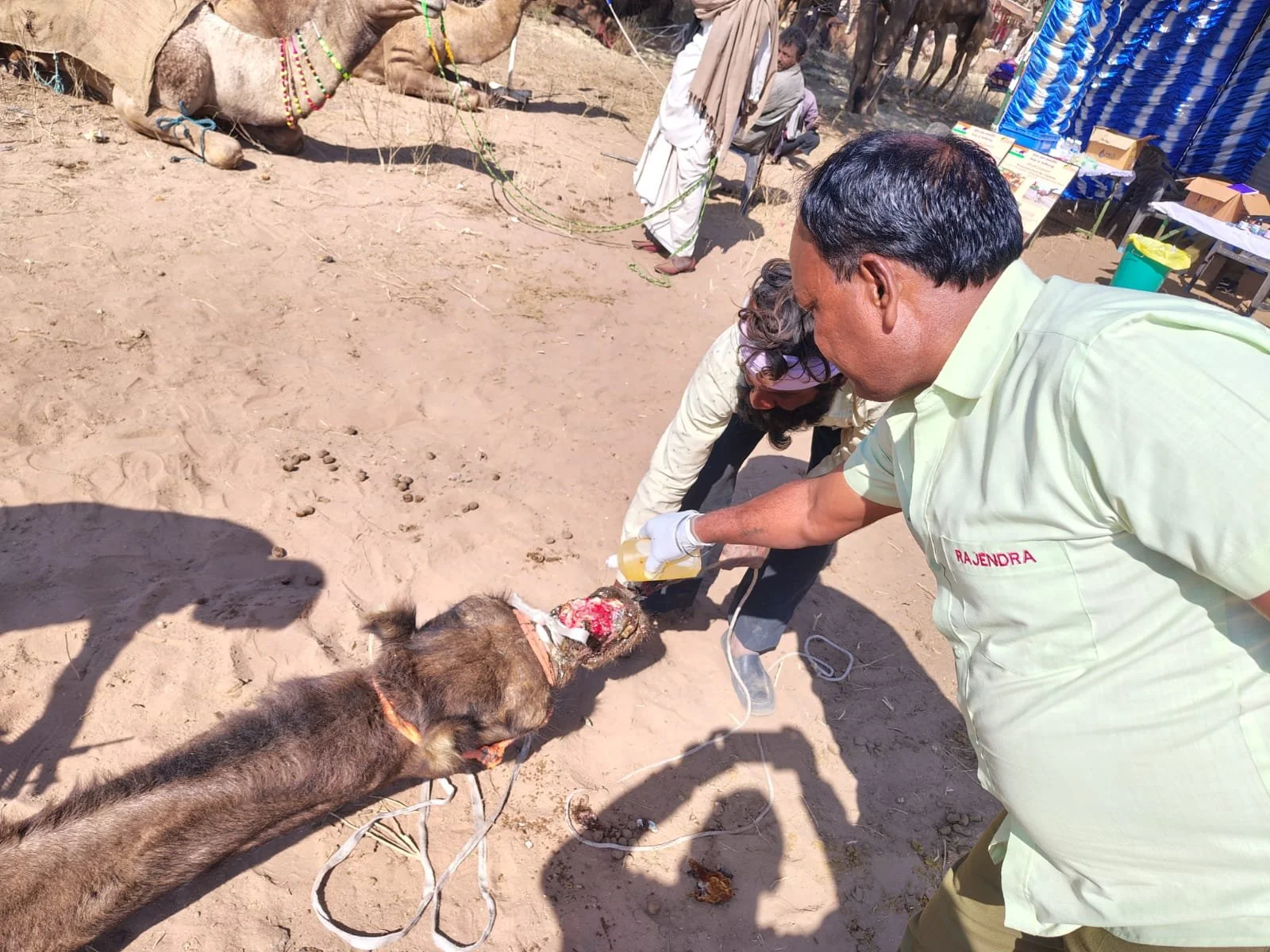
Dressing an extensive face wound
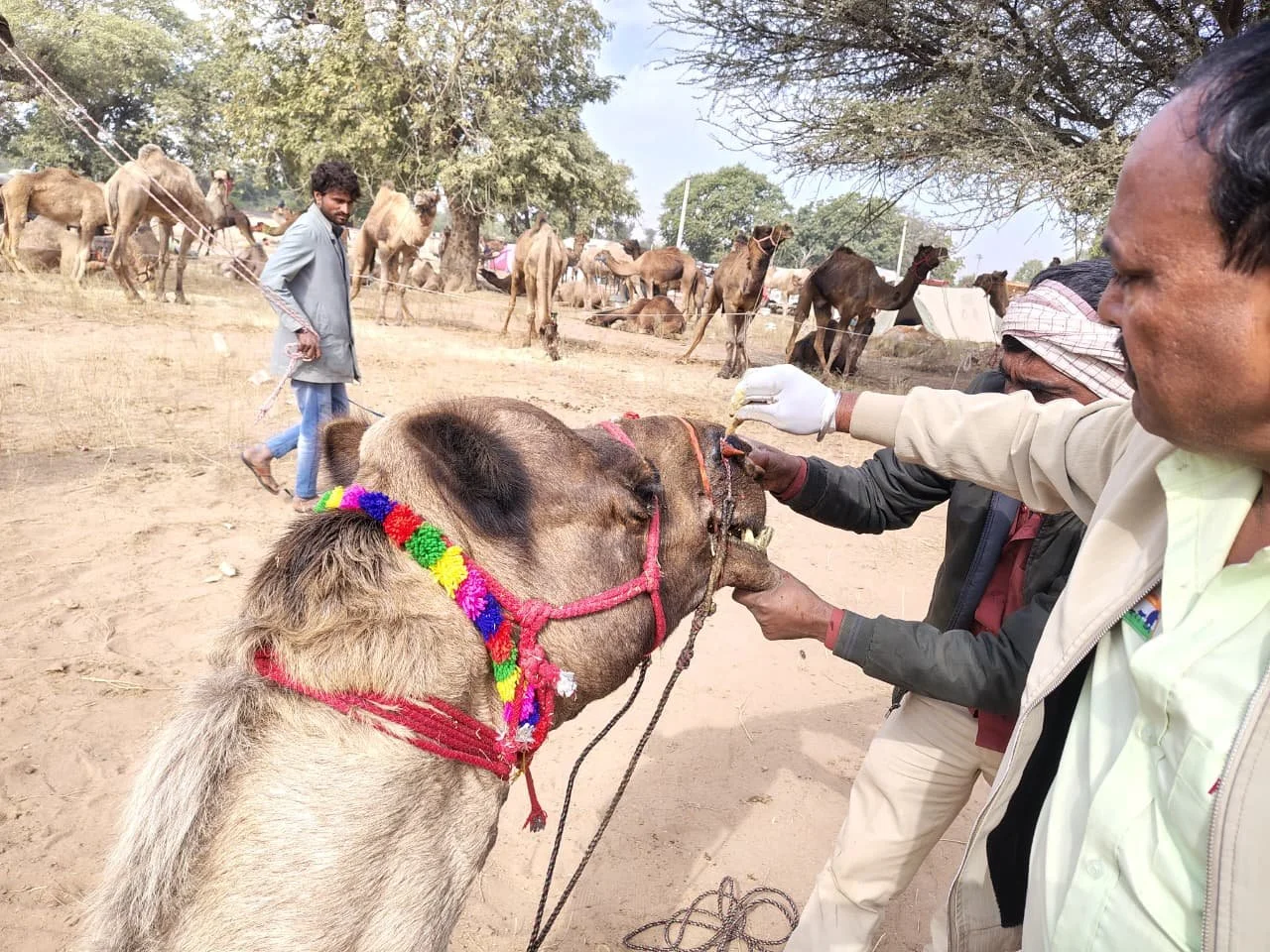
Dressing a nose peg wound by assistant, Rajendar
Case story of multiple wounds
One owner brought in a camel who had a large saddle wound and a severe chest pad wound. Our team thoroughly cleaned the wounds and provided appropriate antibiotics, pain relief, oral medication, and antiseptic ointments.
The owner was very happy with the care provided and is hopeful his camel will recover.
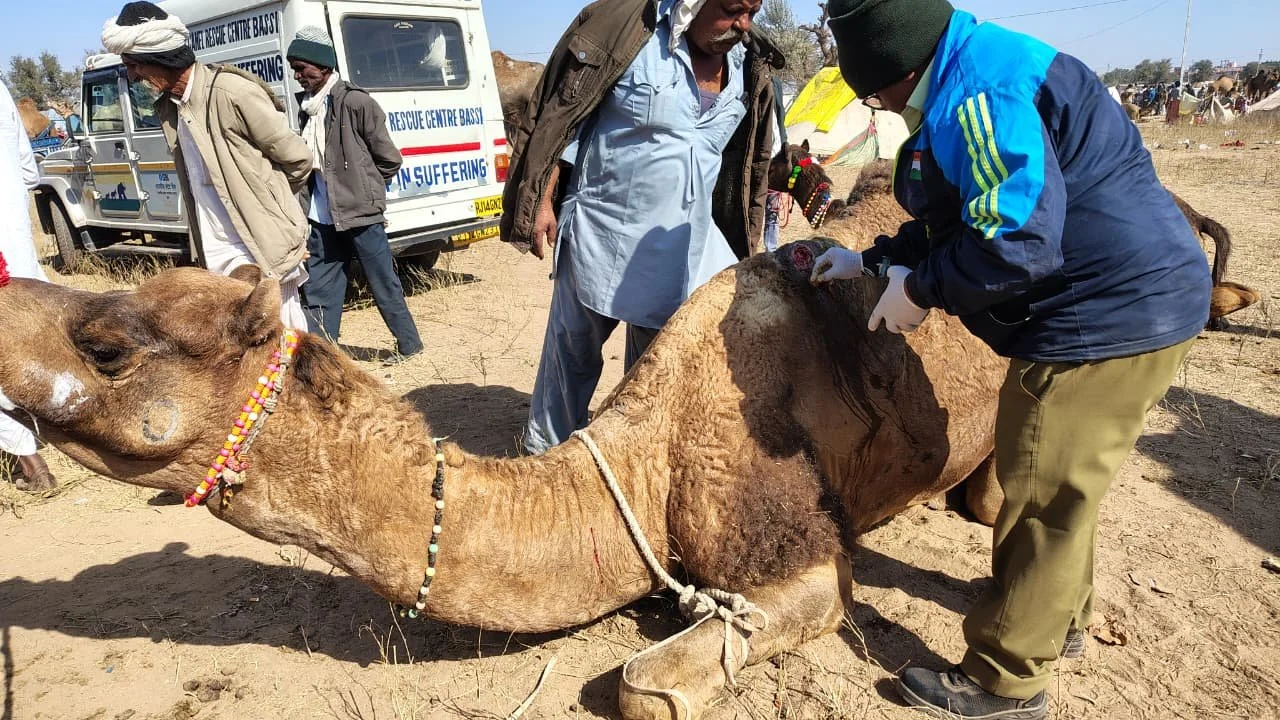
Large saddle wound filled with pus is cleaned by assistant, Bhagwan Das
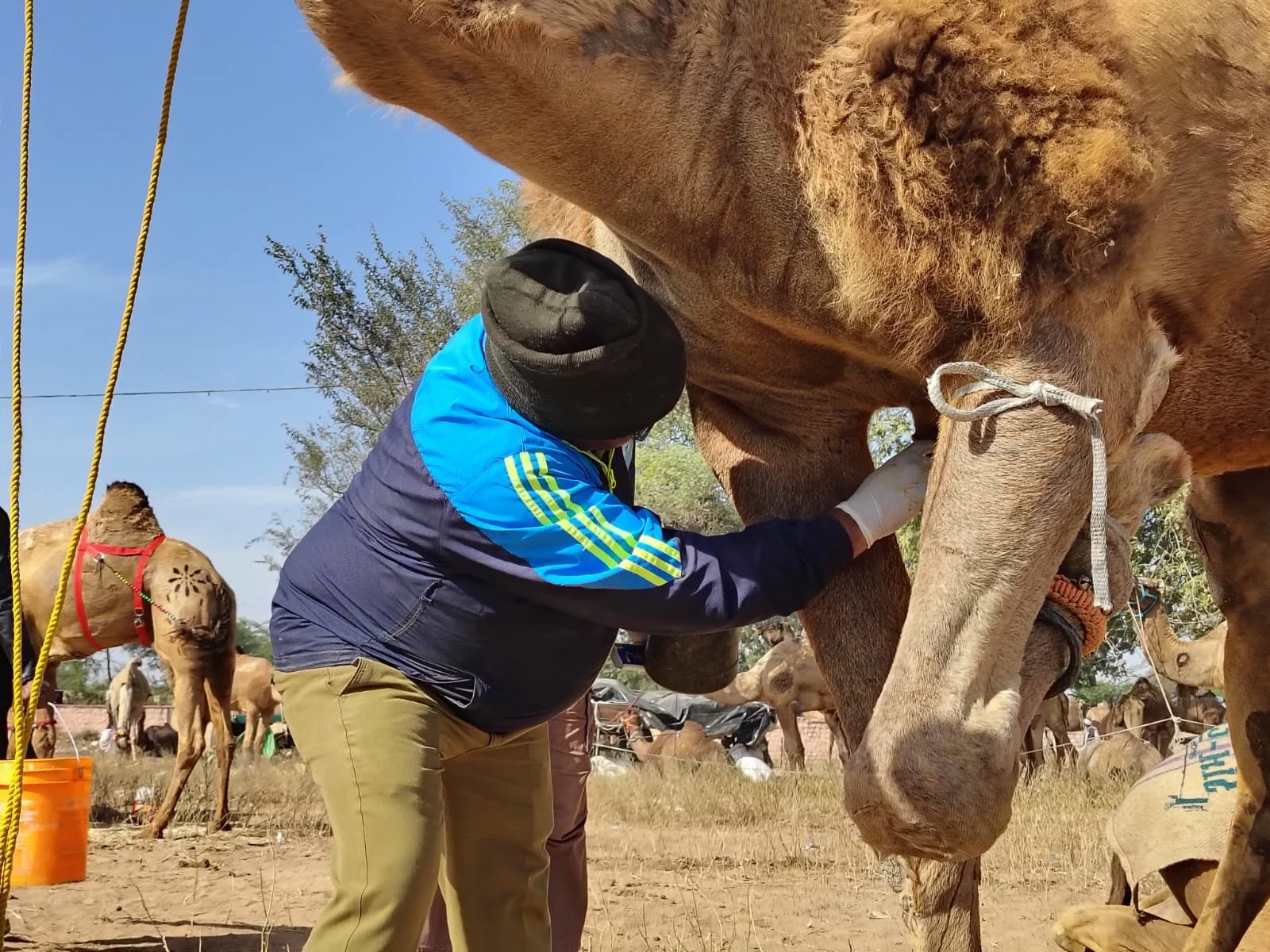
Antiseptic dressing of the chest pad wound
Keeping Camels Safe
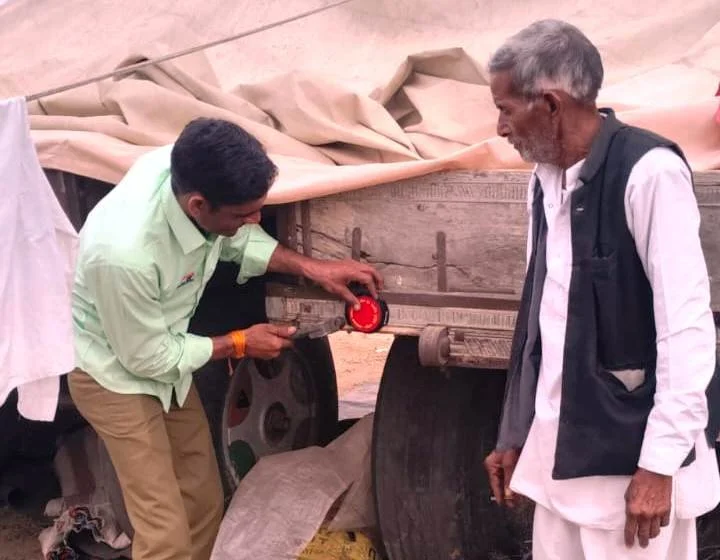
Camels can get hurt on roads, especially at night when they're hard to see. So, we fixed reflectors on 540 camel carts to make them more visible and prevent accidents.

Educating Owners
We handed out 740 leaflets to camel owners to teach them how to properly take care of their camels. These leaflets had pictures and simple explanations about topics like wound care, using reflectors, and keeping their camels healthy.
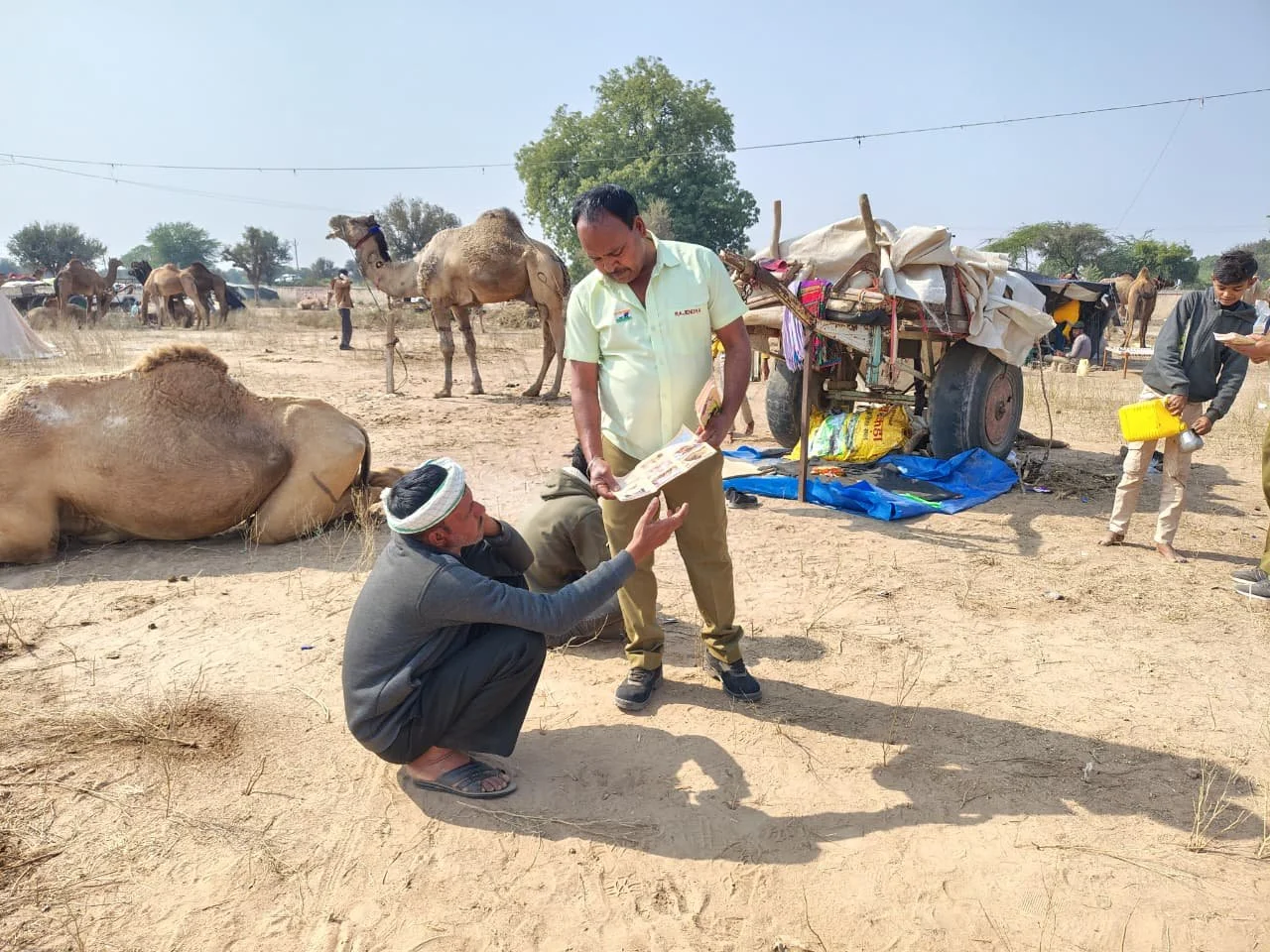
Educational leaflets were distributed to increase understanding of camel care
Numbers
Total treatments: 472
Camels with mange: 18
Camels with lameness: 11
Nose peg wounds: 102
Respiratory infection: 146
Nose pegs distributed: 670
Number of camel carts fitted with reflectors: 540
Worming medication administered: 300
Thank You
We extend our heartfelt thanks to Animal Aid Abroad for your generous support and kind donations. Sincere thanks to all the individual AAA supporters who helped to make this veterinary camp possible.
We are also deeply grateful to the Animal Husbandry Department for their valuable assistance and cooperation throughout the fair.
Closing
Our camp was a great success, and we are proud to have provided timely care to so many camels in need. We hope that our efforts will continue to improve the health, welfare, and working lives of these camels, while also supporting their owners with better knowledge and compassionate practices for the future.
The success of this camp would not have been possible without your generous support. Thank you!