treatment & welfare support assists donkeys during busy harvest season
The team at Lilongwe Society for the Protection and Care of Animals (LSPCA) have been providing practical treatment and welfare support for donkeys during the busy harvest season. During this season, donkeys are required to work longer hours and carry heavier loads than usual. This leads to a greater risk of cart- or harness-related wounds, injuries and exhaustion.
The LSPCA have also been training owners in pack saddle and humane harness making to reduce equipment-related injuries and increase donkeys’ comfort.
Introduction
During May, project activities returned to Mngwangwa, Mitundu, and Dzenza to provide welfare support for working donkeys during the harvest season. These communities depend heavily on donkeys for transporting maize and other agricultural produce, resulting in longer working hours and heavier loads at this time of year.
As donkey use intensifies, so does the risk of wounds, exhaustion, and injuries linked to poor handling and unsuitable equipment.
Field visits last month found many donkeys were engaged in demanding daily transport work. Conditions observed included cart-related wounds, bruising, harness friction injuries, parasite-related conditions, and signs of physical strain from prolonged work.
Several owners also reported donkeys returning home with unexplained injuries sustained while away from home.
In response, the project delivered treatment and practical welfare support that owners could apply immediately in their communities. Activities included mobile clinic services, wound management, owner education sessions, first aid demonstrations, and hands-on training in the making and fitting of pack saddles and harnesses.
Particular attention was given to helping owners identify the causes of injuries, improve daily handling practices, and reduce harm linked to transport work.
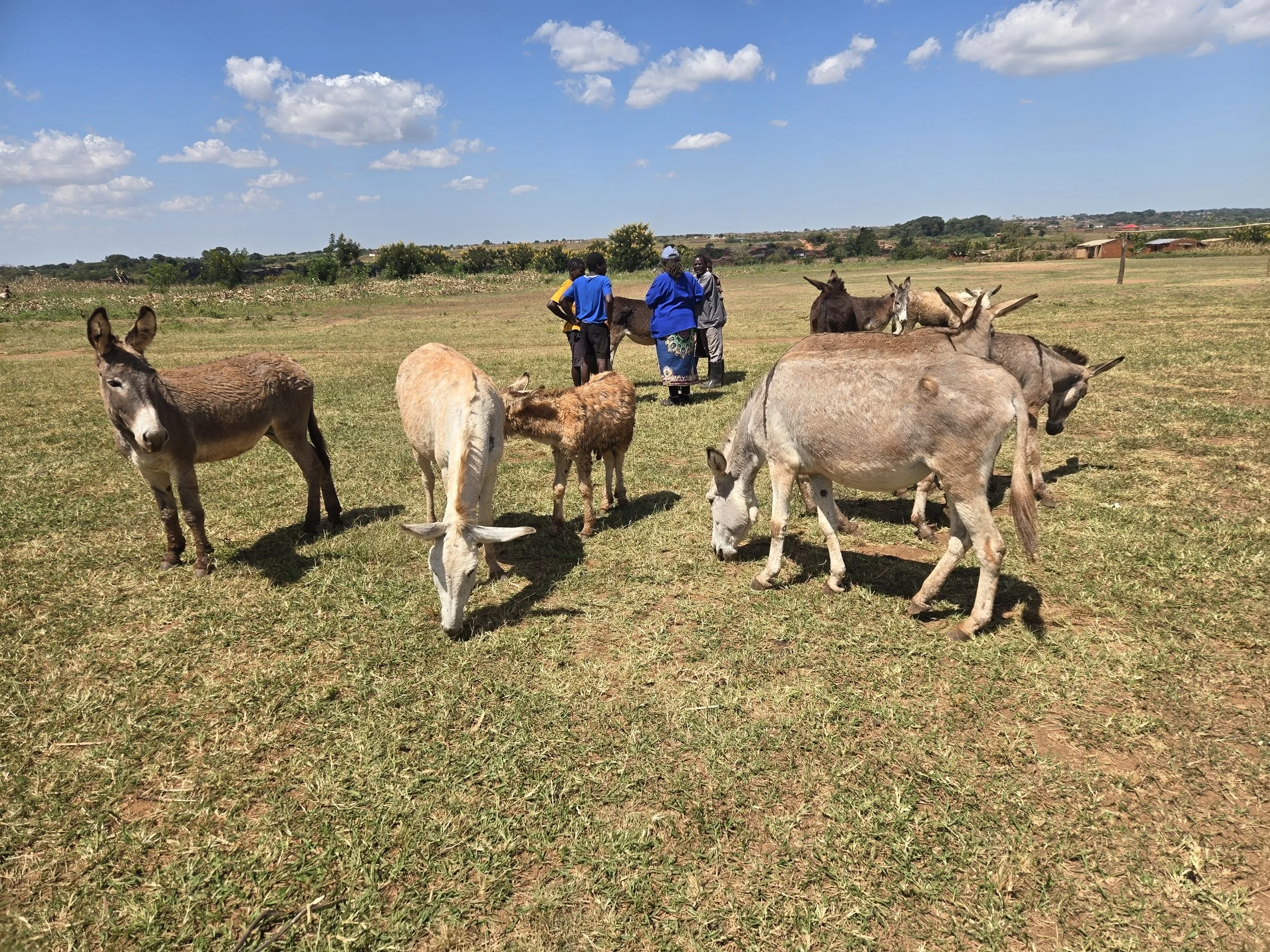
Community members and their donkeys at the Mitundu mobile clinic, where clinical treatment was provided alongside owner guidance on animal care and management.
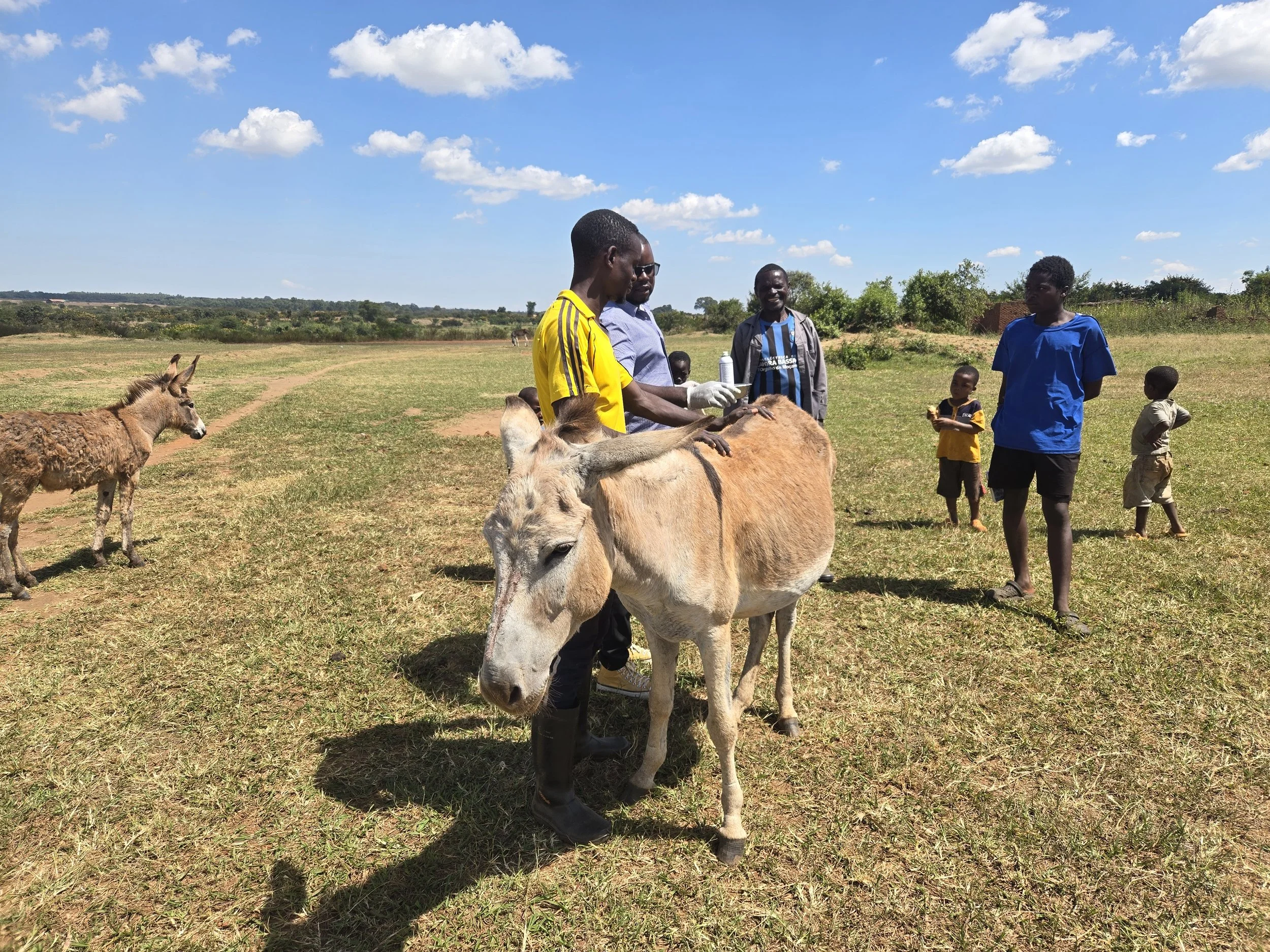
Donkey welfare awareness and community discussions.
Mobile Clinics and Field Activities
Mobile clinic visits and follow-up welfare activities were conducted in Mngwangwa and Mitundu, reaching a total of 84 donkeys. Of these, 46 received treatment and 38 underwent general health assessments with management guidance for owners.
During the visits, the most common conditions observed were wounds, parasite burden, and physical strain linked to increased workloads during the harvest season. Treatment provided included wound cleaning and dressing, deworming, and supportive care for animals requiring closer monitoring.
Alongside treatment, owners took part in practical discussions on welfare management during periods of heightened donkey use. Sessions covered workload management, hydration, rest periods, wound monitoring, and recognising early signs of injury before conditions become severe.
Guidance was also provided on humane handling and the importance of daily checks during busy harvest periods when animals are working for extended hours.
Additional focus was given to first aid following owner reports of donkeys occasionally returning home with injuries. Owners were guided on wound cleaning, monitoring healing, identifying signs of infection, and knowing when to seek further treatment.
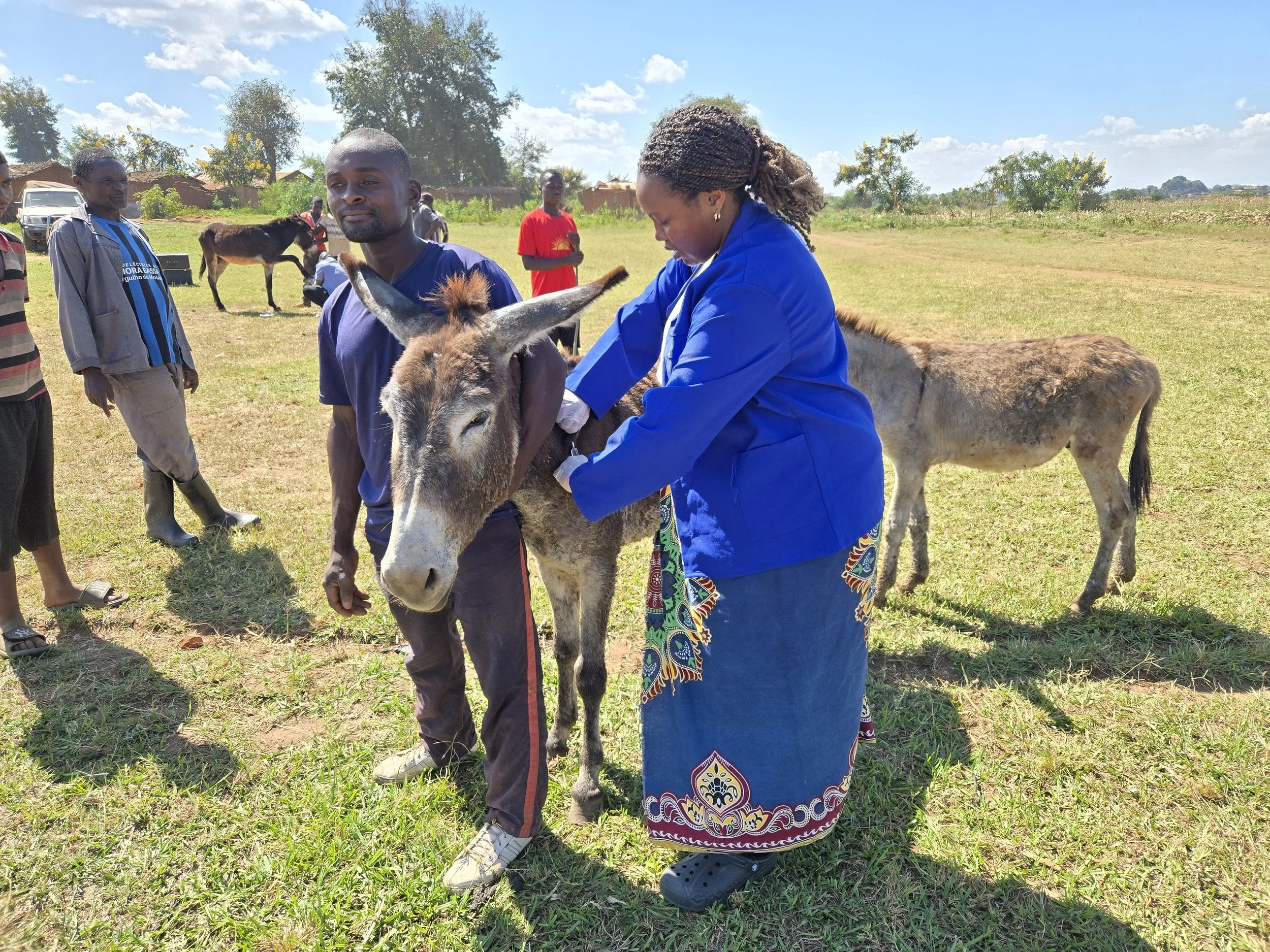
Administrating pain relief following wound treatment.
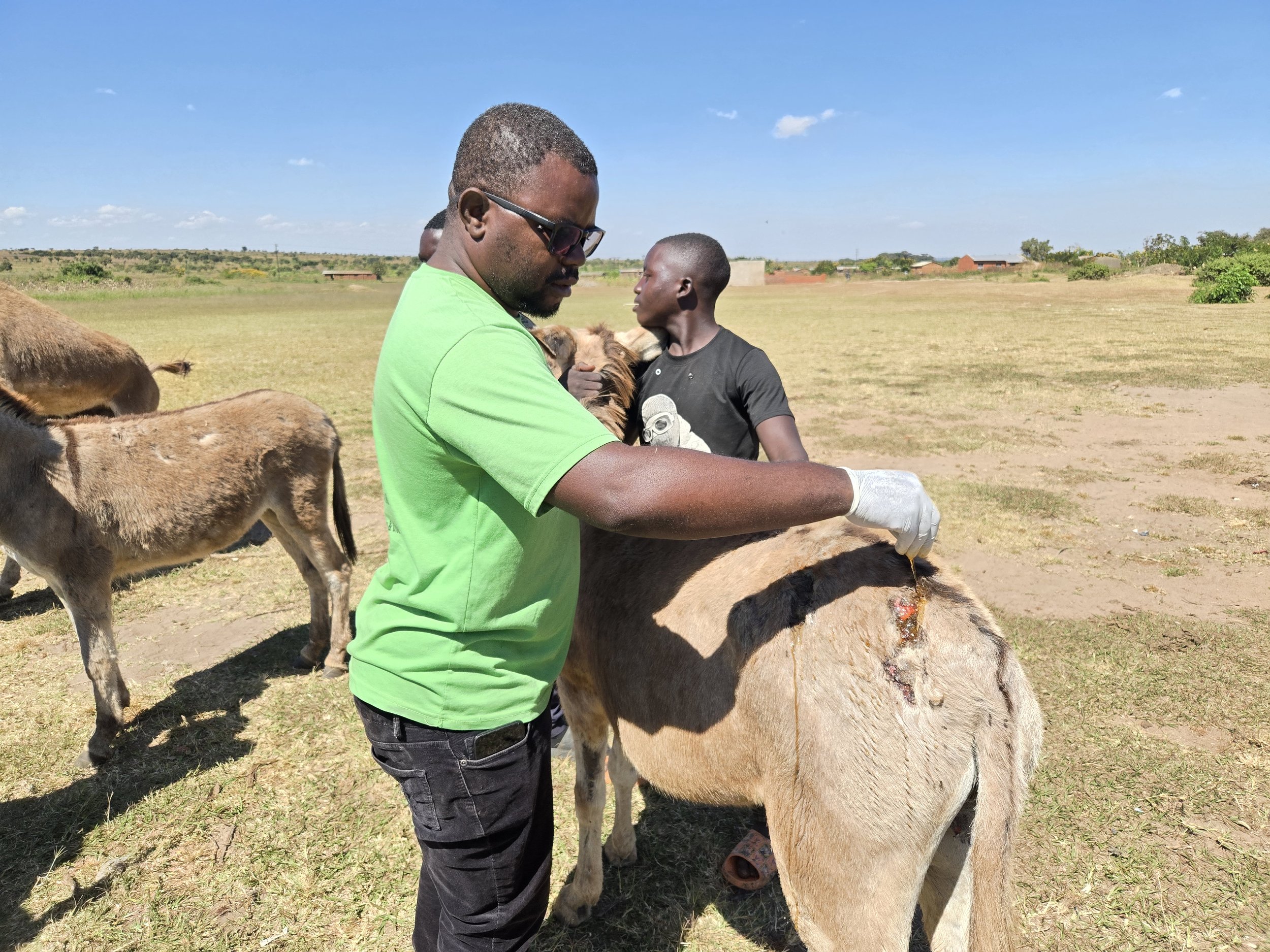
LSPCA staff treating wounds identified during field activities.
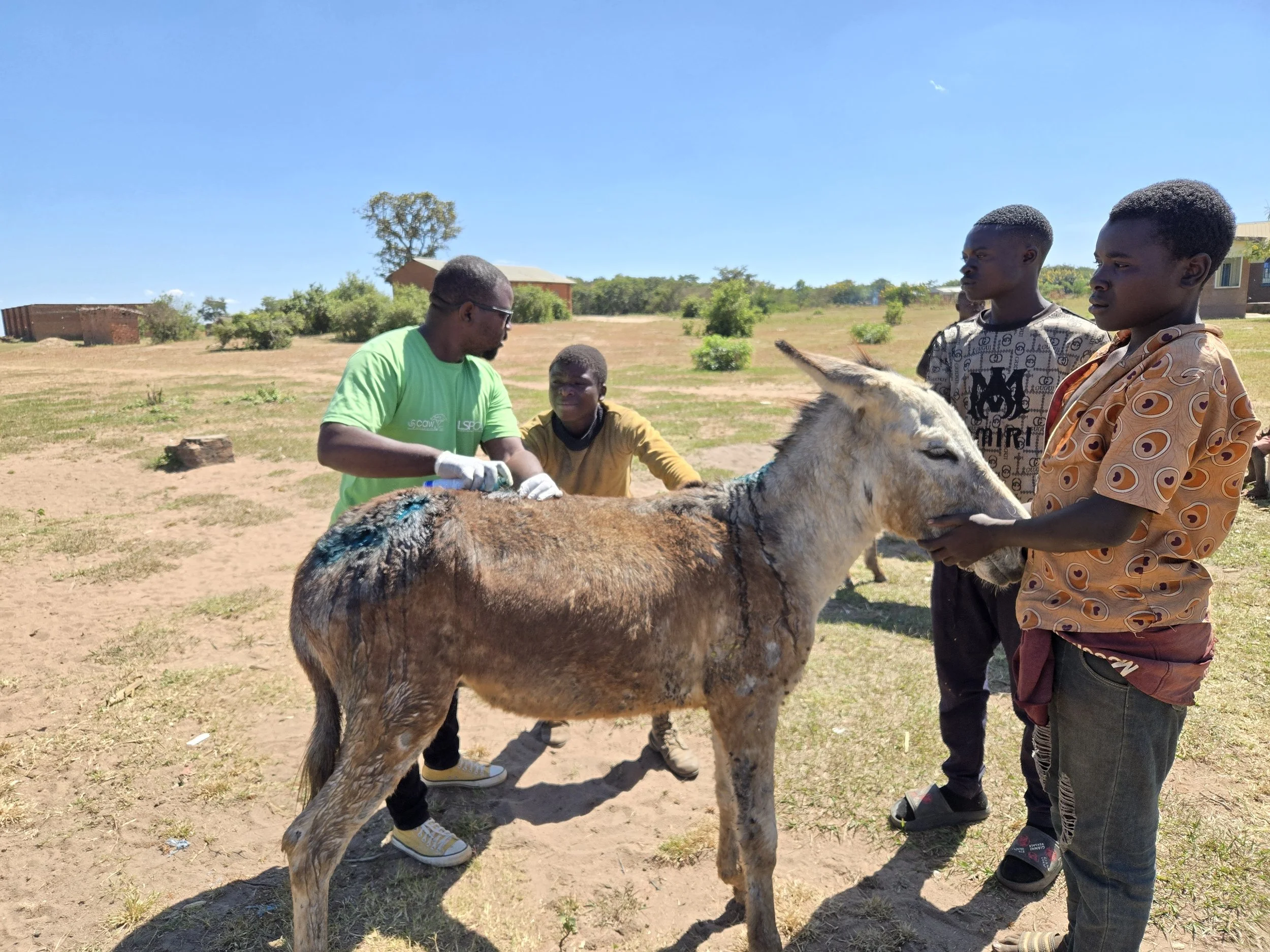
Practical demonstration and engagement with donkey owners.
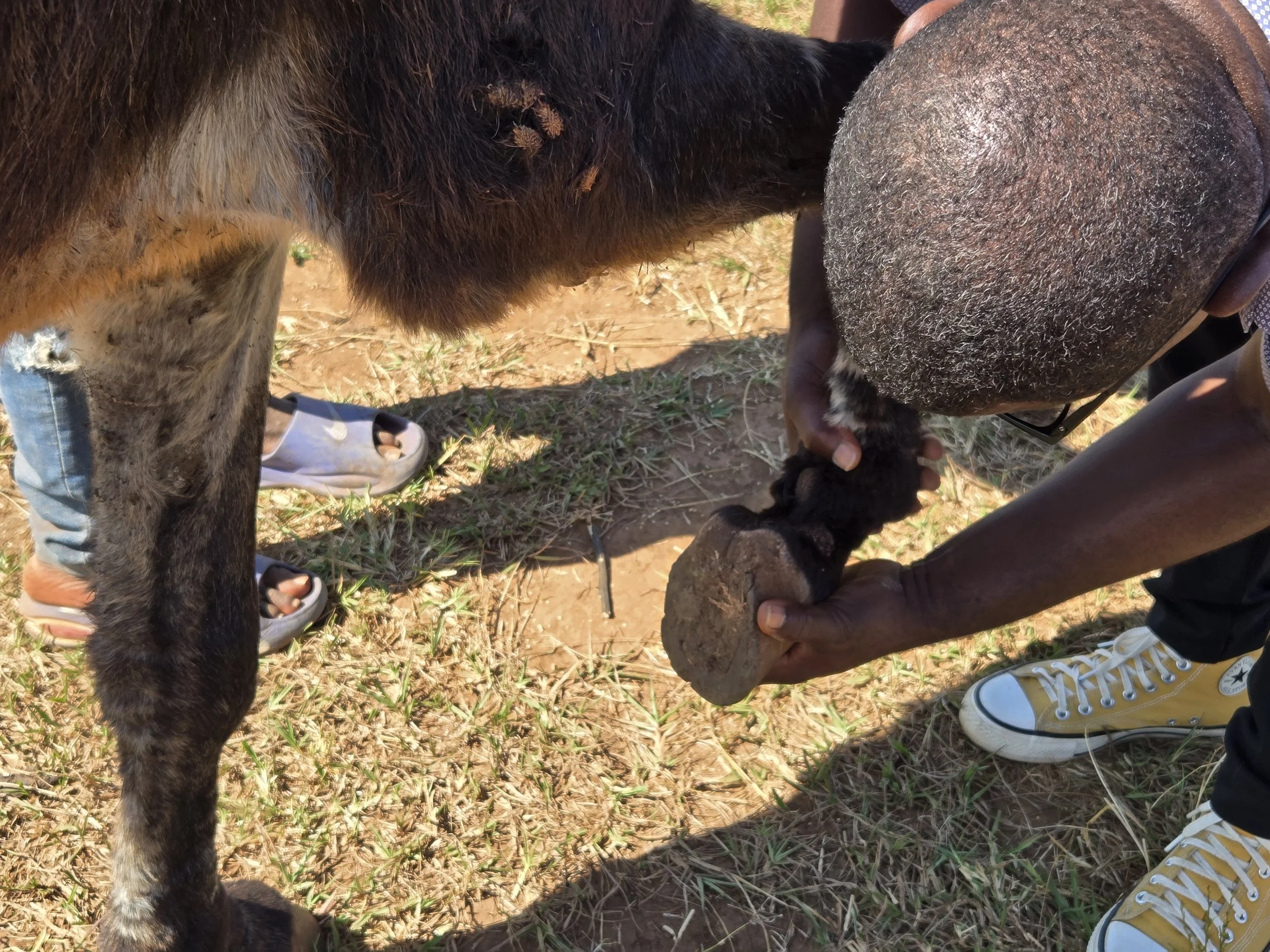
Lameness assessment and mobility evaluation.
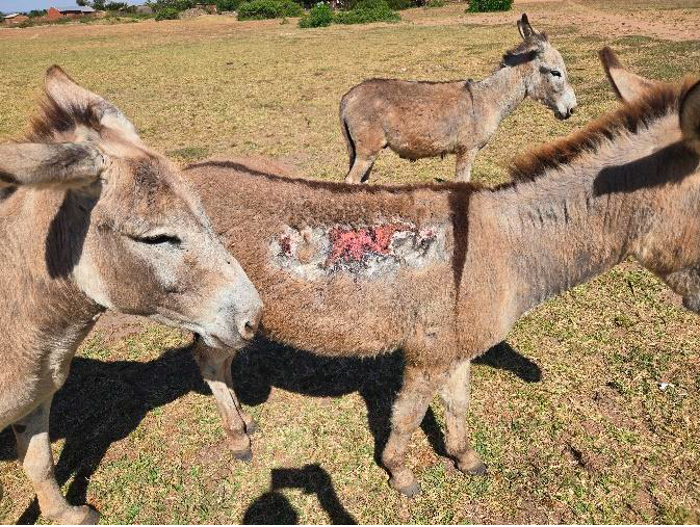
Case Study: Burn-Related Wound in Mngwangwa
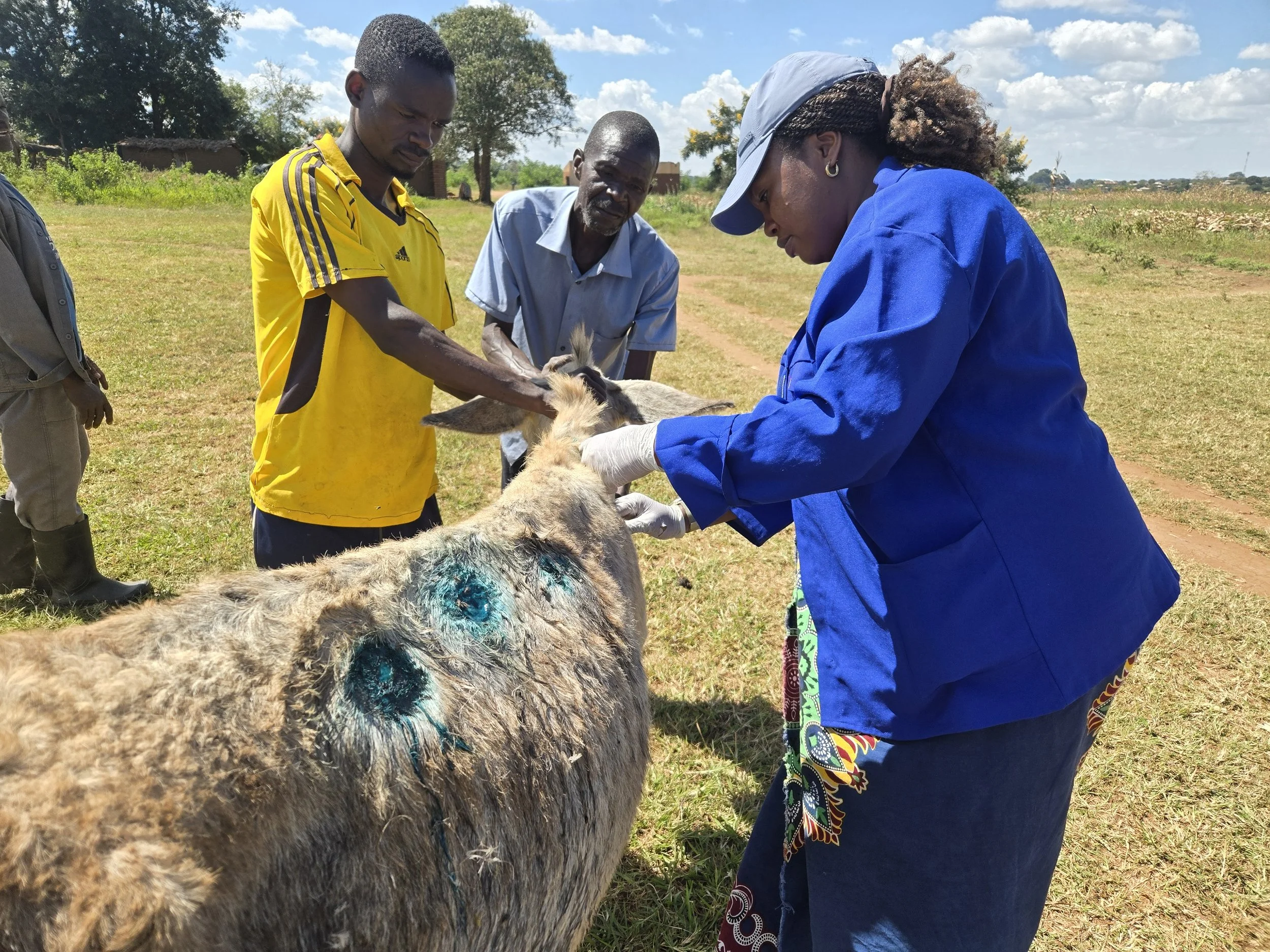
One donkey examined during field activities in Mngwangwa presented with a large wound along the right flank. At the time of assessment, the wound was beginning to dry and show early signs of healing, though the extent of tissue damage indicated a serious prior injury.
The owner reported that the donkey is believed to have been injured after hot water was poured on her while she was away from home. This type of incident can occasionally occur when animals do not have direct supervision.
The wound was cleaned and treated during the visit. At a follow-up check, healing was progressing well with no signs of infection, and the donkey had returned to light activity.
Guidance was provided to the owner on continued wound care, monitoring, and minimising irritation to support her full recovery.
The case also provided an opportunity for broader discussion with community members on first aid, the humane treatment of working animals, and the importance of acting quickly when injuries occur.
Assessment of the burn-related wound during initial examination.
The donkey following cleaning and treatment of the affected area.
Harness and Pack Saddle Making
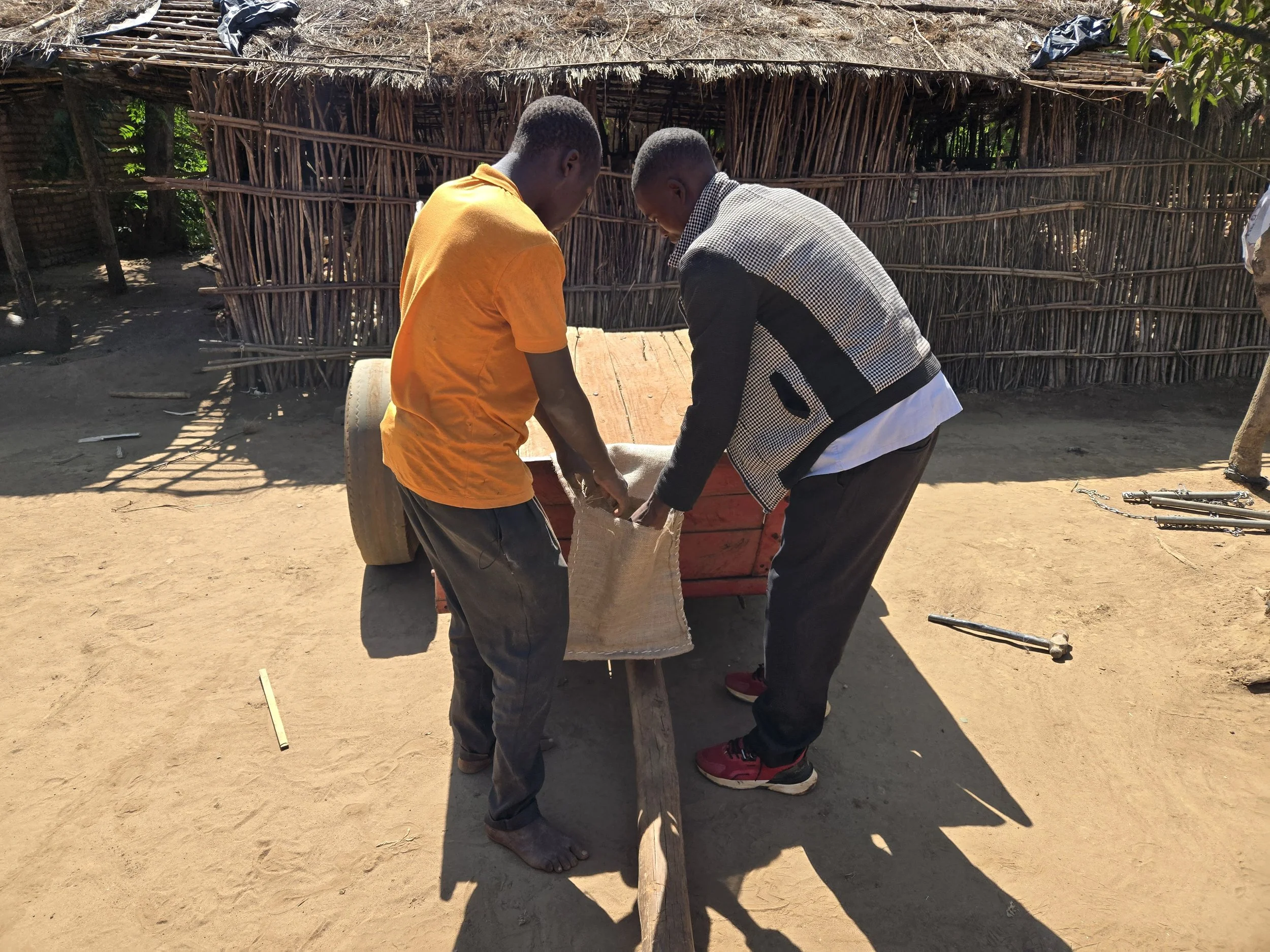
A field visit was conducted in Dzenza to support making pack saddles and harnesses for working donkeys. The community comprised several donkey owners managing nine donkeys used primarily for transport work during the harvest season.
The activity was driven by the interest of a lead farmer who raised concerns about cart-related wounds and the need for safer alternatives.
As the community did not previously have pack saddles or properly made harnesses, this visit provided an important opportunity to introduce equipment designed to reduce injuries caused by friction, pressure, and uneven load distribution.
During the visit, four donkeys were treated for neck wounds associated with cart work. One donkey was noticeably shorter than those it worked alongside, contributing to increased pressure and friction when pulling the cart. This issue was directly addressed through the fitting guidance provided.
Practical demonstrations covered harness fitting, load balancing, identifying pressure points, and checking for signs of rubbing or discomfort.
The team completed two pairs of harnesses and five pack saddles, with further harnesses still needed for the remaining donkeys in the community. These could not be finished within the available time, so a follow-up visit to Dzenza is planned for June to complete the humane equipment and continue supporting the community.
Preparation of pack saddles and harnesses during the Dzenza visit.
A local craftsman fitting a pack saddle.
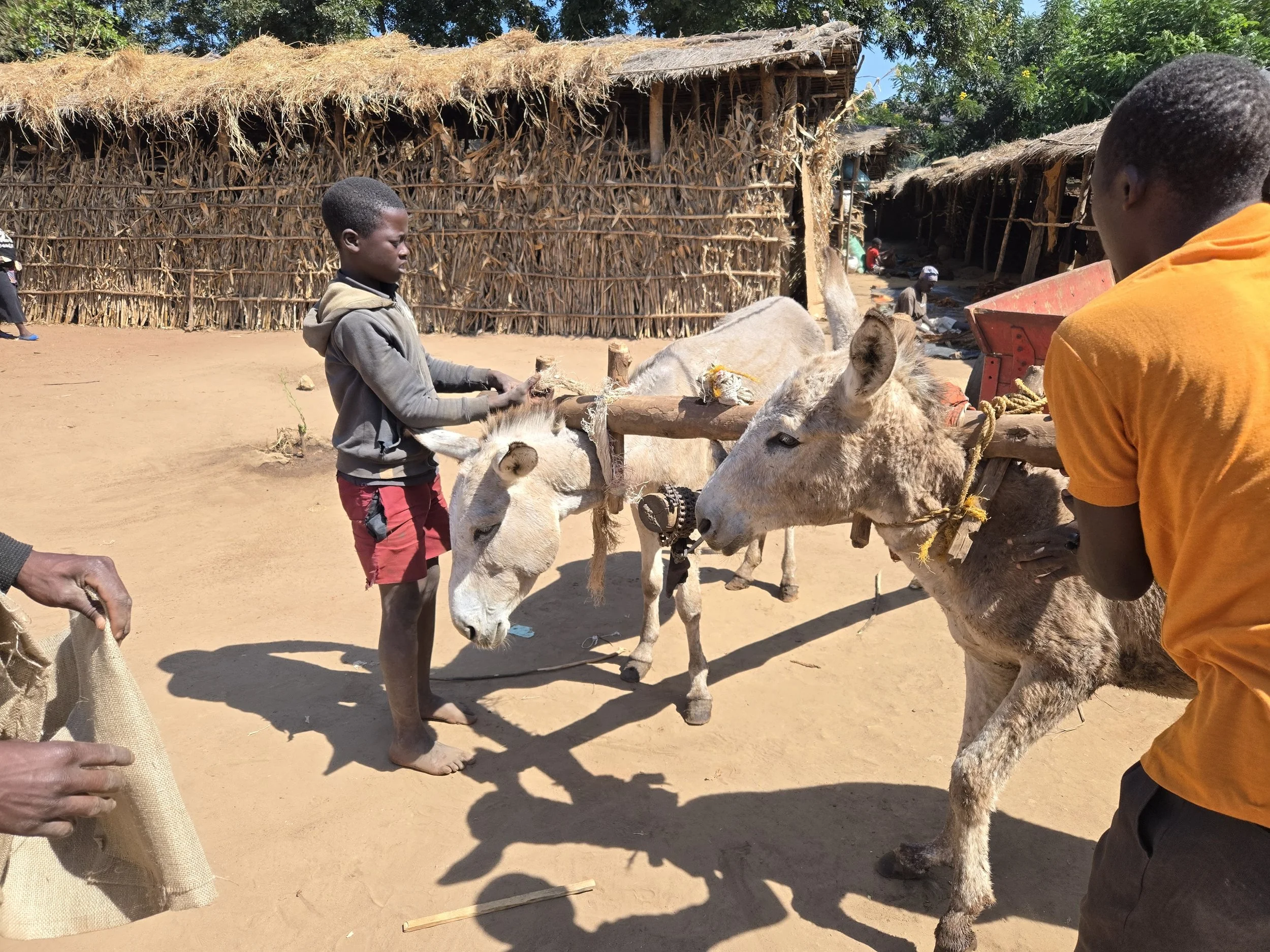
Demonstrating cart-related injuries associated with ox yoke use.
Challenges
The harvest season continues to place heavy demands on working donkeys across the project areas. Increased workloads contributed to recurring cases of strain, wounds, bruising, and harness-related injuries throughout May.
Unexplained injuries sustained while donkeys are away from home remained a concern during this period. Community discussions indicated that some animals may be exposed to unsafe conditions or mistreatment outside direct owner supervision, making prevention difficult.
The team continues to address this through first aid training and community education focused on bystander response, encouraging community members to act if they encounter an injured animal and to alert owners promptly. Building informal reporting networks within communities, where neighbours look out for animals working nearby, remains part of the longer-term approach to reducing harm that occurs outside direct owner supervision.
Despite these challenges, the project maintained targeted welfare support in areas where donkey use was highest during the harvest period.
Conclusion
May’s activities demonstrated the continued physical demands placed on working donkeys during the harvest season in Mngwangwa, Mitundu, and Dzenza. Returning to these communities at a time of peak donkey use allowed the team to assess welfare conditions, provide treatment, and work directly with owners on practical ways to reduce transport-related injuries.
The value of combining clinical care with hands-on owner training was clear throughout the month, encompassing wound care, first aid, humane handling, workload management, and harness fitting. The introduction of pack saddles and harnesses in Dzenza offered a meaningful step toward reducing equipment-related injuries and improving comfort for working donkeys in that community.
Follow-up visits will continue in June, with a confirmed return to Dzenza to complete remaining harness work and monitor the donkeys treated last month.
With your fantastic support, LSPCA will continue to focus on treatment, practical welfare support, owner education, and early response to injuries in order to reduce preventable harm and support the welfare of working donkeys.