combining vet care, Education & humane equipment improves donkey welfare in lilongwe
The Lilongwe Society for the Protection and Care of Animals (LSPCA) spent July treating injured working donkeys, increasing farmers’ knowledge about humane husbandry and conducting harness-making workshops. This important combination of activities is reducing injuries in donkeys and enhancing their long-term welfare.
Introduction
During July, the LSPCA Donkey Welfare project expanded its activities to the communities of Kanjedza, Mponela and Mitundu, where working donkeys continue to play a vital role in supporting rural livelihoods.
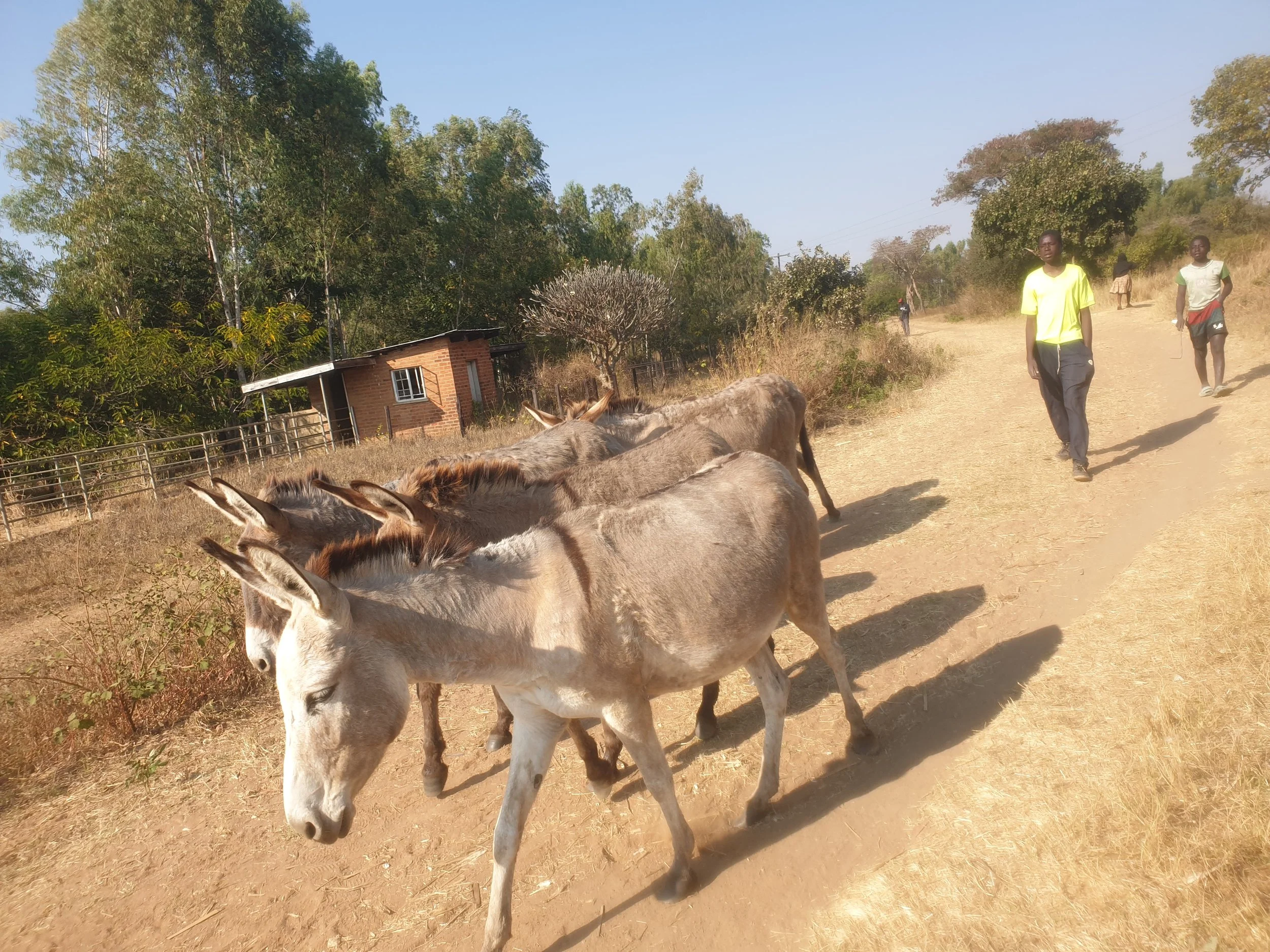
This period falls just after harvest, when farmers begin preparing their land ahead of the next cropping season. Planting has not yet started, but land preparation itself is labour-intensive and increases the demand for donkey-powered transport. Donkeys were widely used to haul farm inputs, transport construction materials, and pull heavily-loaded carts, exposing them to prolonged working hours and increased physical demands.
LSPCA visited these communities to assess the welfare of working donkeys, provide veterinary care, and strengthen owners' knowledge of husbandry and humane handling. The visits also extended the project's reach to new donkey-owning communities in the area.
Activities during the month combined mobile veterinary clinics, treatment of injured animals, harness-making training, and community awareness on preventing work-related injuries. Pairing clinical care with practical training is intended to reduce preventable injuries while building longer-term welfare practices among donkey owners.

Mobile Clinics & Field Activities
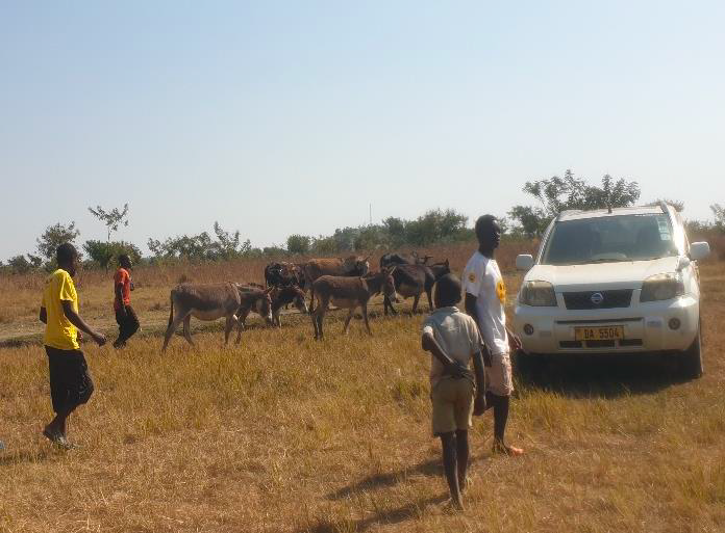
Two mobile veterinary clinics were held in Kanjedza and Mponela, where the LSPCA team examined and treated working donkeys used mainly for transporting agricultural produce, farm inputs, and household goods.
A total of 74 donkeys were clinically examined, revealing a range of welfare concerns. The most common conditions were friction wounds from poorly-fitted harnesses and wooden yokes, and pressure sores from pulling overloaded carts.
The team also treated bite wounds - mainly in male donkeys competing for females during the mating season - and burns from contact with hot ashes around homesteads. These findings reflect the combined effect of heavier seasonal workloads, unsuitable equipment, and limited awareness of proper husbandry.


Veterinary interventions included wound cleaning and dressing, and the administration of antibiotics and parasite control to 55 donkeys, while 19 donkeys received general health assessments only.
Animals with more severe injuries received additional treatment and follow-up recommendations to support recovery and reduce the risk of infection.

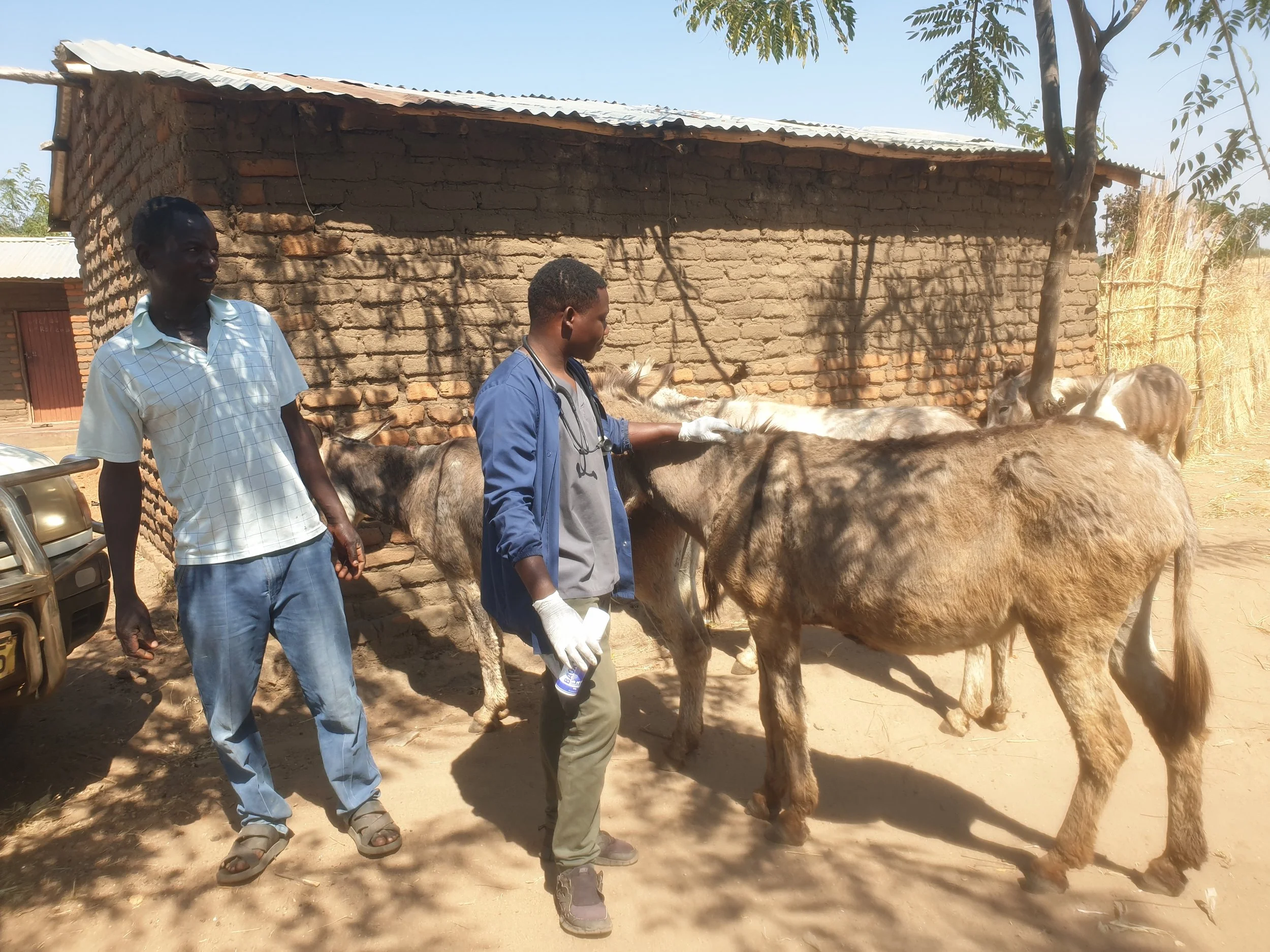
Farmer education was a central part of every mobile clinic. Practical demonstrations covered correct restraint techniques, routine harness inspection, early identification of wounds, and basic first aid owners could apply before veterinary assistance arrived.
Discussions also covered workload management, adequate nutrition, access to clean drinking water, and allowing injured animals sufficient rest before returning to work.

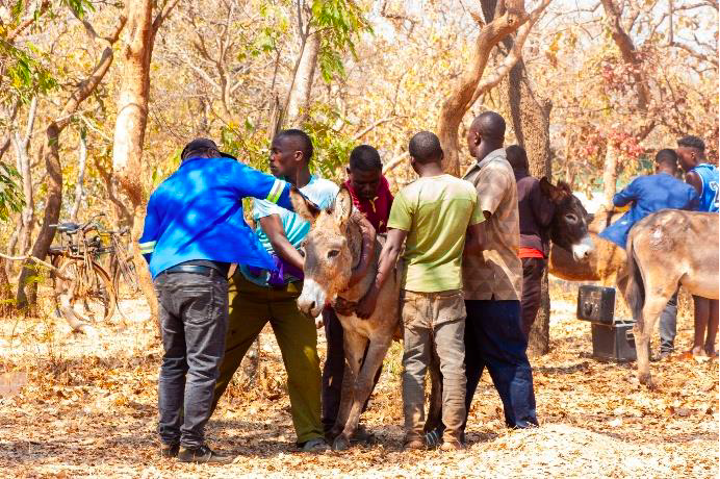
The clinics were well received, with many farmers expressing appreciation for the veterinary services and welfare advice provided. The turnout reflected how much local households depend on working donkeys and the continuing demand for accessible mobile veterinary services in this area.
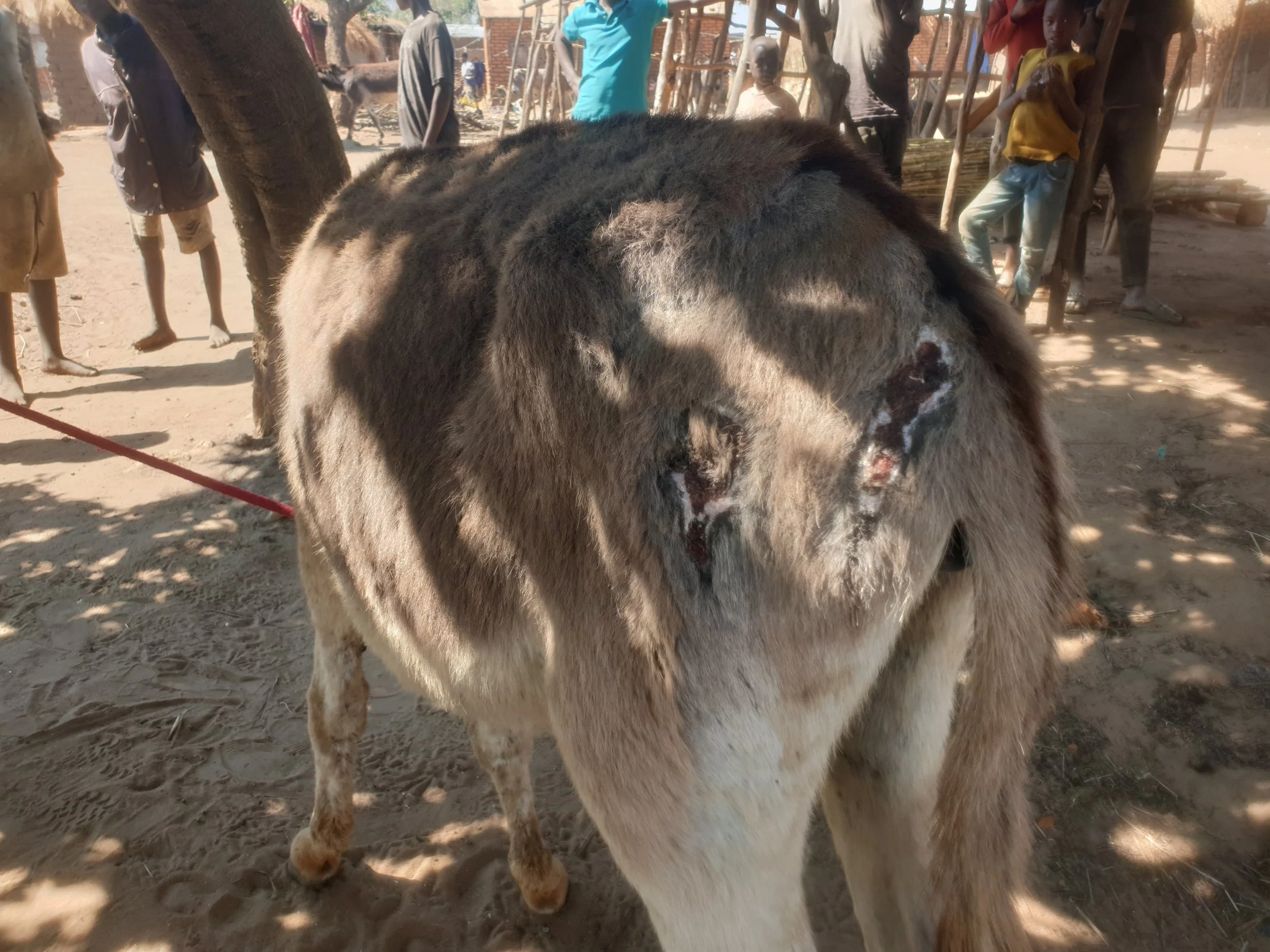
Case Study: Harness-Related Neck Wound Caused by Heavy Work
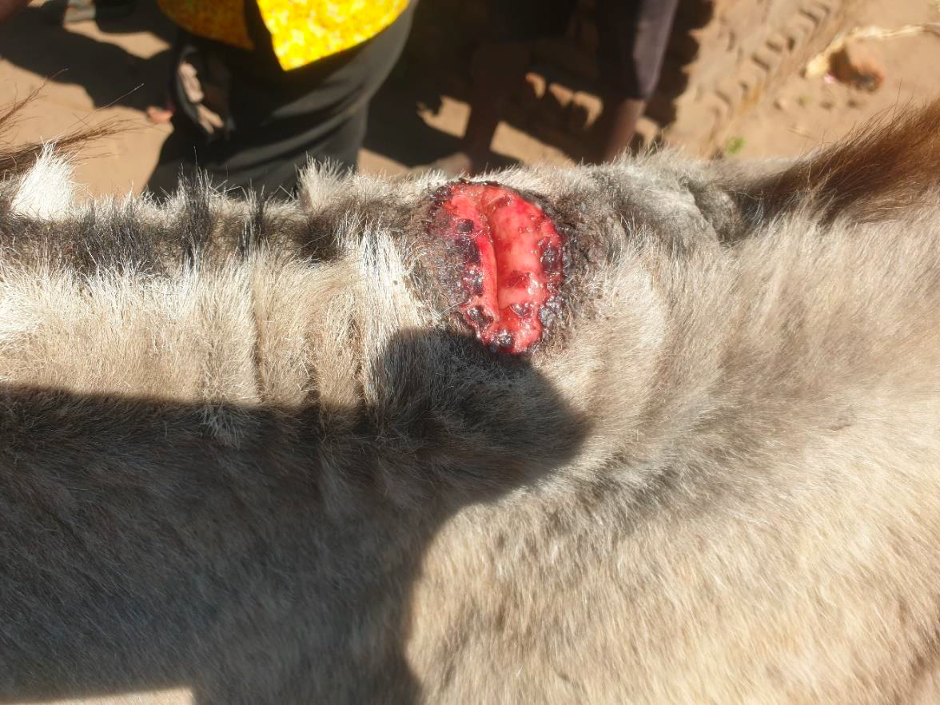
During field activities in Mponela, the veterinary team examined a working donkey with a deep, fresh wound on the crest of her neck. The injury developed from continuous friction between the wooden yoke and the donkey's neck while pulling heavy loads without a properly-fitted harness.
According to the owner, the donkey had been working extended hours transporting heavy loads between farms. The lack of harness padding and uneven load distribution created excessive pressure on her neck, eventually causing skin damage and an open wound.
The wound was thoroughly cleaned, disinfected, and treated to reduce the risk of infection and support healing.
The owner was advised to rest his donkey until recovery was advanced, and to avoid using the existing yoke without modifications. Practical guidance was also given on proper harness fitting, balancing cart loads, and checking regularly for signs of rubbing or pressure points.
This case became a practical teaching example for other farmers at the clinic. Using the injured donkey to illustrate the consequences of poor equipment, the team encouraged owners to adopt improved harness designs and inspect their animals' equipment routinely.
Harness Making
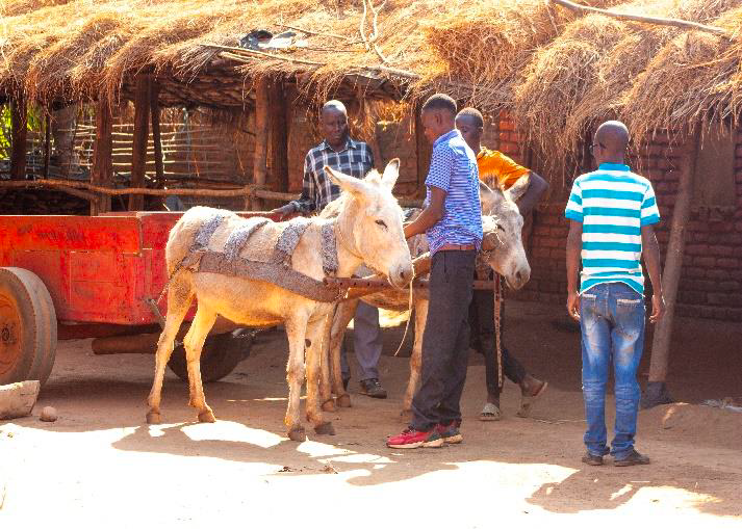
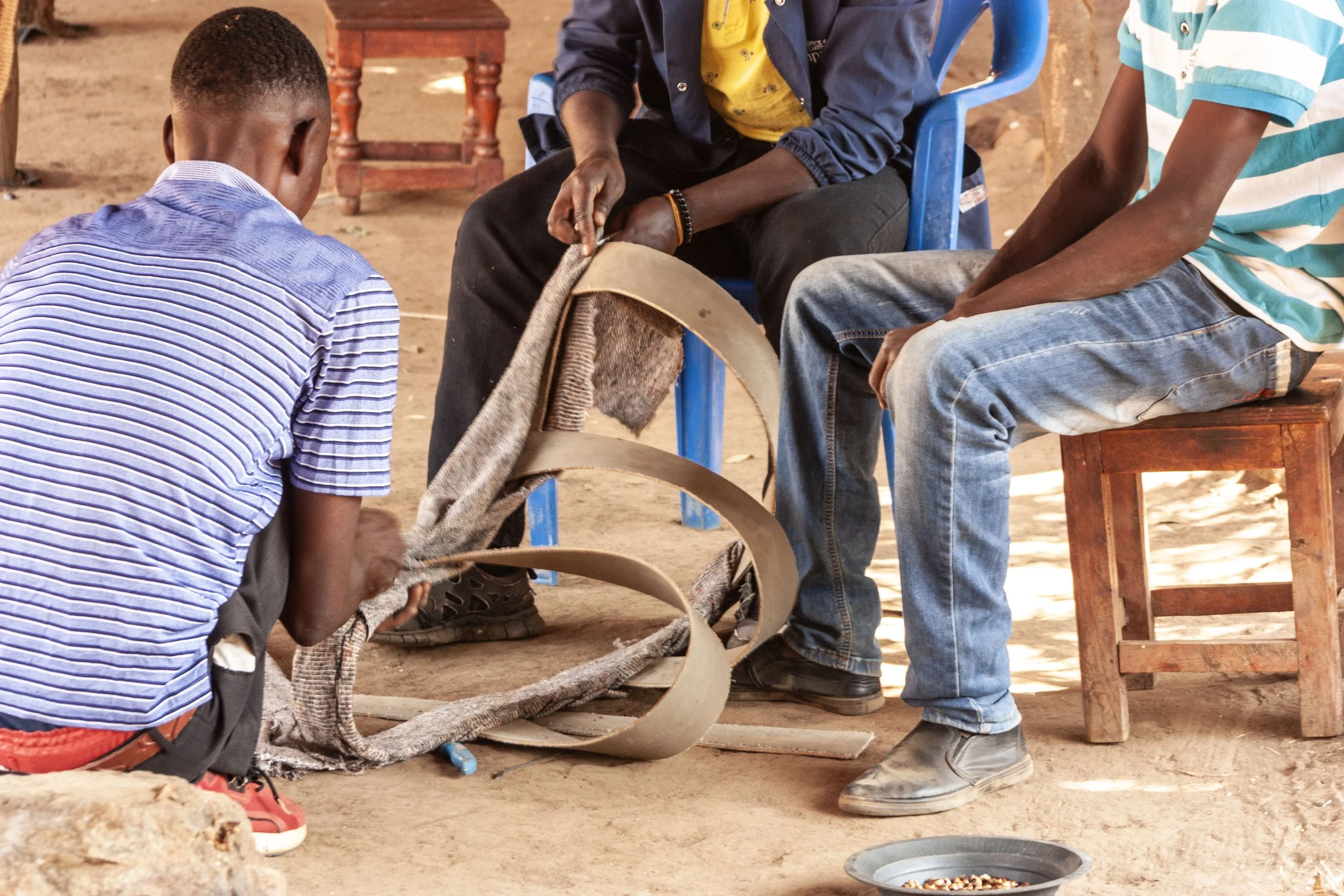
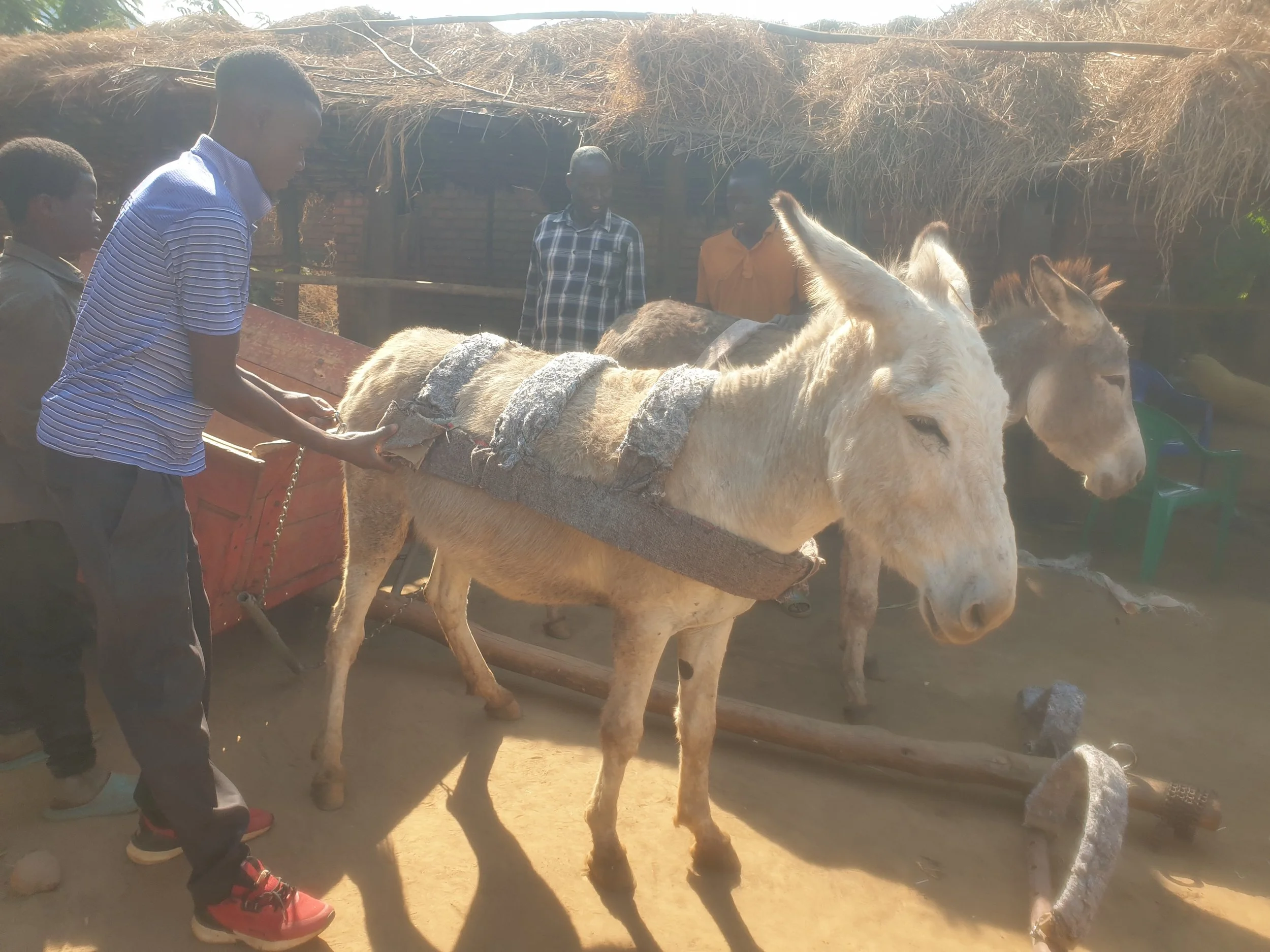
Following the mobile veterinary clinics, the LSPCA team carried out a follow-up visit to Mitundu for harness-making activities introduced during previous visits. The session brought together donkey owners interested in producing simple, affordable harnesses from locally-available materials.
During the training, farmers were taken through each stage of harness making, from selecting suitable materials and measuring the donkey correctly, to cutting, assembling, and fitting the harness.
Emphasis was placed on distributing weight evenly across the animal's body to reduce friction and pressure around the neck, shoulders, and chest, and on inspecting harnesses regularly for wear.
The sessions generated strong interest, with several owners acknowledging that they had previously used traditional equipment without understanding its effect on their animals.
By the end of the training, participants showed improved confidence in fitting harnesses correctly and were willing to share the skill with other donkey owners in their communities.

Challenges
July's activities presented a number of operational and welfare challenges. The land preparation period increased demand for donkey labour, and the resulting workload contributed to the high number of harness and yoke-related wounds treated during the month. These cases required additional treatment time and reinforced the need for continued owner education on equipment use and workload management.
Although community participation during the mobile clinics was encouraging, some donkey owners were unable to attend because they were occupied with farming activities. This limited the project's ability to reach every animal requiring treatment, indicating the need for continued collaboration with community leaders to improve mobilisation and ensure that clinic dates are communicated well in advance.
The LSPCA also continued to encounter management practices that contribute to preventable injuries. In several cases, farmers delayed seeking veterinary treatment until wounds had become severe, while others continued using damaged harnesses because of limited access to suitable replacement materials.
Despite these challenges, the LSPCA successfully delivered planned veterinary services, welfare education, and harness-making activities across the target communities. The strong interest shown by donkey owners provides a solid foundation for expanding welfare interventions in future outreach activities.
Conclusion
July's activities reinforced the importance of combining veterinary treatment with practical owner education to improve the welfare of working donkeys. Mobile clinics provided timely treatment for injured animals while giving the project team an opportunity to engage directly with owners on the causes of common welfare problems observed in the field. The high number of harness-related wounds confirmed that unsuitable working equipment remains one of the major challenges affecting donkey welfare in these communities.
The follow-up visit for harness-making activities in Mitundu marked an important achievement last month. Farmers gained practical skills that will help them produce and maintain better-fitting harnesses, reducing the likelihood of friction injuries and improving the comfort of working donkeys. The positive response from community members also showed an increasing willingness to adopt improved animal welfare practices when provided with practical demonstrations and continued technical support.
Thanks to your kind donations, the LSPCA will continue to build on this progress and ensure working donkeys in Lilongwe become healthier and happier over time.