Transforming Suffering into Healing: Donkey Welfare in Tanzania’s Gold Mines
Animal Aid Abroad, together with our local partner Lake Zone Animal Welfare Organization (LAZAWO), is leading vital progress for working donkeys in Tanzania’s gold mines. Thanks to your incredible support, nearly 500 donkeys received veterinary care in February, turning suffering into healing and invisibility into dignity.
With your incredible support, they reached nearly 500 donkeys during February.
Background Summary
February was another intensive month of outreach in Geita’s six gold mines. With your support, LAZAWO attended to a wide range of conditions caused by heavy workloads, harsh terrain, cruelty-related injuries, and respiratory and digestive disorders linked to the wet season.
The team provided follow-up care for previously treated donkeys and carried out emergency rescues for animals requiring specialized attention. Among them was Mgasa, a foal with a severe fracture, now receiving compassionate care at the sanctuary.
LAZAWO also welcomed visitors Shannon Edwards, Brawly, and Larry Lavert, who witnessed firsthand the challenges faced by donkeys in Geita and the transformative impact of AAA’s support.
Transforming Suffering into Healing: Donkey Welfare in Tanzania’s Gold Mines
Veterinary Conditions
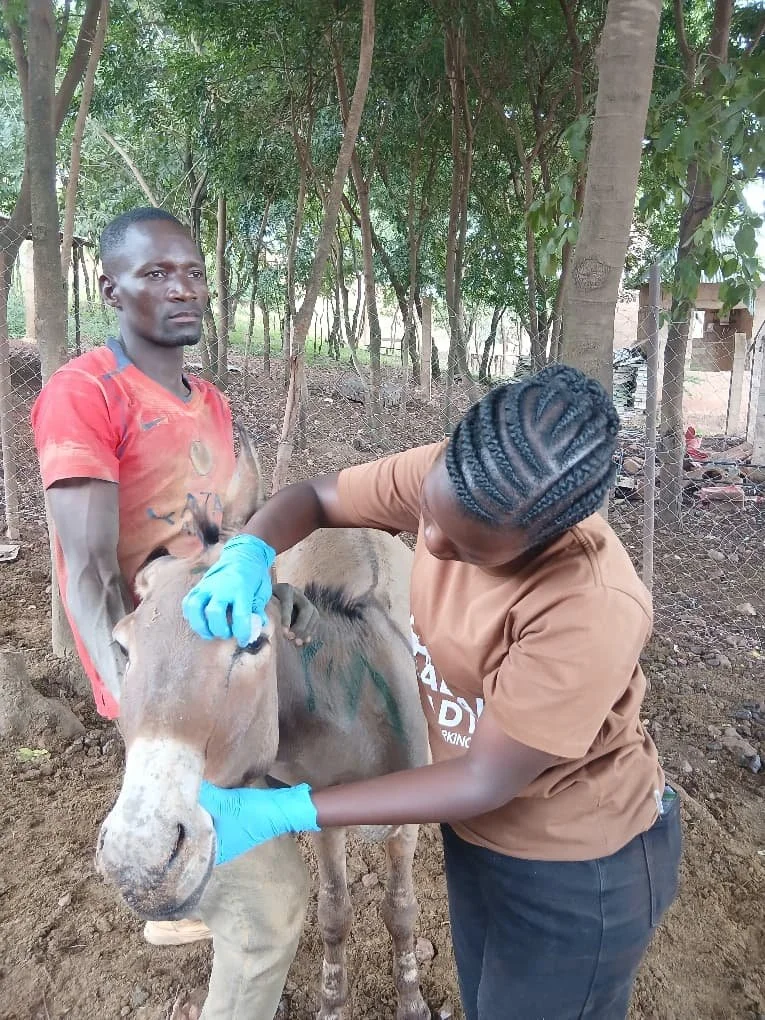
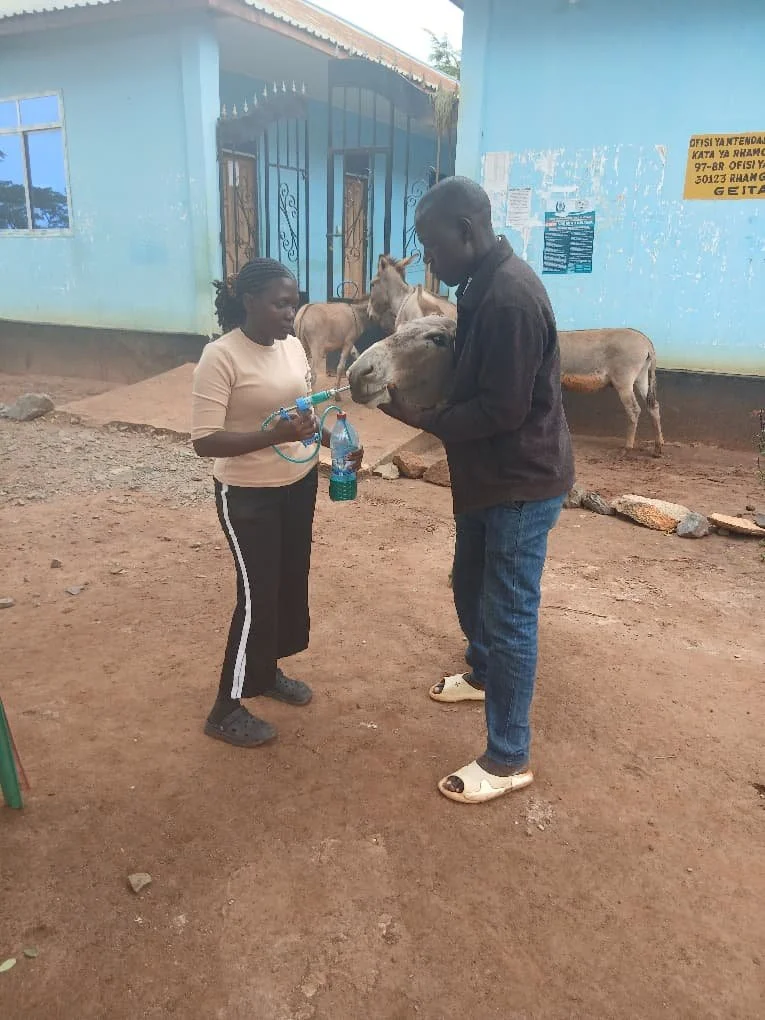
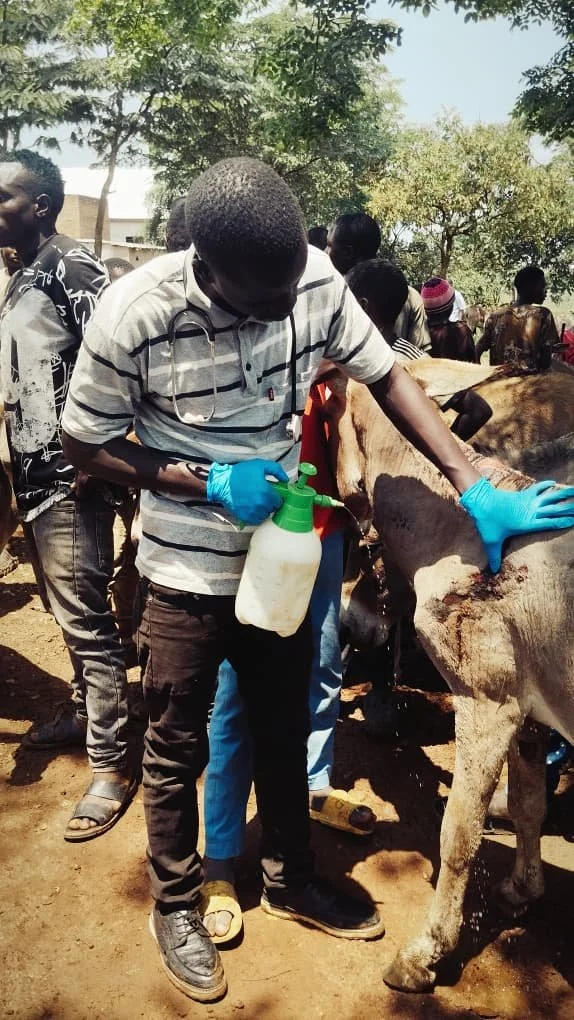
In February, 481 donkeys were treated across six mines — Mgusu, Lwamgasa, Magenge, Stamico, Nyarugusu, and Nyaruyeye — as well as surrounding communities. Conditions included traumatic wounds, trypanosomiasis, mange, respiratory and eye infections, arthritis, abscesses, and fractures.
Critical cases were transferred to the sanctuary, ensuring a safe environment for recovery and long-term care.
Transforming Suffering into Healing: Donkey Welfare in Tanzania’s Gold Mines
Follow-Up Activities
Salehe – from cruelty to recovery
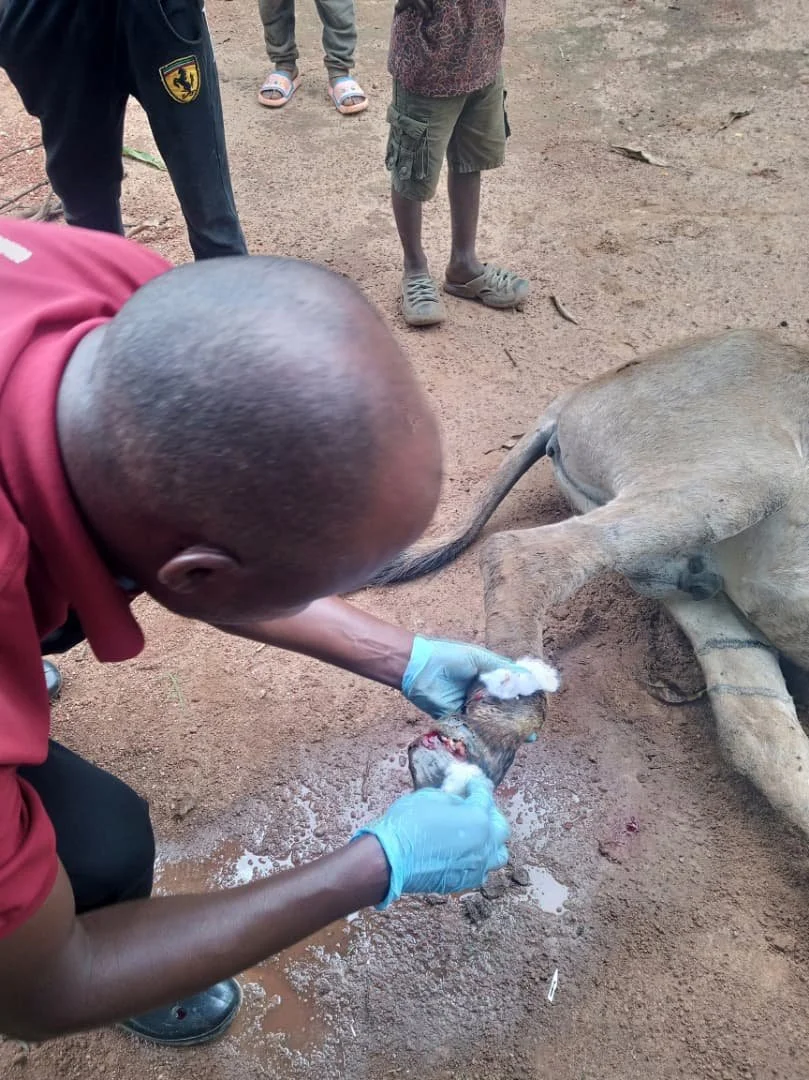
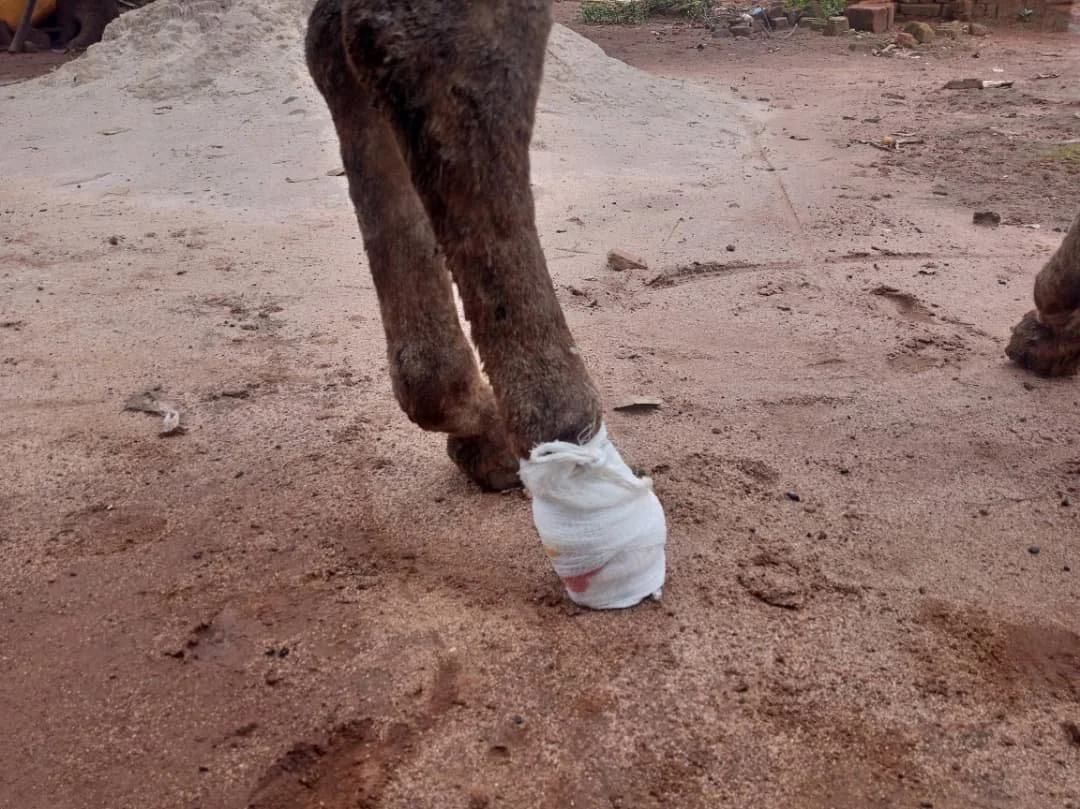
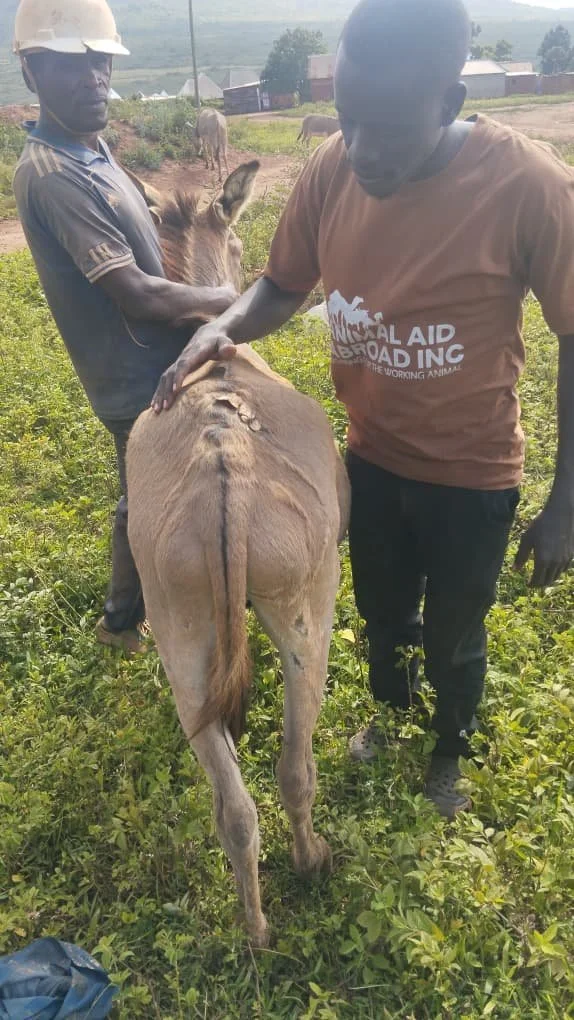
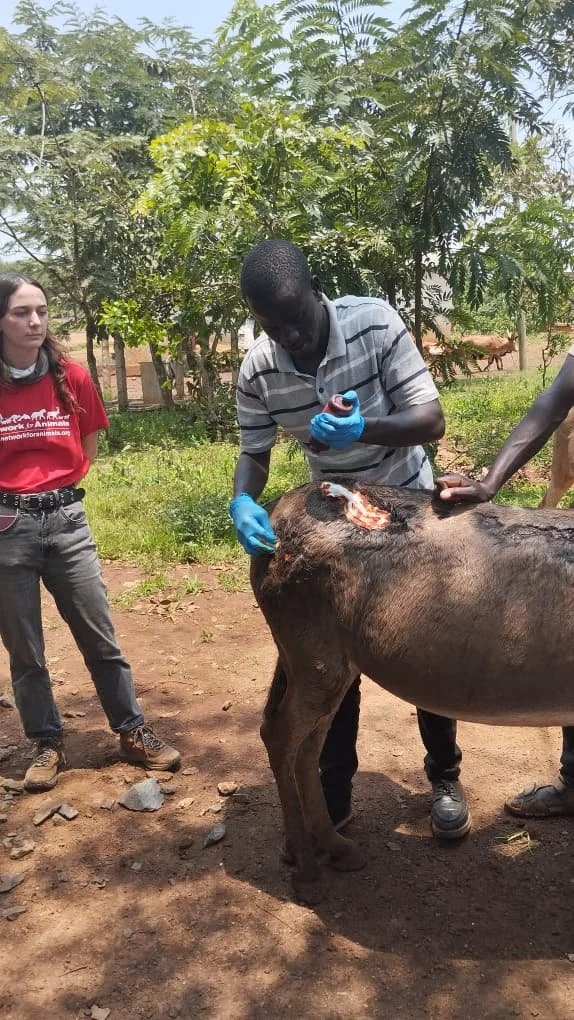
Salehe, a donkey transporting gold ore, suffered a machete-inflicted wound causing severe tissue damage. Thanks to immediate intervention, surgical care, and continuous follow-ups, Salehe has fully recovered. His transformation is a powerful example of how AAA’s support restores health and dignity to animals who would otherwise suffer in silence.
General Follow-Ups
Routine field visits and clinics ensured continuity of care, monitoring recovery, and adjusting treatments as needed. These systematic follow-ups guarantee better long-term outcomes for working donkeys.
Monthly Veterinary Clinics and Community Outreach
Two clinics were held in Lwamgasa and Magenge, treating 59 donkeys and engaging communities in humane handling practices.
A key focus was promoting the use of shakers (plastic containers with gravel) as a humane alternative to sticks. This simple change reduces pain and injuries while encouraging donkeys to move without fear.
Impact
Community adoption of shakers continues to grow, with Magenge leading the way. This shift in practice is already reducing stick-related wounds and represents a cultural change toward compassion for working animals.
Challenges and Constraints
Despite progress, challenges remain. The sanctuary urgently needs a foal stable and an isolation unit for sick donkeys. These facilities would protect vulnerable animals from injuries and predators such as hyenas and dogs.
Case Studies
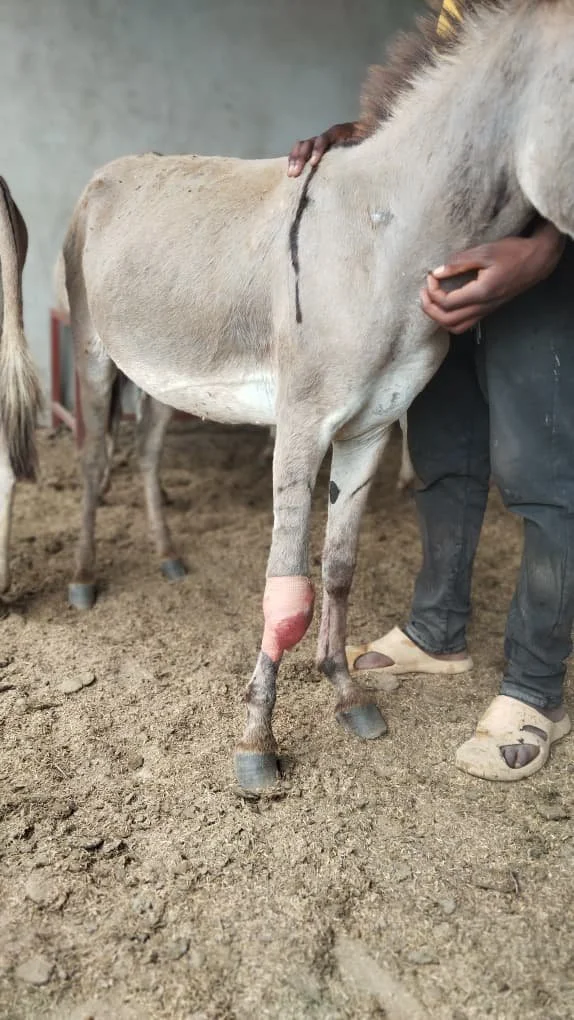
Maksi – healing from proud flesh
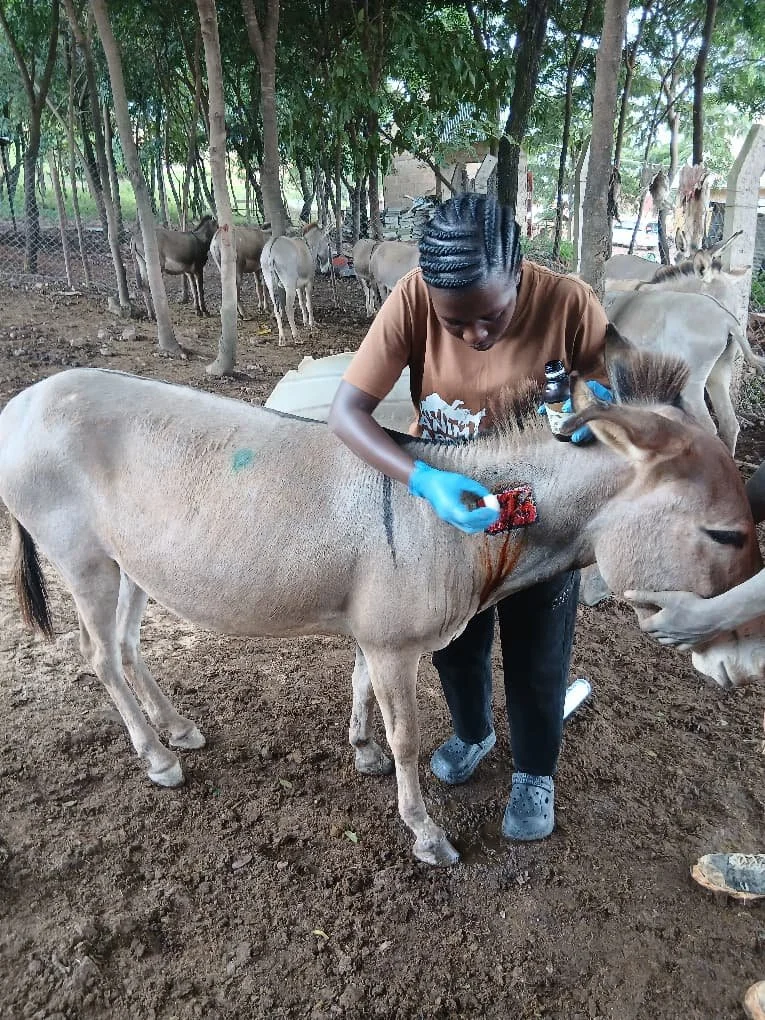
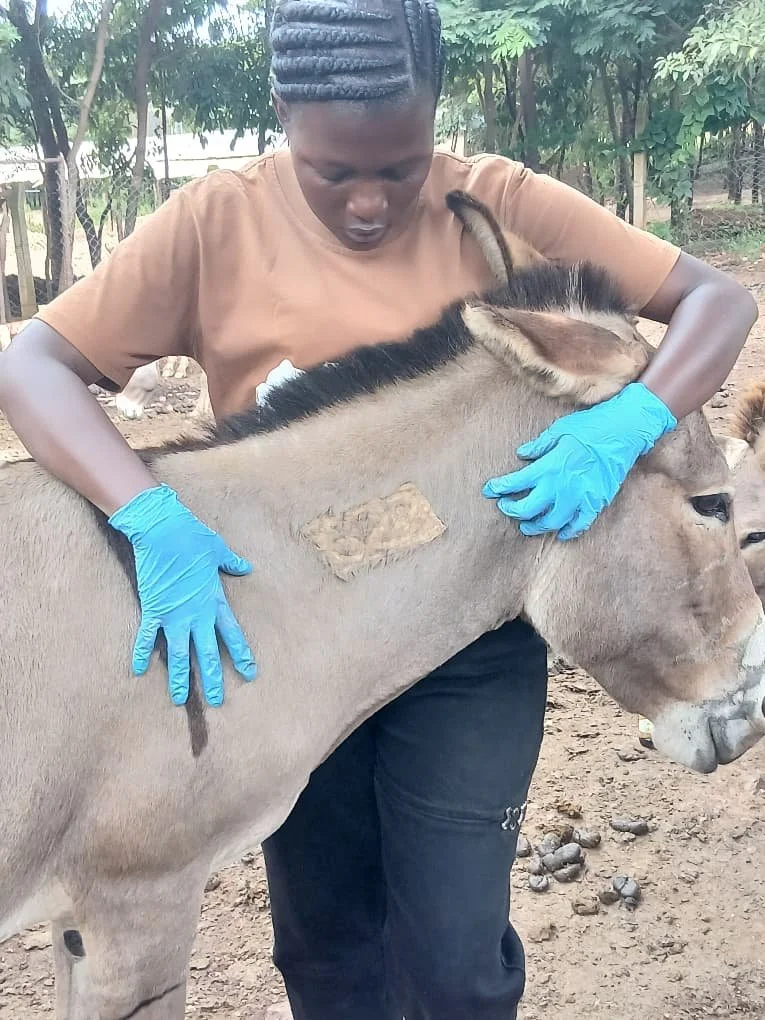
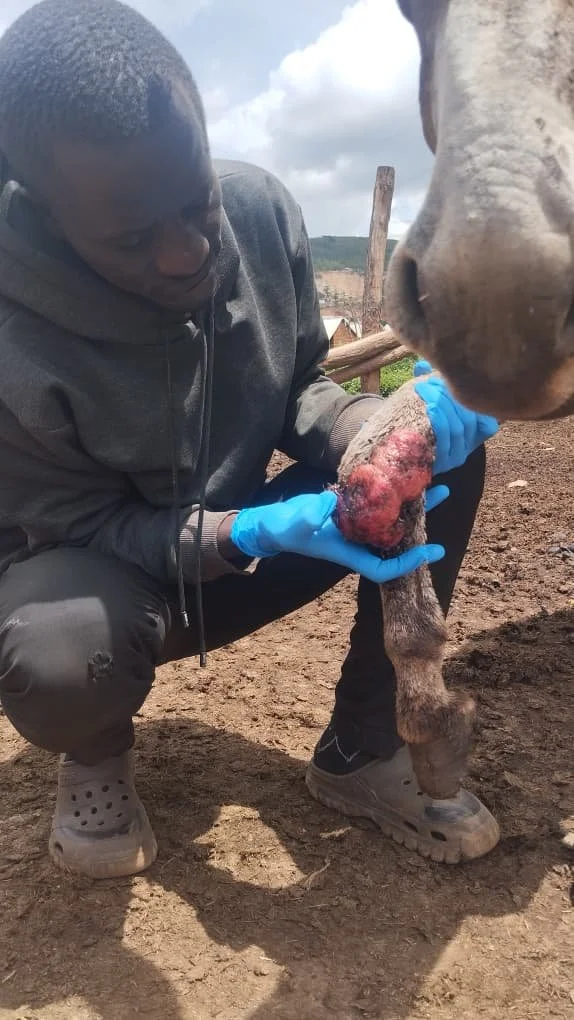
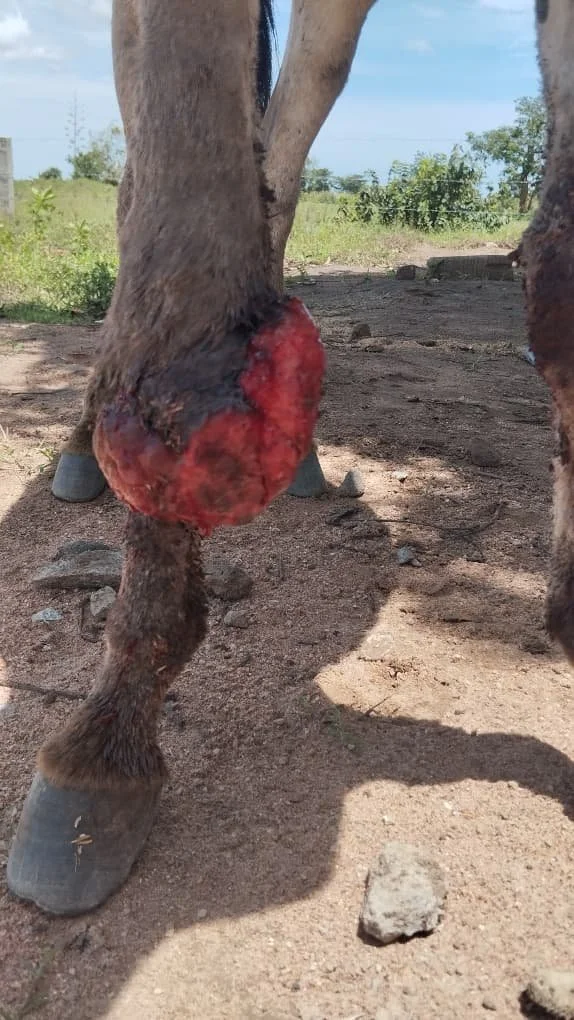
Maksi, a donkey in Nyarugusu, suffered from a painful lesion around her carpal joint. Transported to the sanctuary, she underwent surgery and ongoing wound management. Today, Maksi is healing well and regaining comfort.
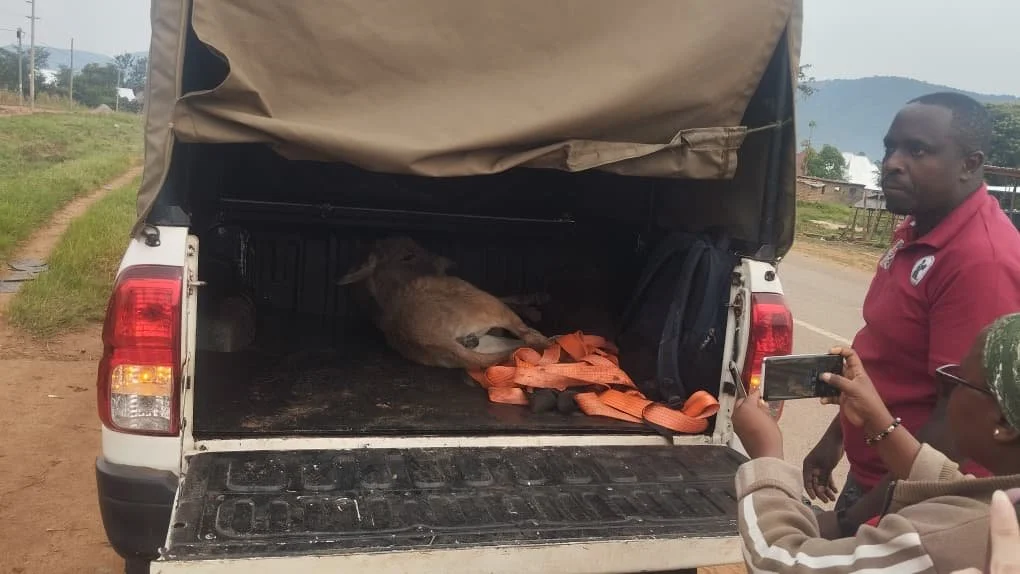
Mgasa – rescued from abandonment
Mgasa, a young foal struck by a motorbike, was found alone and in severe pain. With fractures and deformities, she was unable to stand. Rescued and brought to the sanctuary, Mgasa now receives assisted feeding and intensive care. Her survival is a testament to rapid intervention and donor support.
Conclusion and Appreciation
Working donkeys in Geita endure immense suffering, but through the partnership between LAZAWO and Animal Aid Abroad, they are receiving the care, treatment, and compassion they deserve.
Your continued support funds medications, fuel, and operations — transforming suffering into healing and ensuring that these hardworking animals are no longer invisible.
Together, we are turning burden into care.