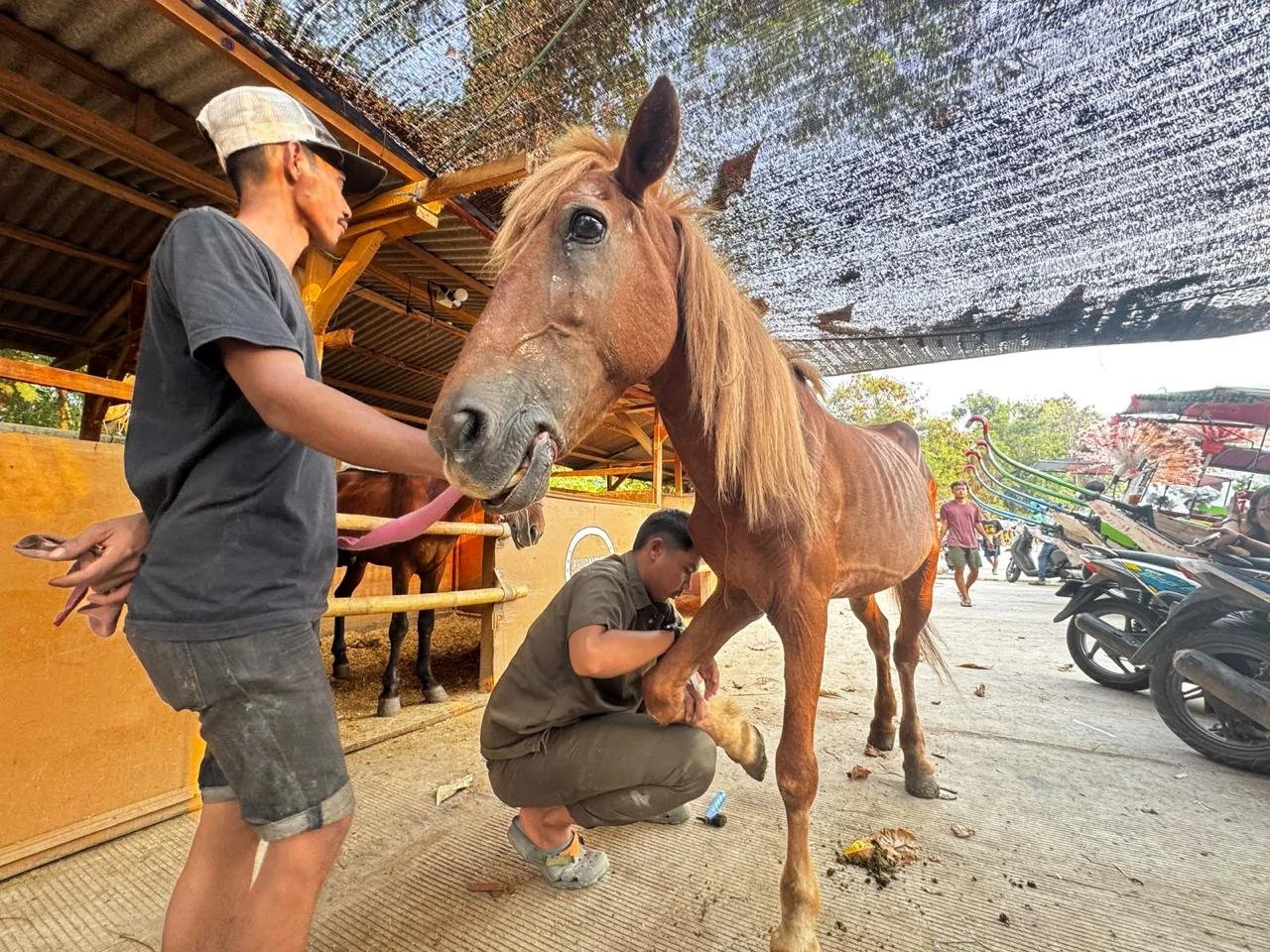
Our new partner group, Jakarta Animal Aid Network (JAAN), provide free veterinary care for carriage horses. These animals are frequently neglected, malnourished, mistreated or literally worked to death. During October, JAAN reached 54 working horses in need and educated 43 owners about animal welfare.
Program Overview & Summary
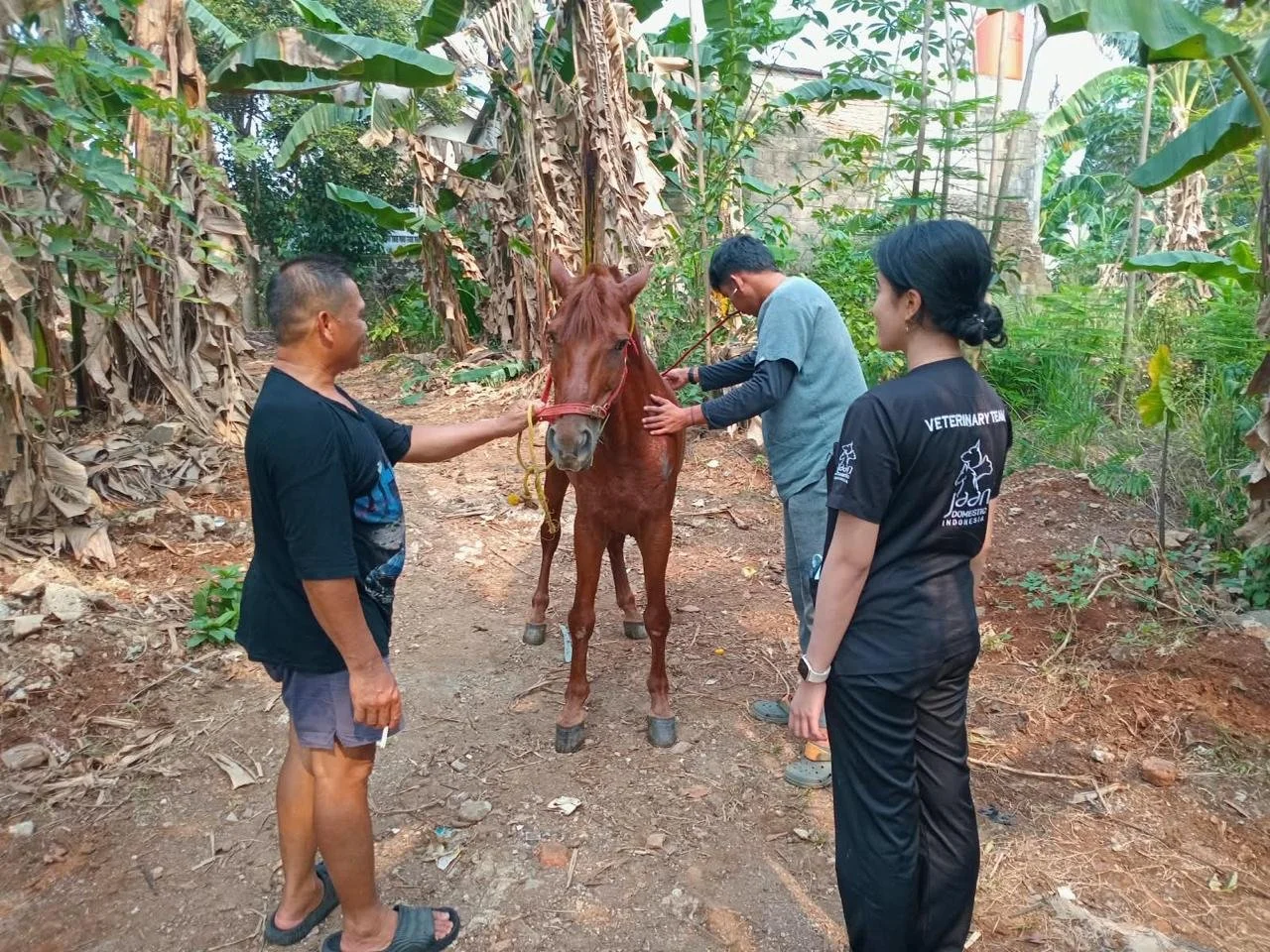
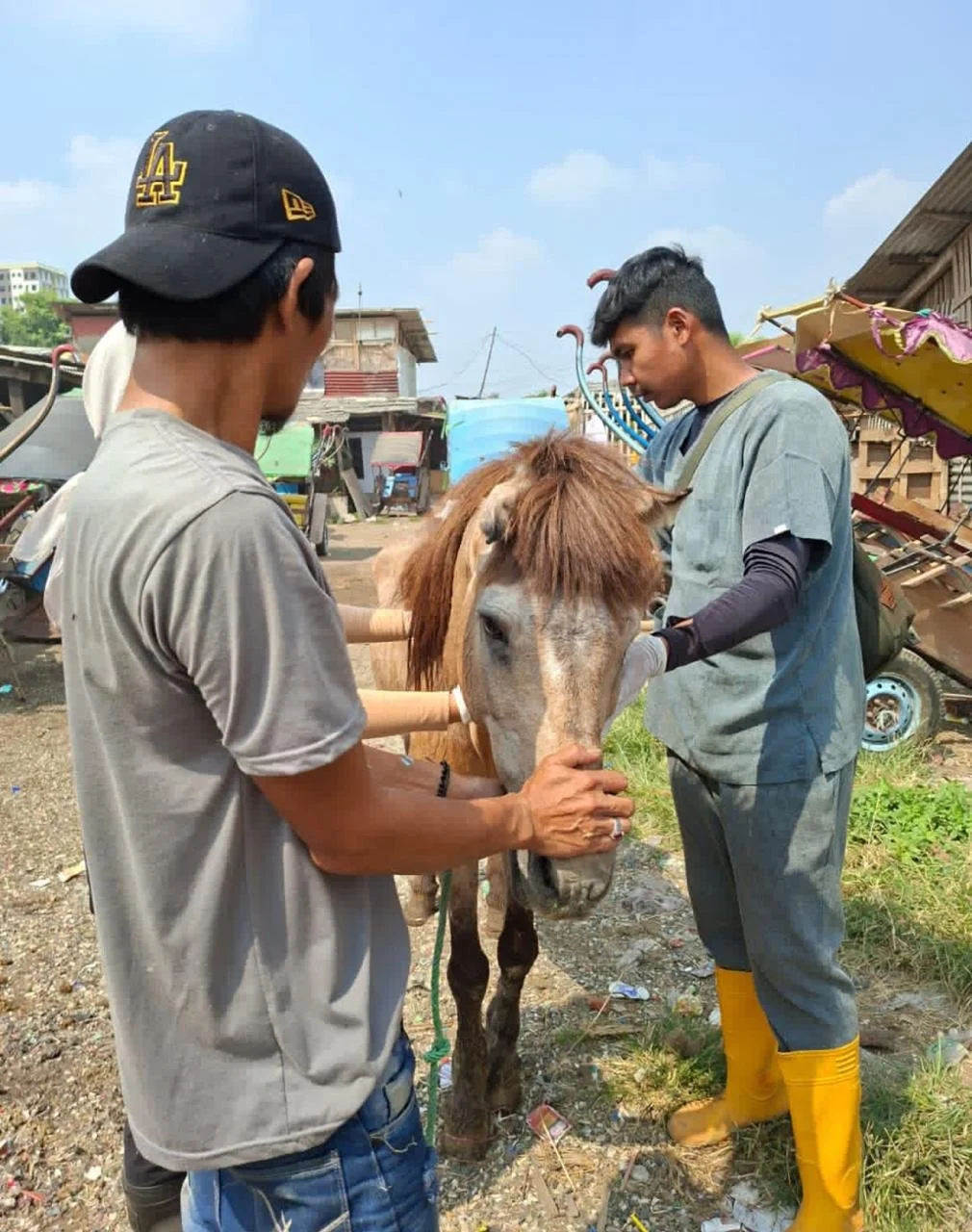
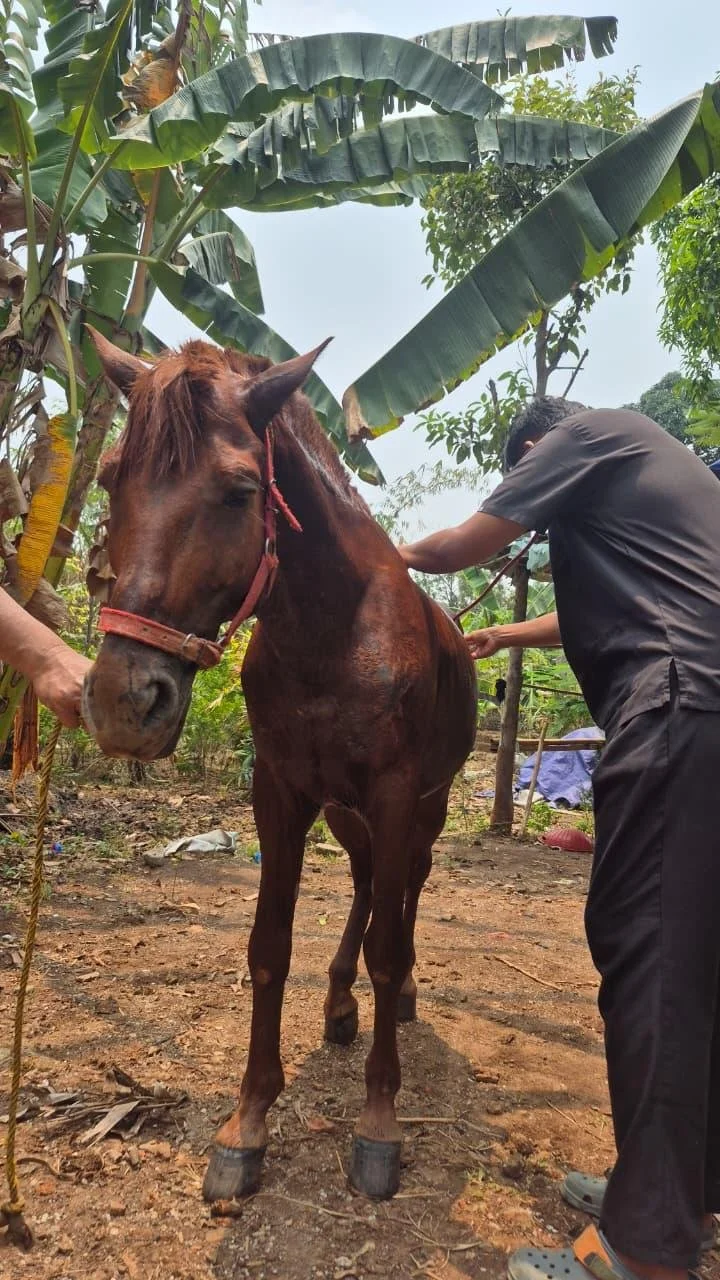
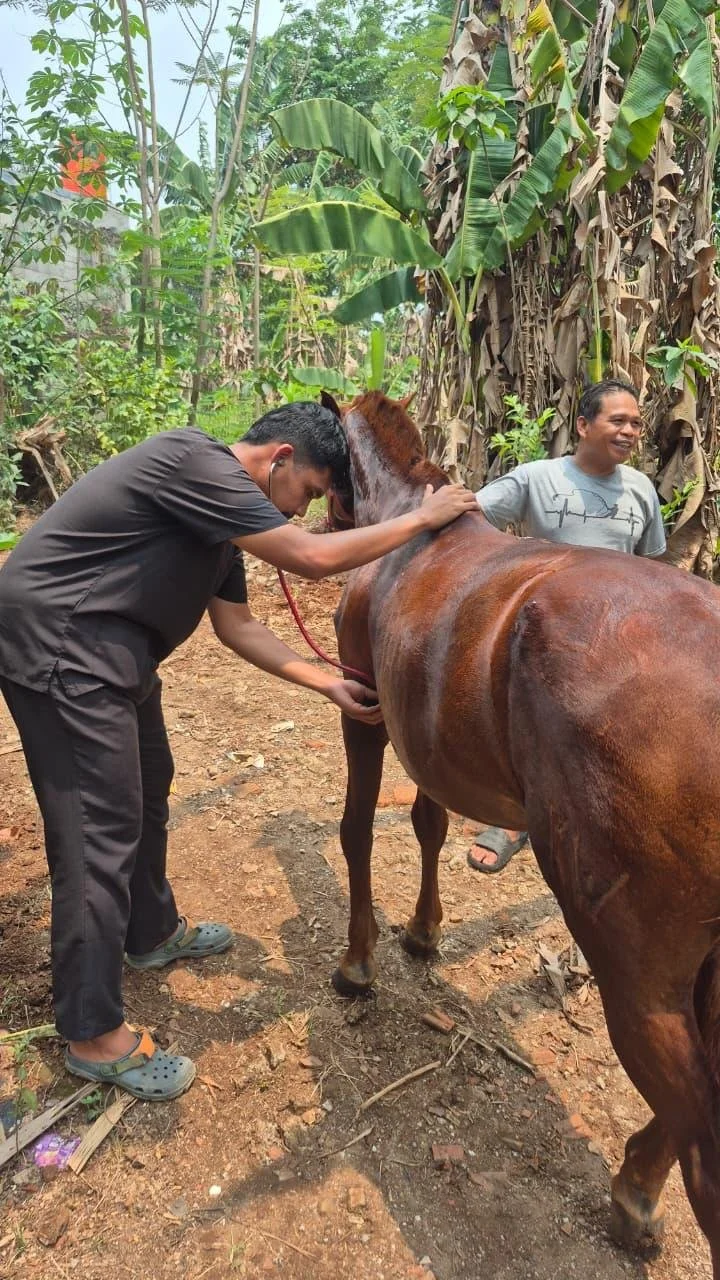
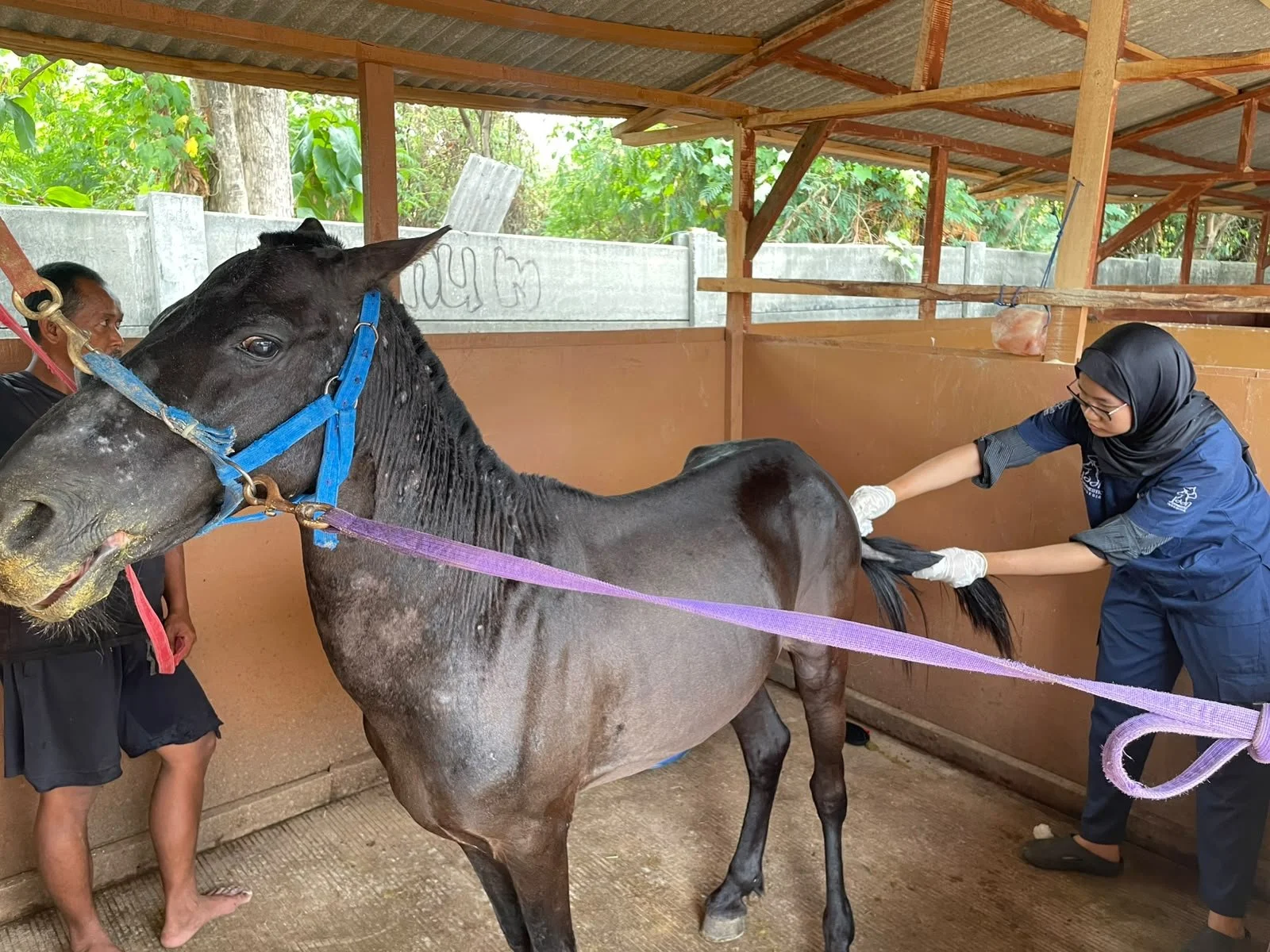
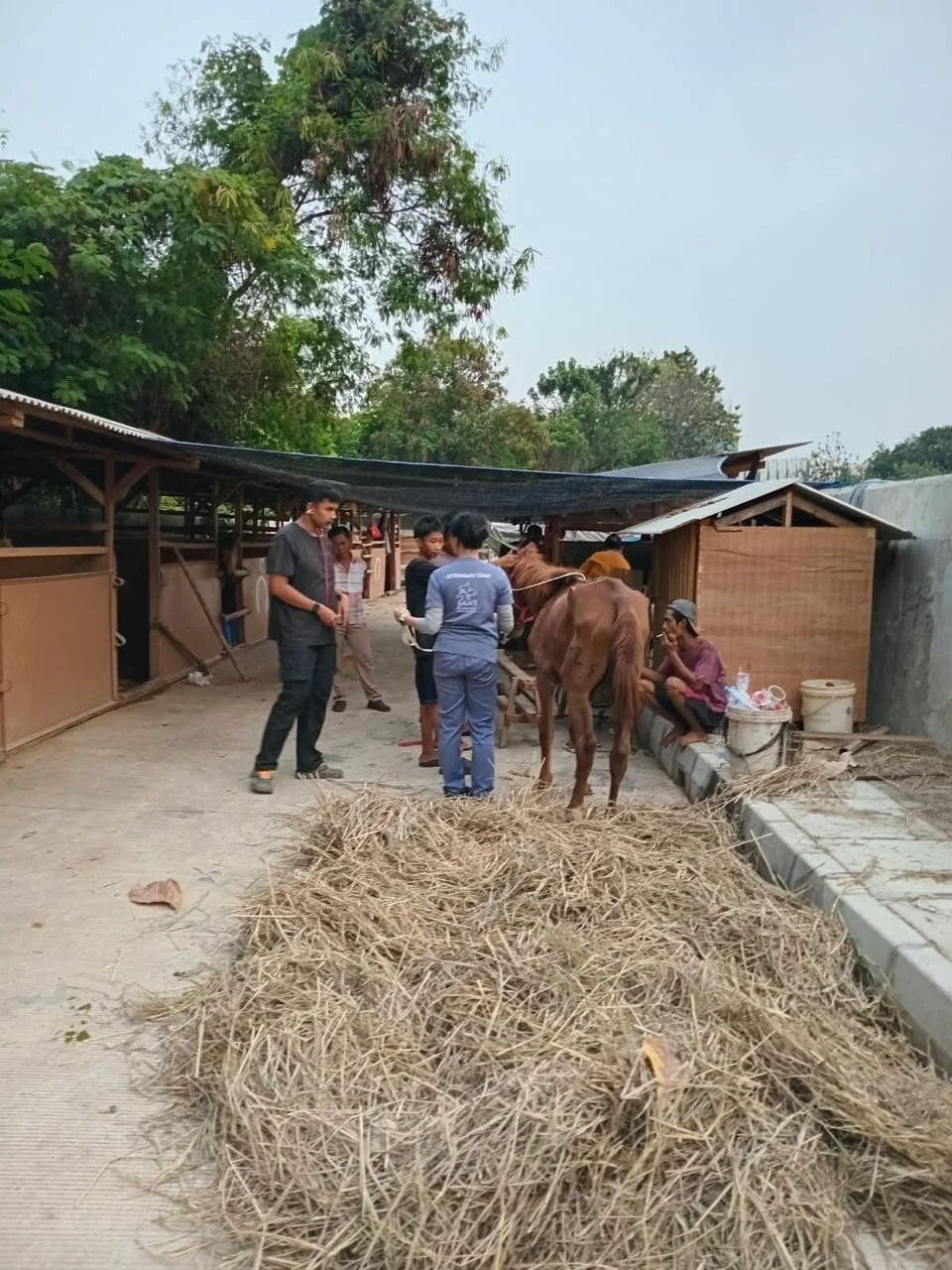
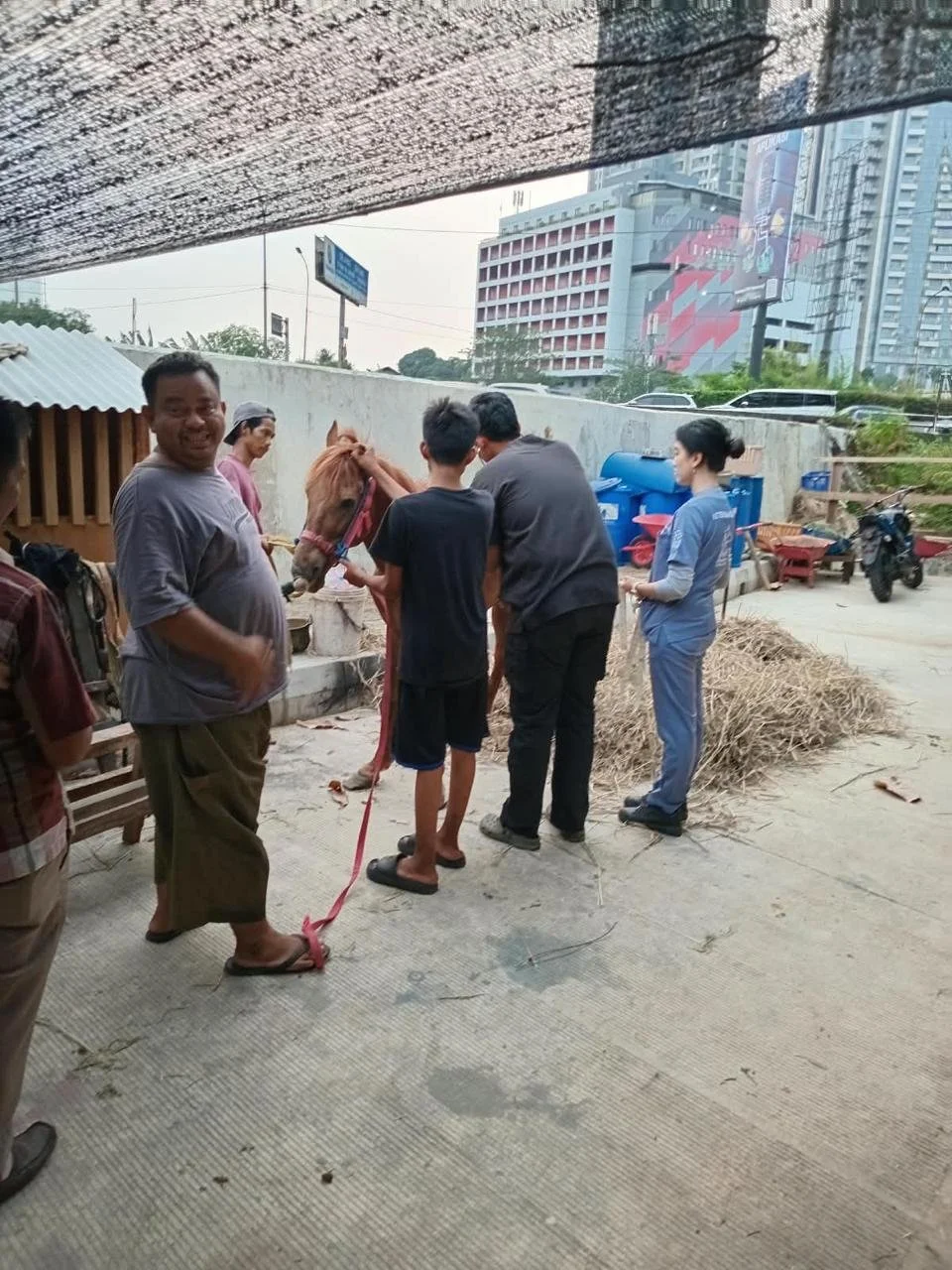
During October, the JAAN Domestic (JAAN PKP) veterinary and outreach team continued to strengthen working horse health and welfare across Greater Jakarta through mobile health examinations, routine preventative care, emergency clinical interventions, and direct owner engagement.
Field operations spanned 11 stable locations across West Jakarta, South Jakarta, North Jakarta, South Tangerang, and Bekasi Regency, reaching 43 horse owners and households.
A total of 54 working horses underwent comprehensive clinical examinations, and all horses received targeted veterinary treatment aligned with their clinical indications. This included deworming, tetanus vaccinations, vitamin/nutritional supplementation, dental rasping, wound management, and intensive intravenous fluid therapy for acute colic emergencies.
Seven horses will require ongoing monitoring and follow-up examinations.
Field Operations & Veterinary Interventions
Routine Health Examinations & Preventative Care
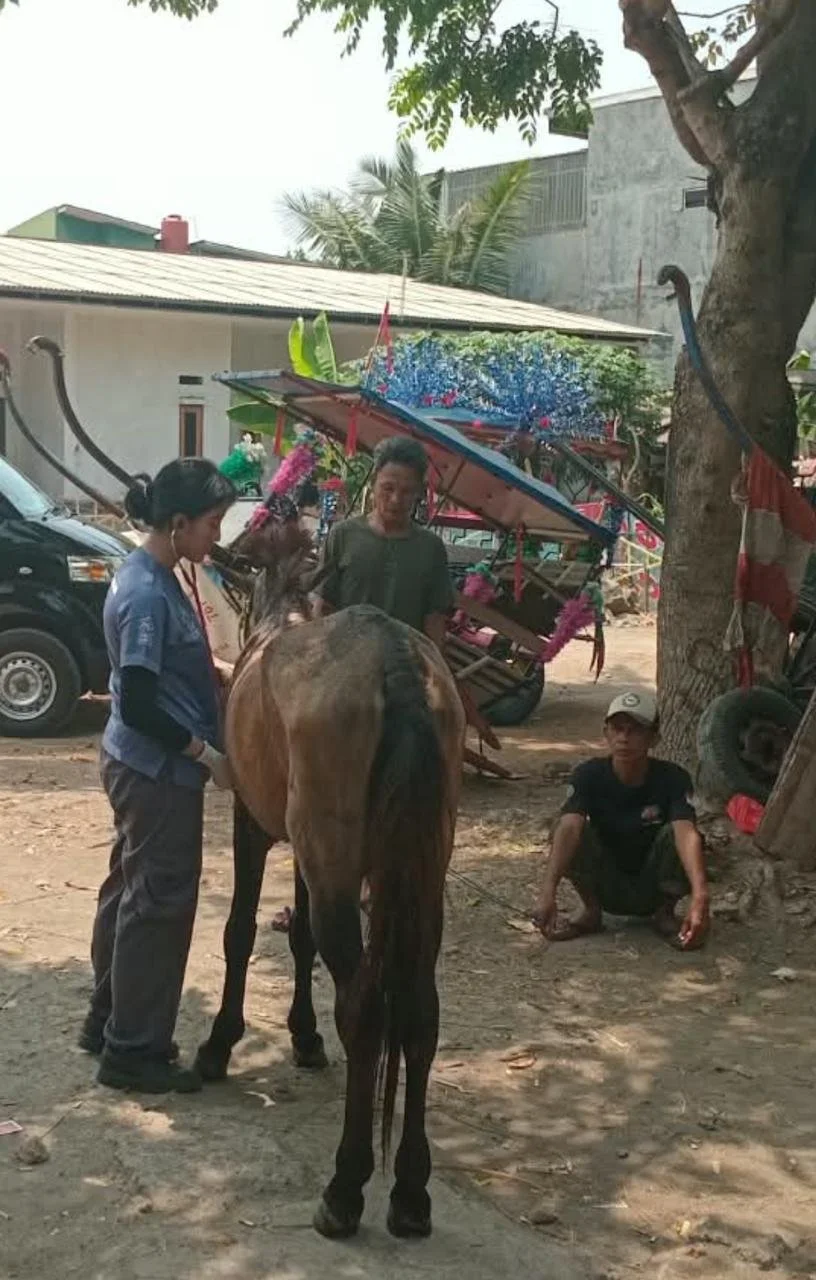
Regular mobile veterinary clinics were conducted across key carriage horse hubs including Tambun (Bekasi Regency), Petukangan, Setu Babakan, Joglo 2, and Ulujami (South Jakarta), as well as Sungai Bambu and Kalijodo (North Jakarta).
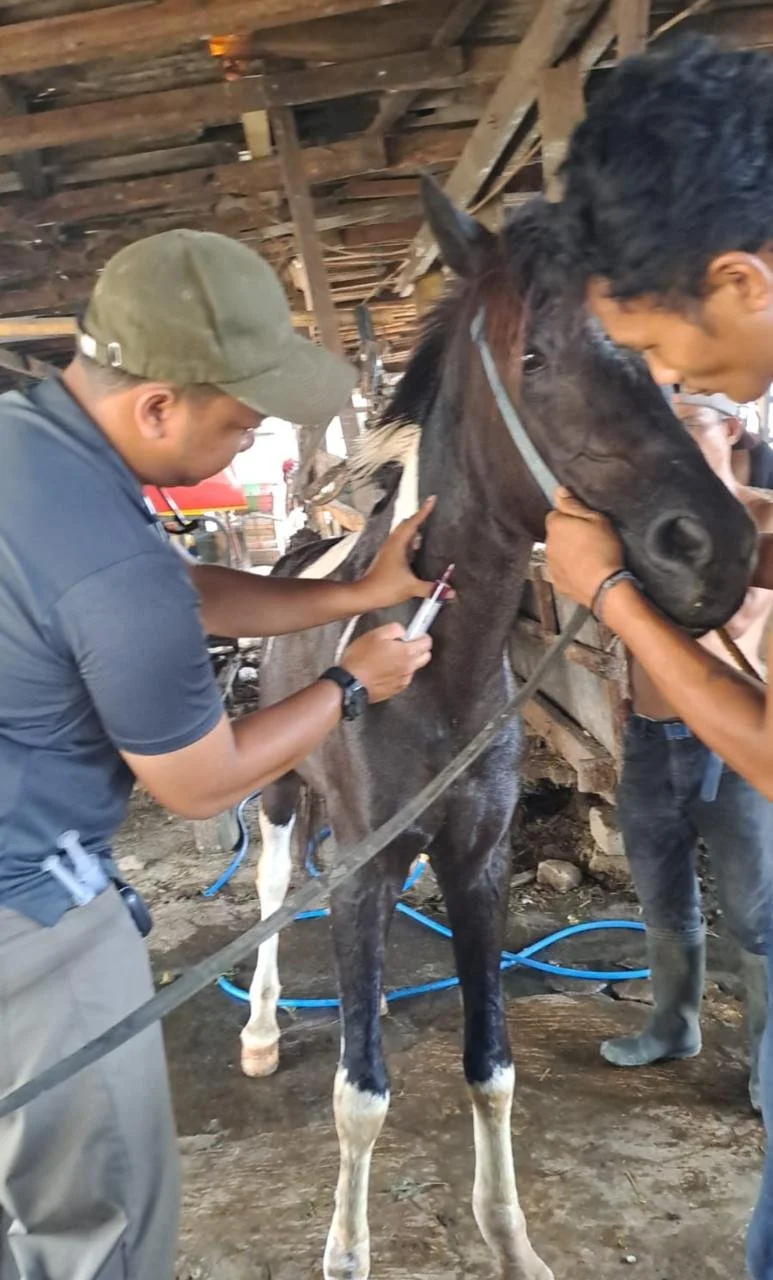
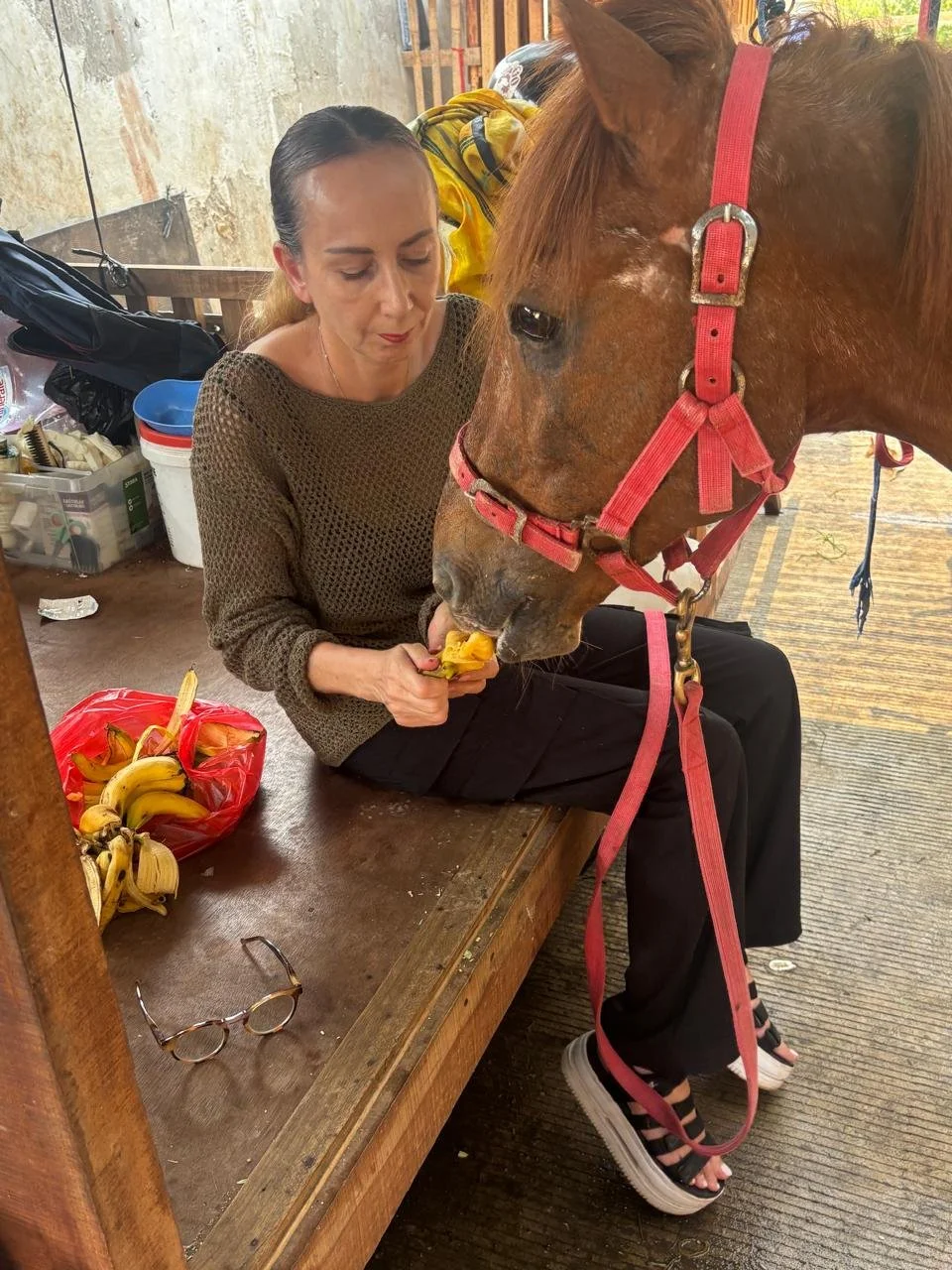
Preventative care focused on strengthening baseline immunity through tetanus vaccinations and broad spectrum anti-parasitic/deworming protocols (13 horses treated), alongside vitamin and nutritional supplementation (7 horses) to address nutritional deficits and support recovery.
Emergency Medical Response & Intensive Care
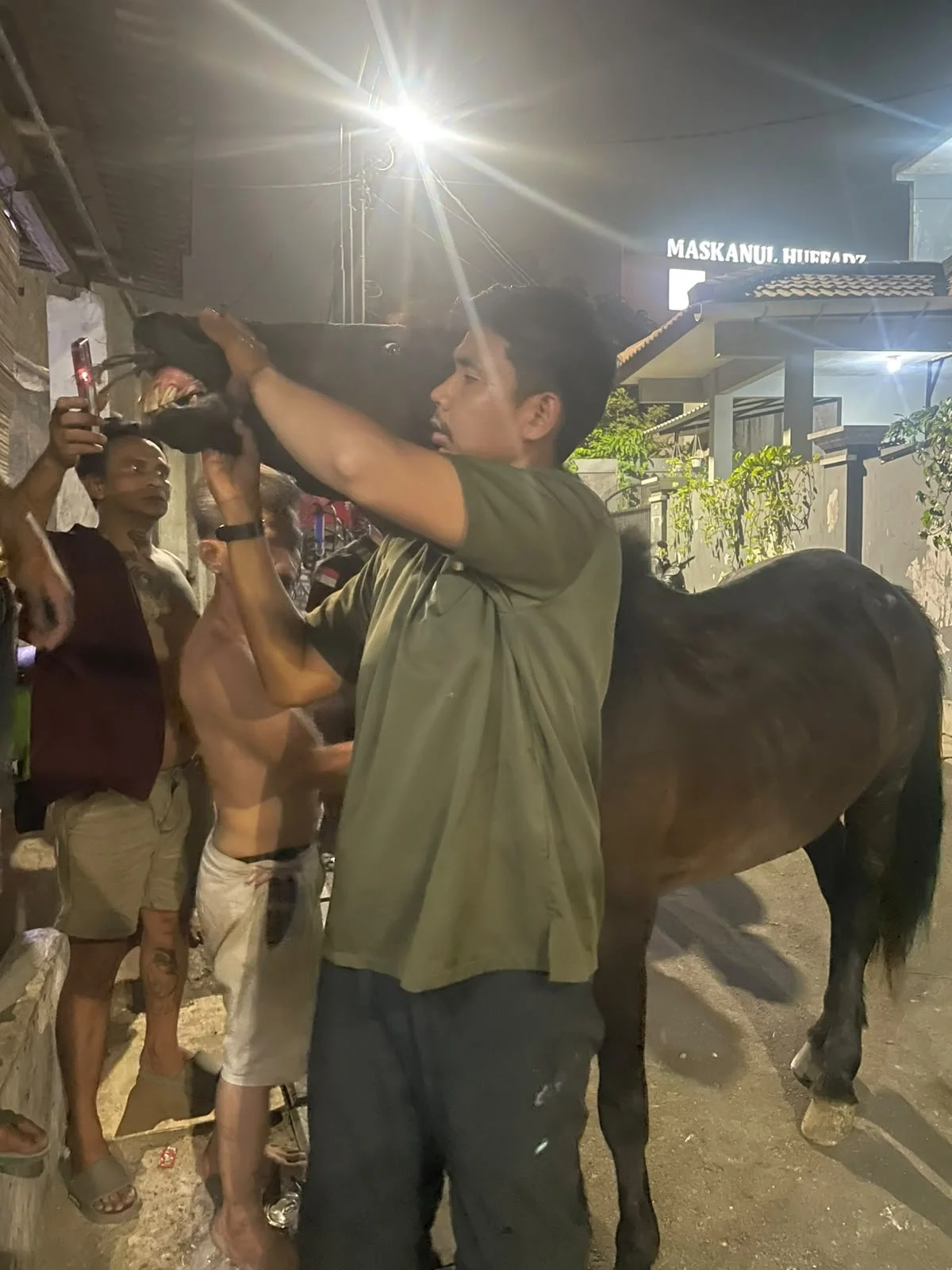
The veterinary team responded rapidly to acute medical emergencies across South Tangerang (Ciledug and Bintaro) and West Jakarta (Intercon).
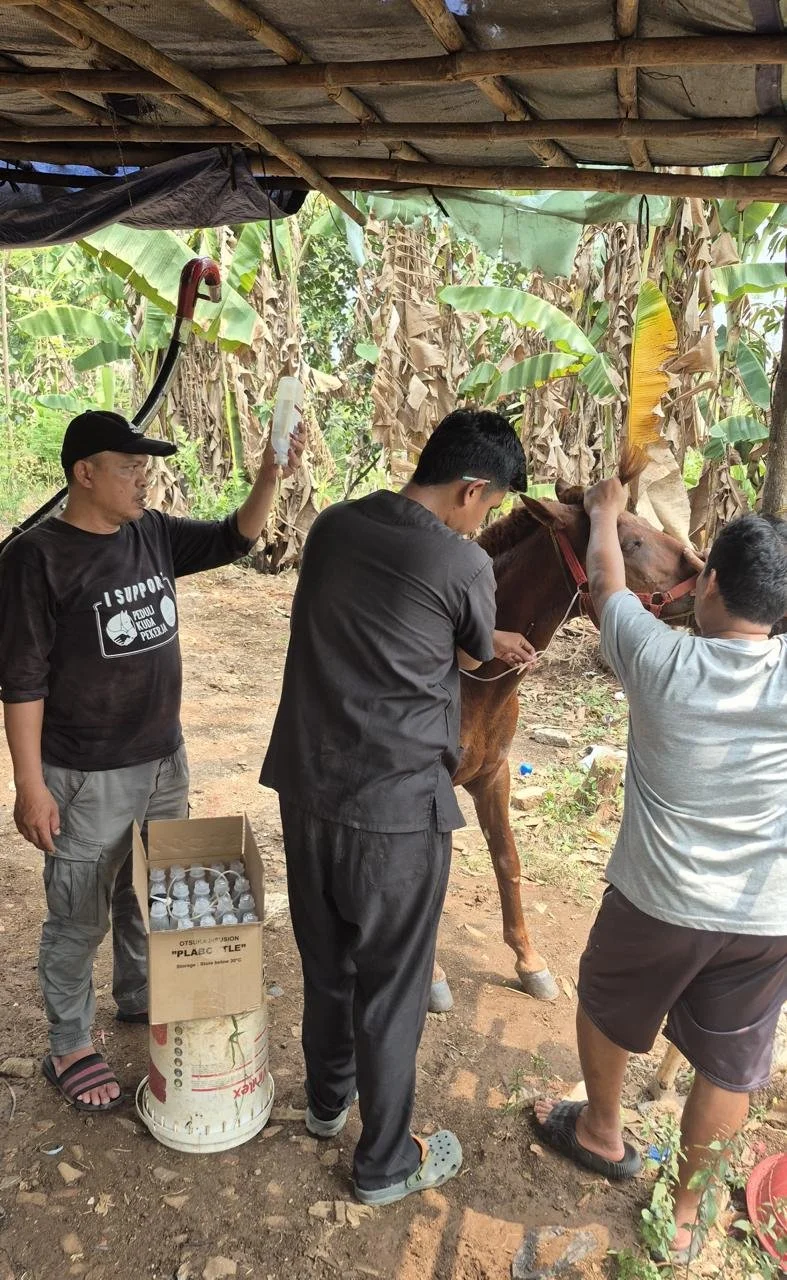
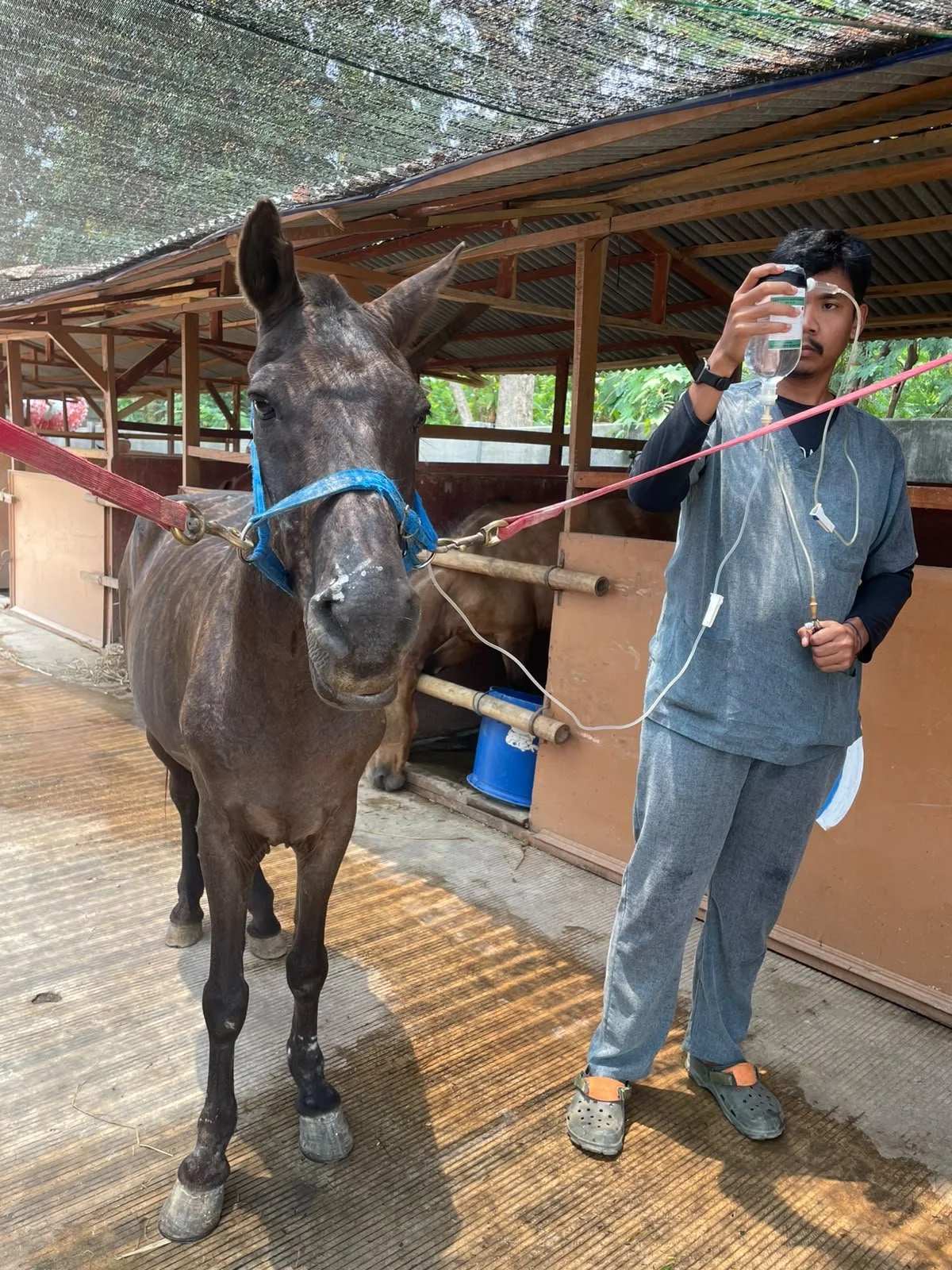
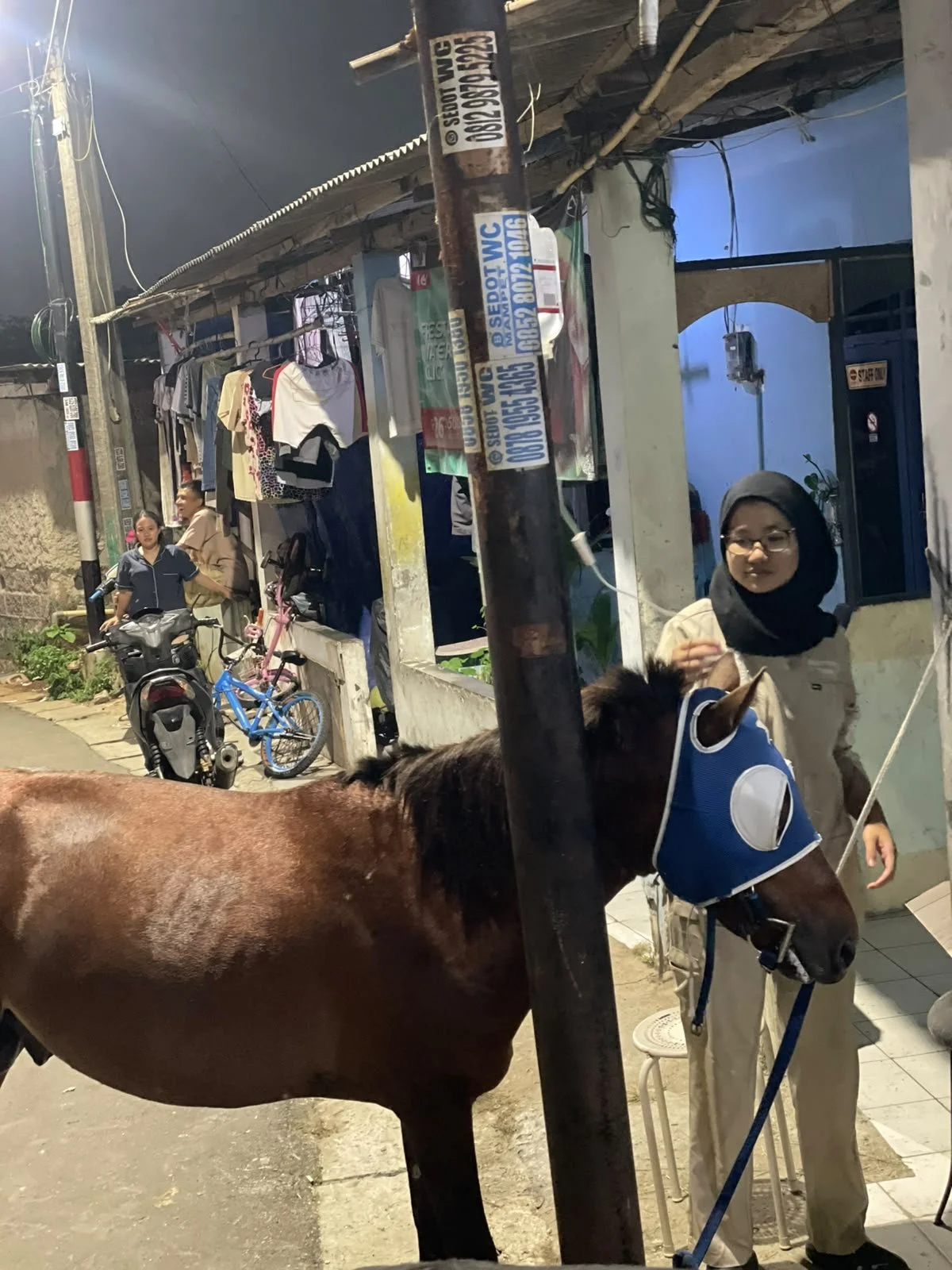
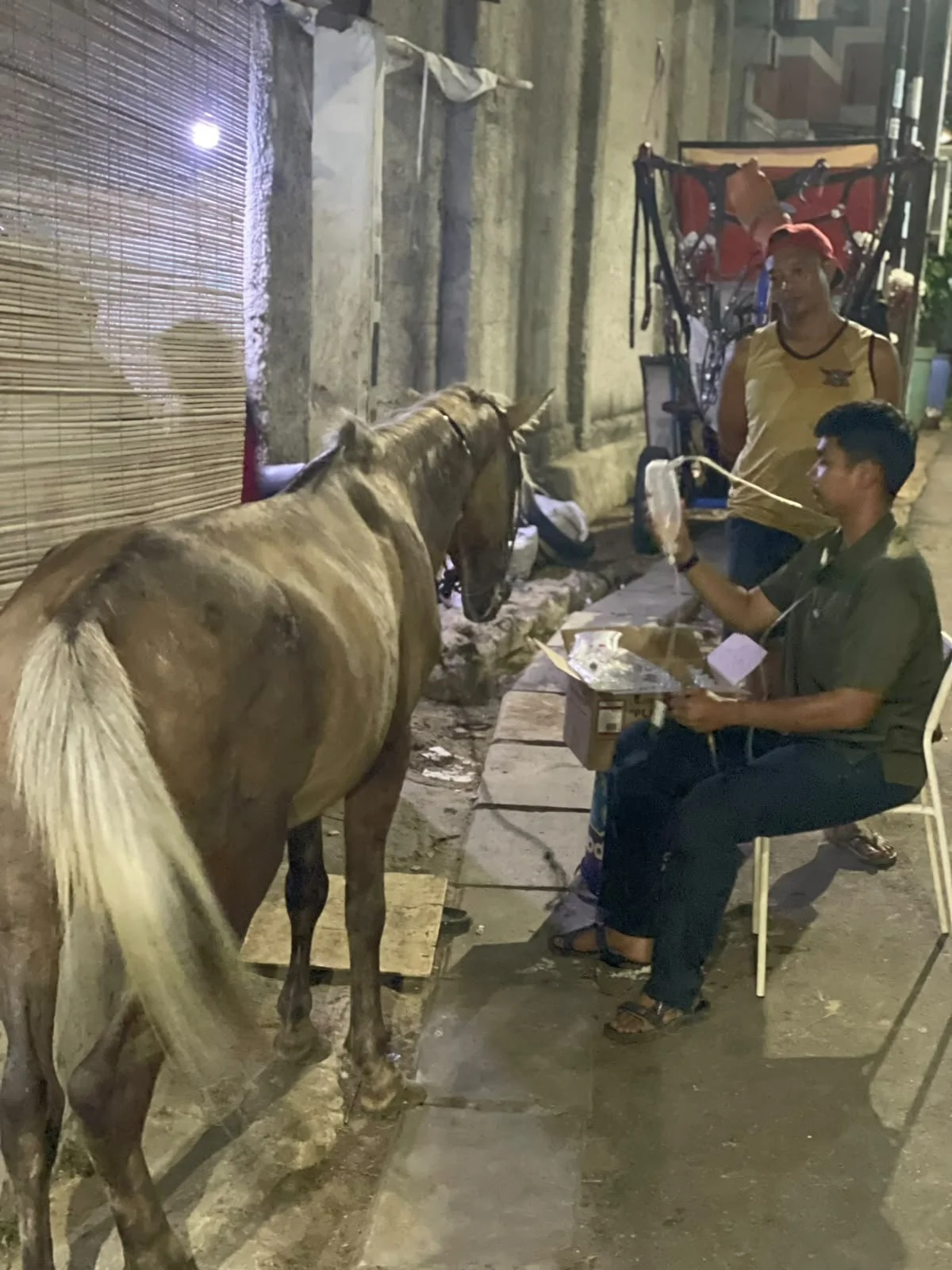
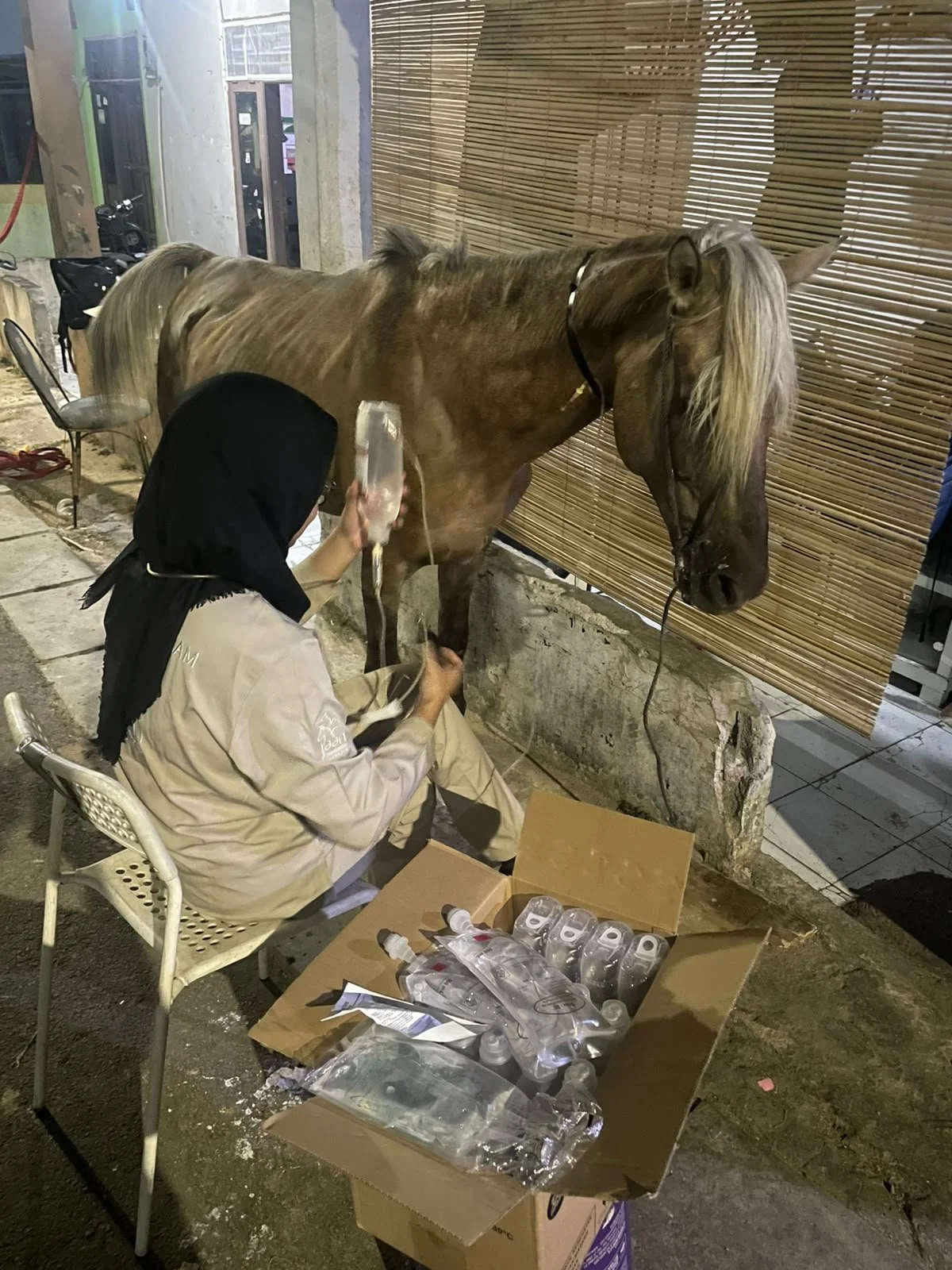
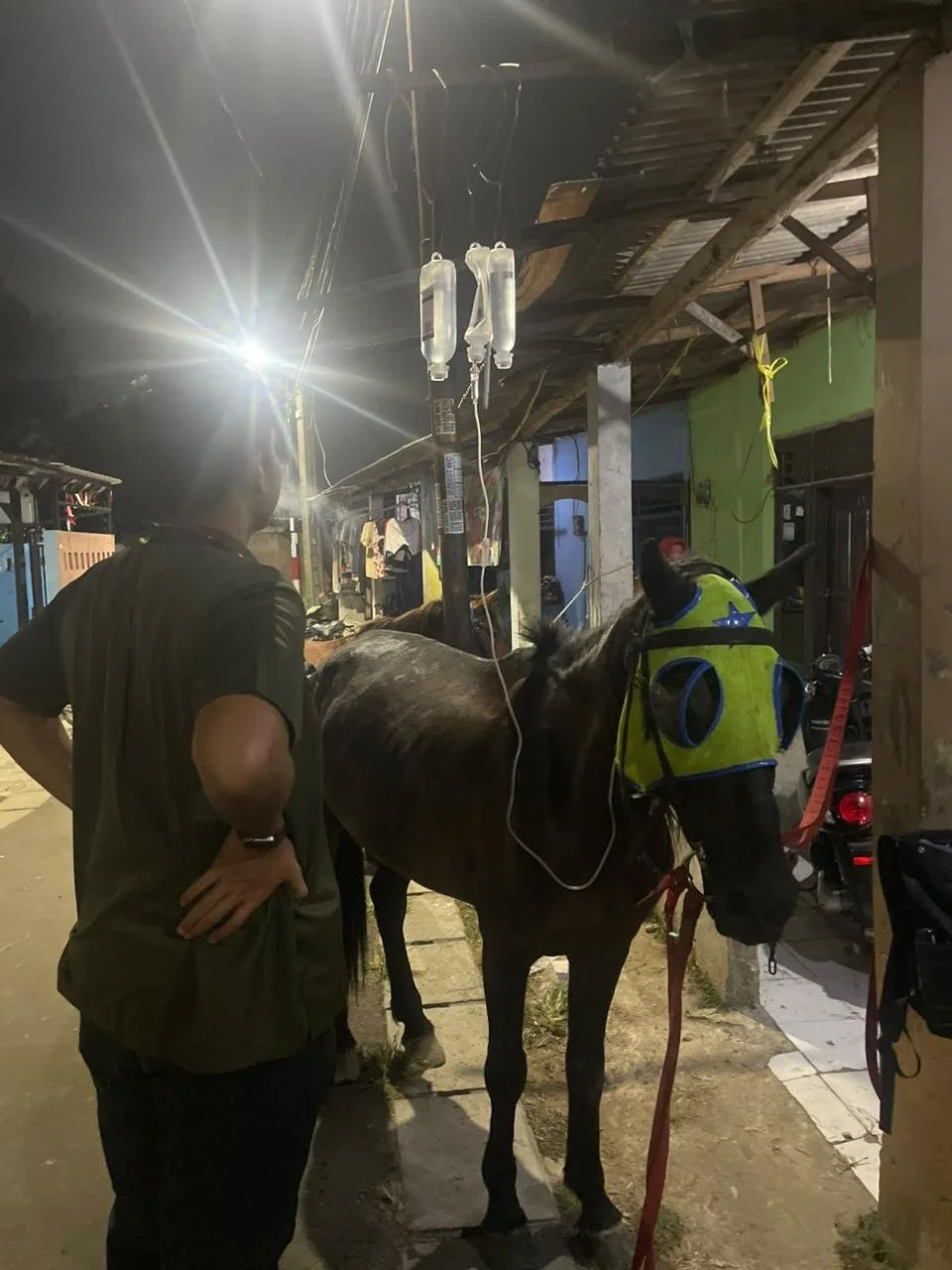
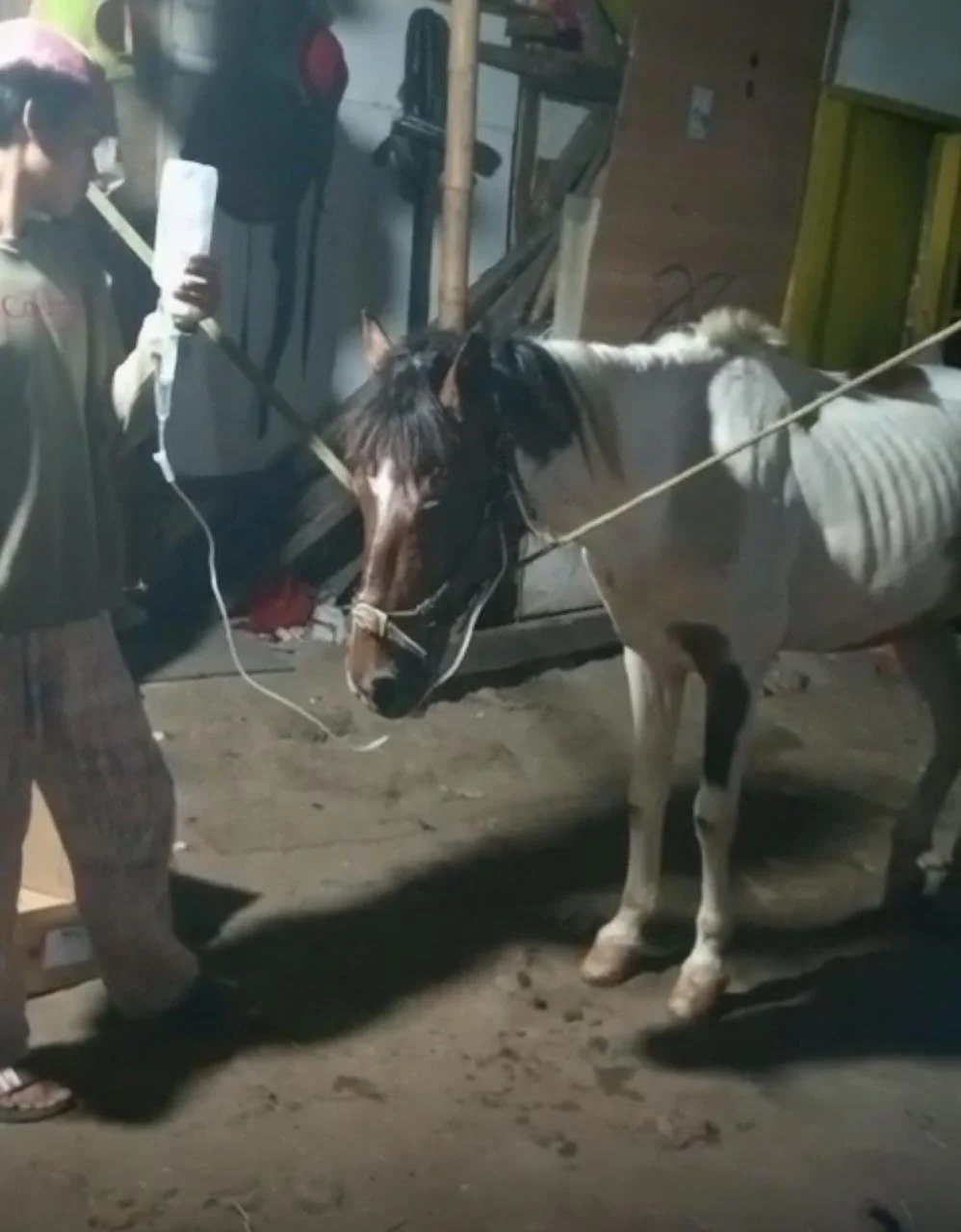
Notably, the team managed an acute colic case in Ciledug (Boy), an emergency colic case in Intercon (Begeng), and a cluster of three acute colic cases in Bintaro (Moka, Al-Adiat, and Ganteng).
Treatments included administering intravenous fluid therapy (6 treatments), analgesics (7 treatments), anti-inflammatory medications (5 treatments), and gastrointestinal protectants to stabilise affected horses and restore gut motility.
Dental and Wound Care (Kemanggisan/Golkar Stable)
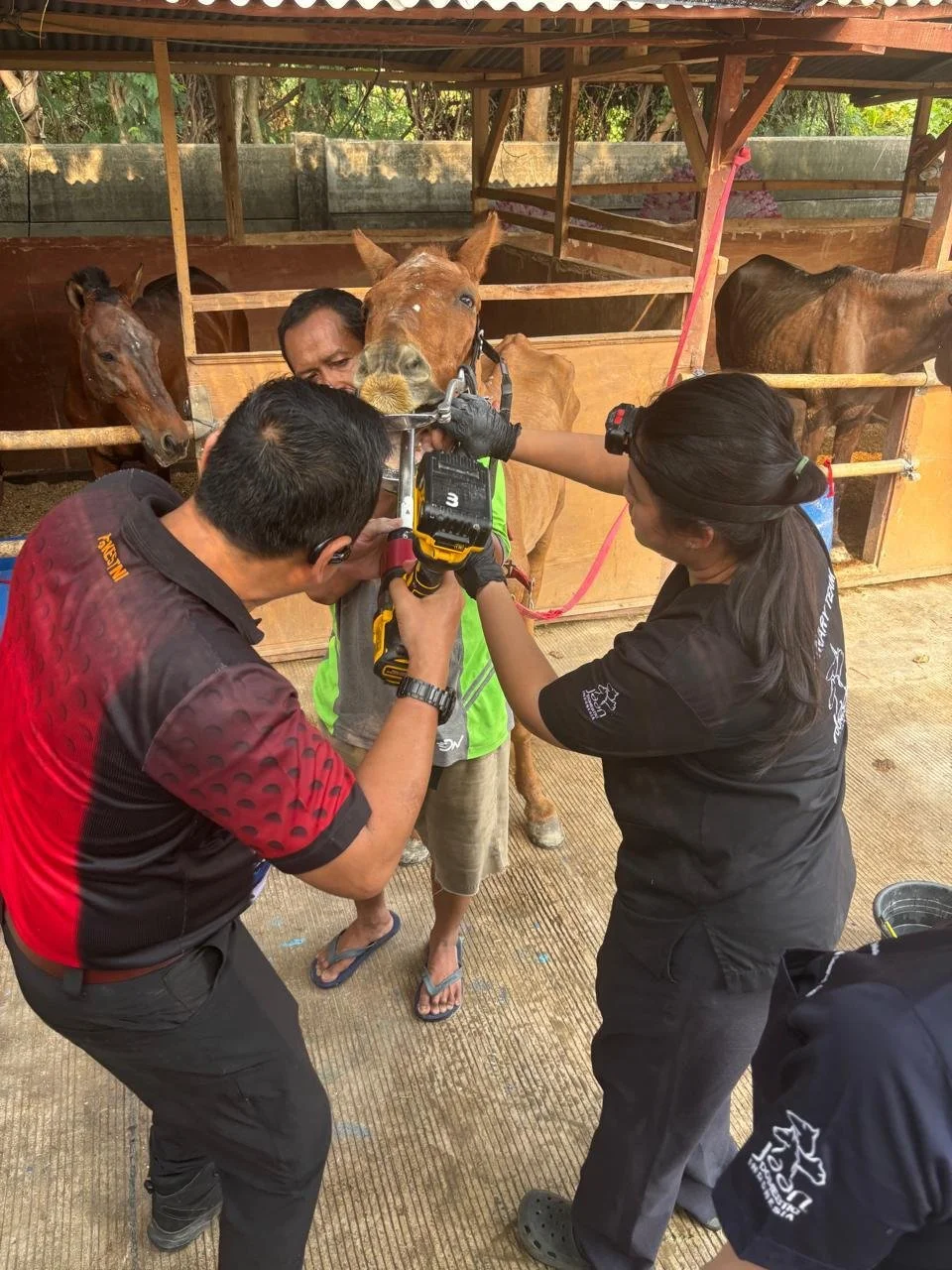
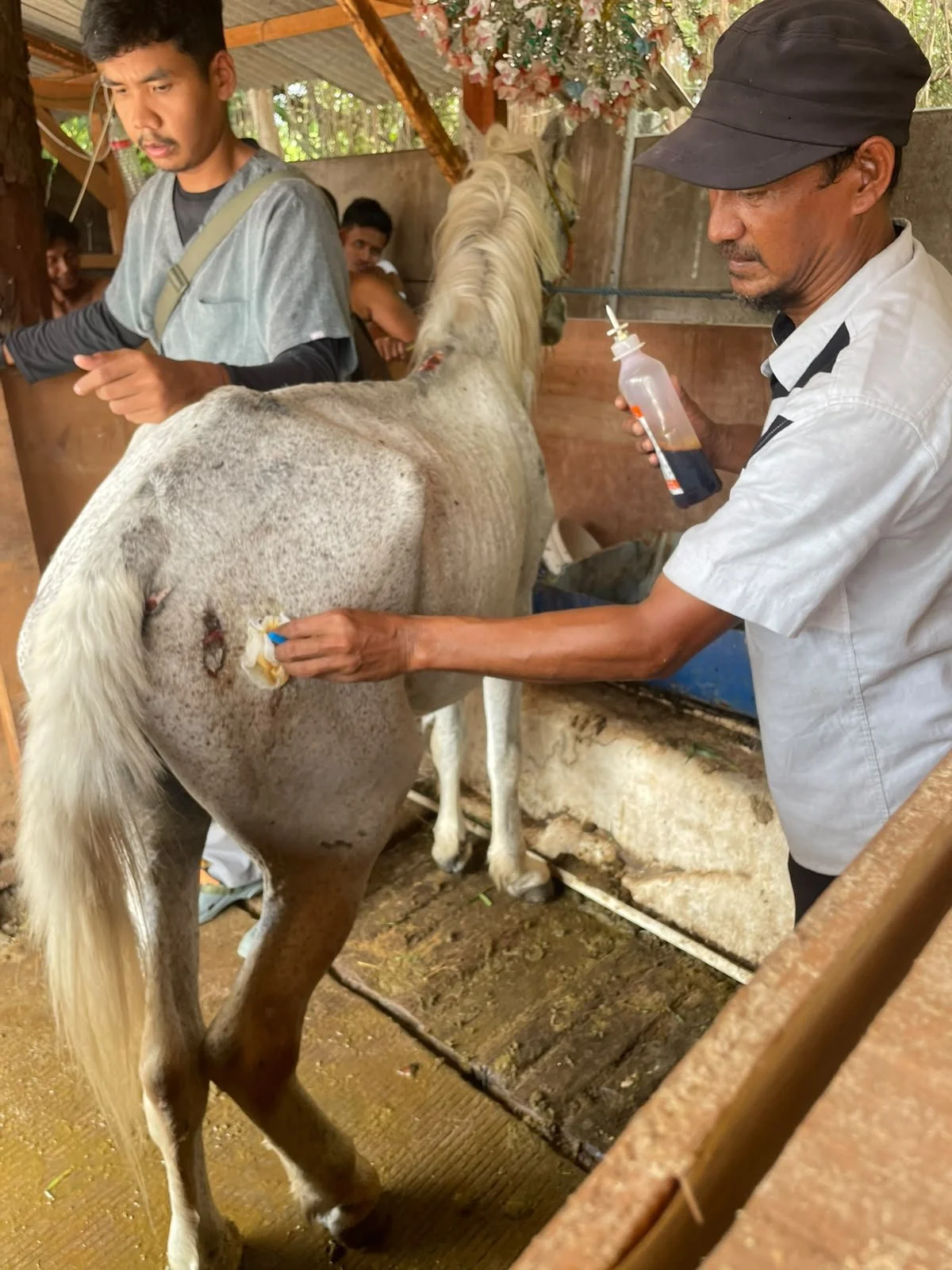
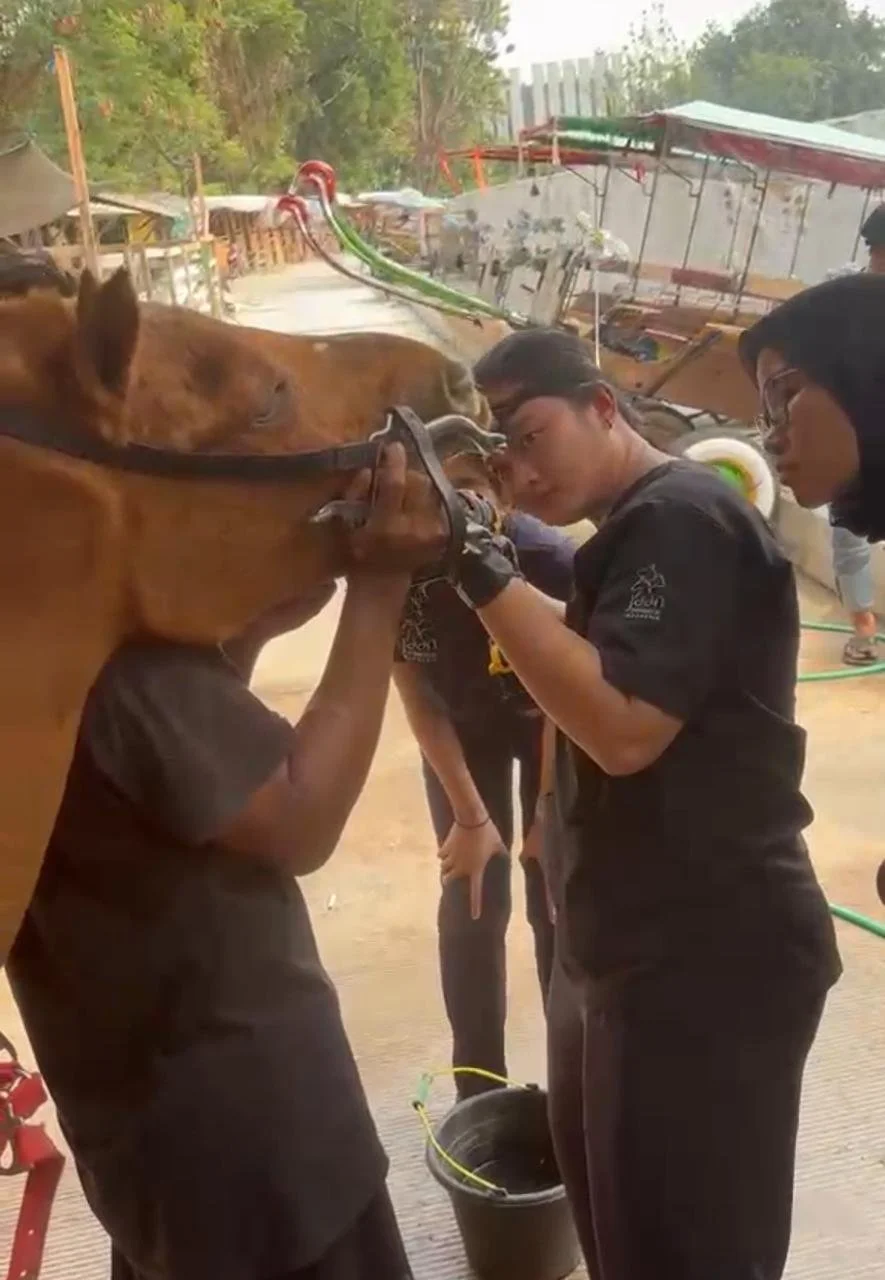
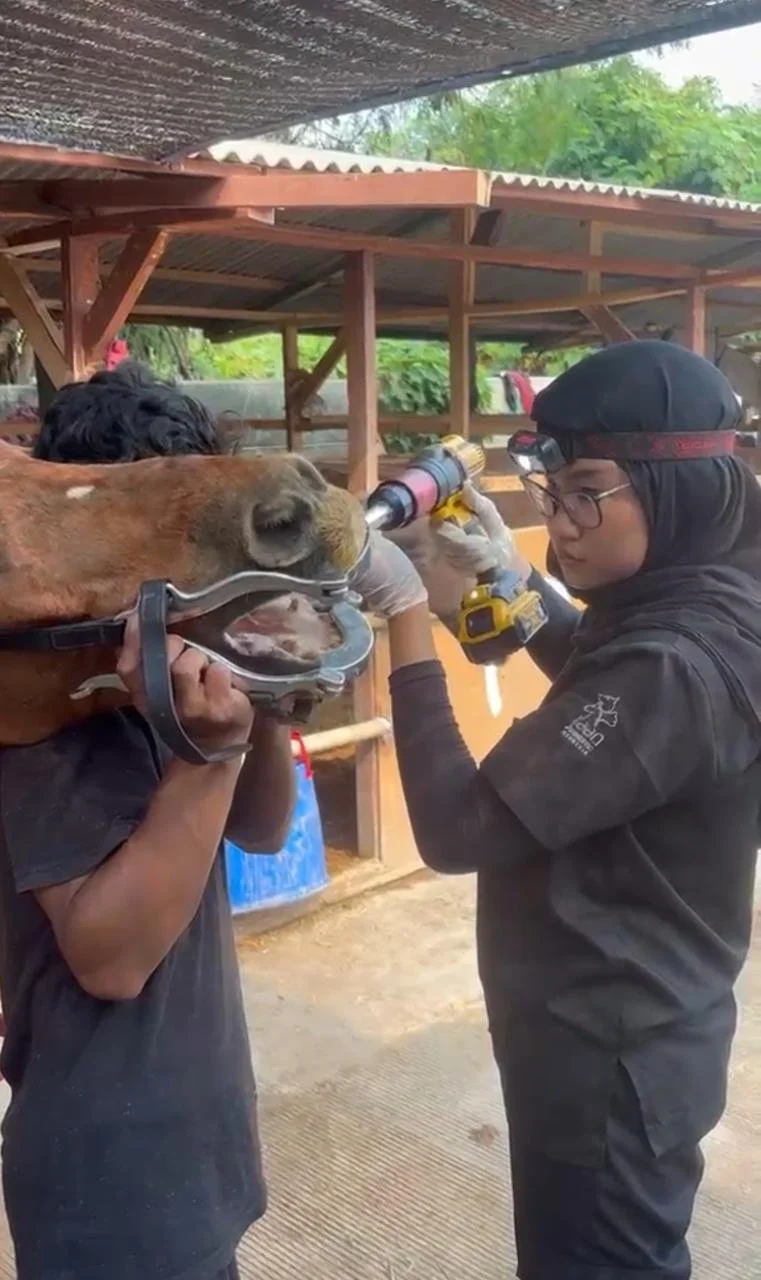
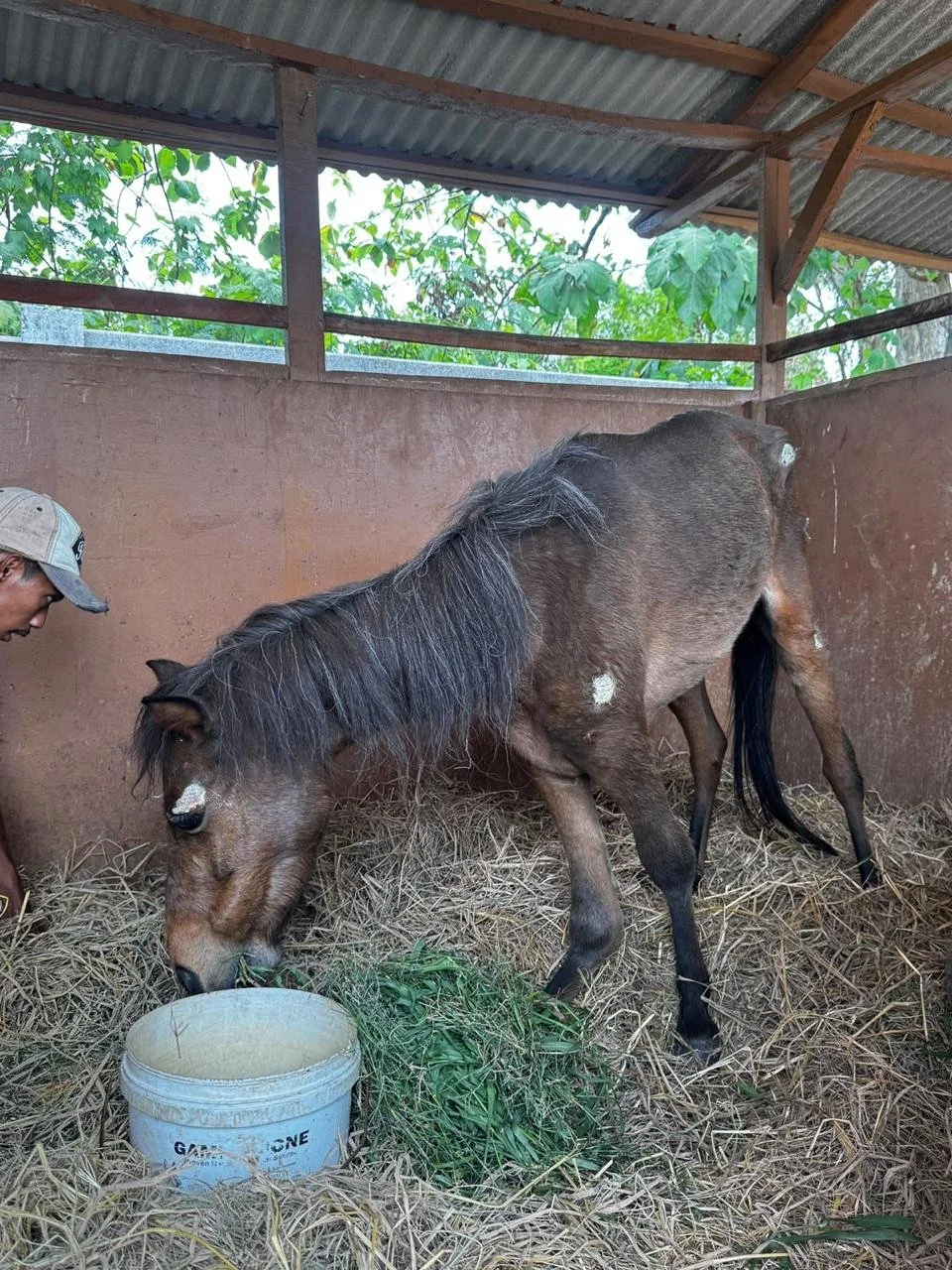
At the stable behind Kantor DPP Partai Golkar in Kemanggisan, West Jakarta (13 owners/households, 27 horses), targeted clinical management was provided for seven horses, including Frankie, Choco, Melody, Noah, Maxie, Kenzo and Reza.
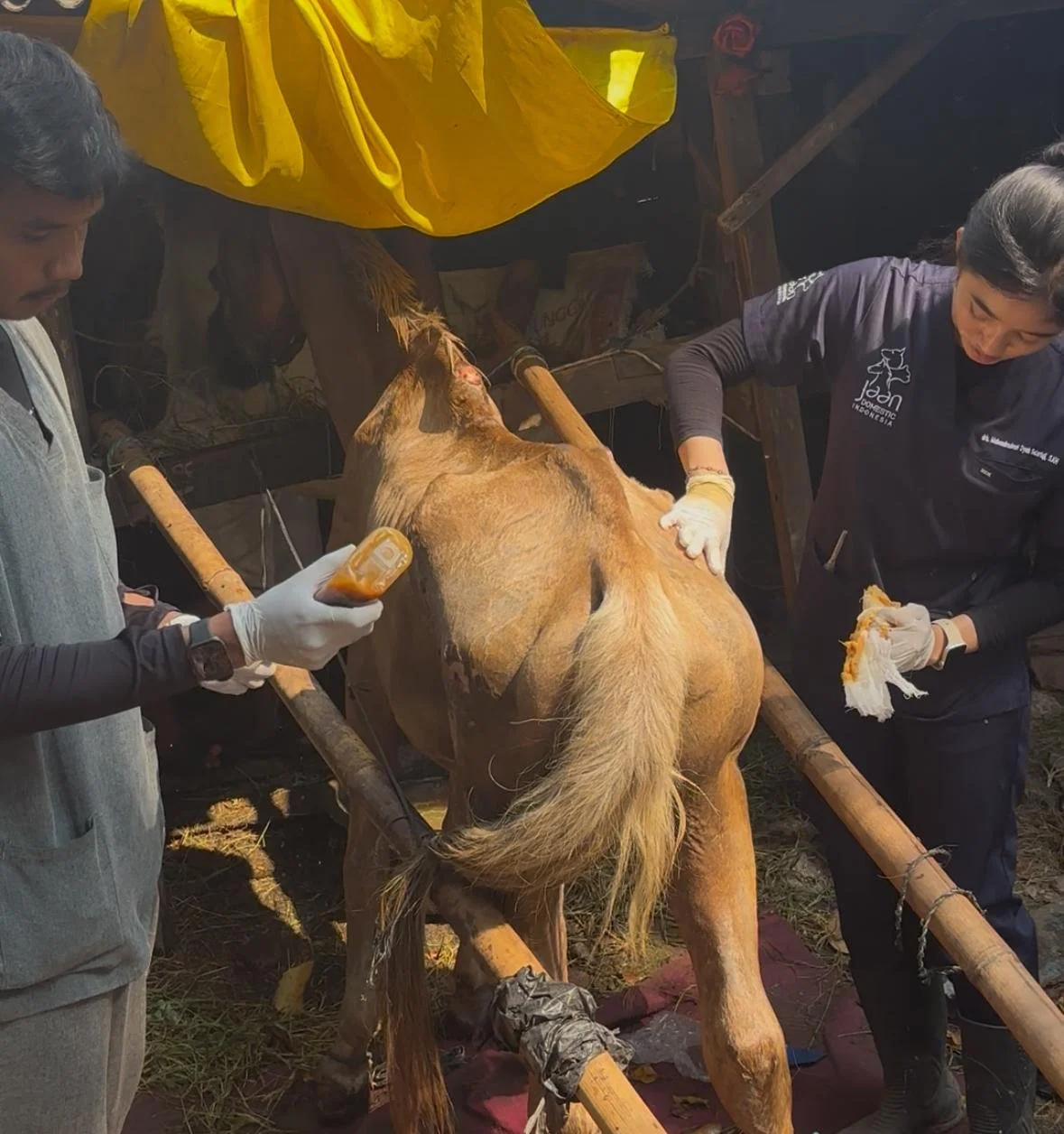
Interventions included sedated dental rasping to correct wave-mouth enamel points, surgical debridement and antiseptic flushing of chronic abscesses and skin lesions (4 wound treatments), systemic antibiotic therapy (3 treatments), and humane euthanasia for Choco due to severe, irreversible genital tumour progression.
Owner Counselling & Husbandry Outreach
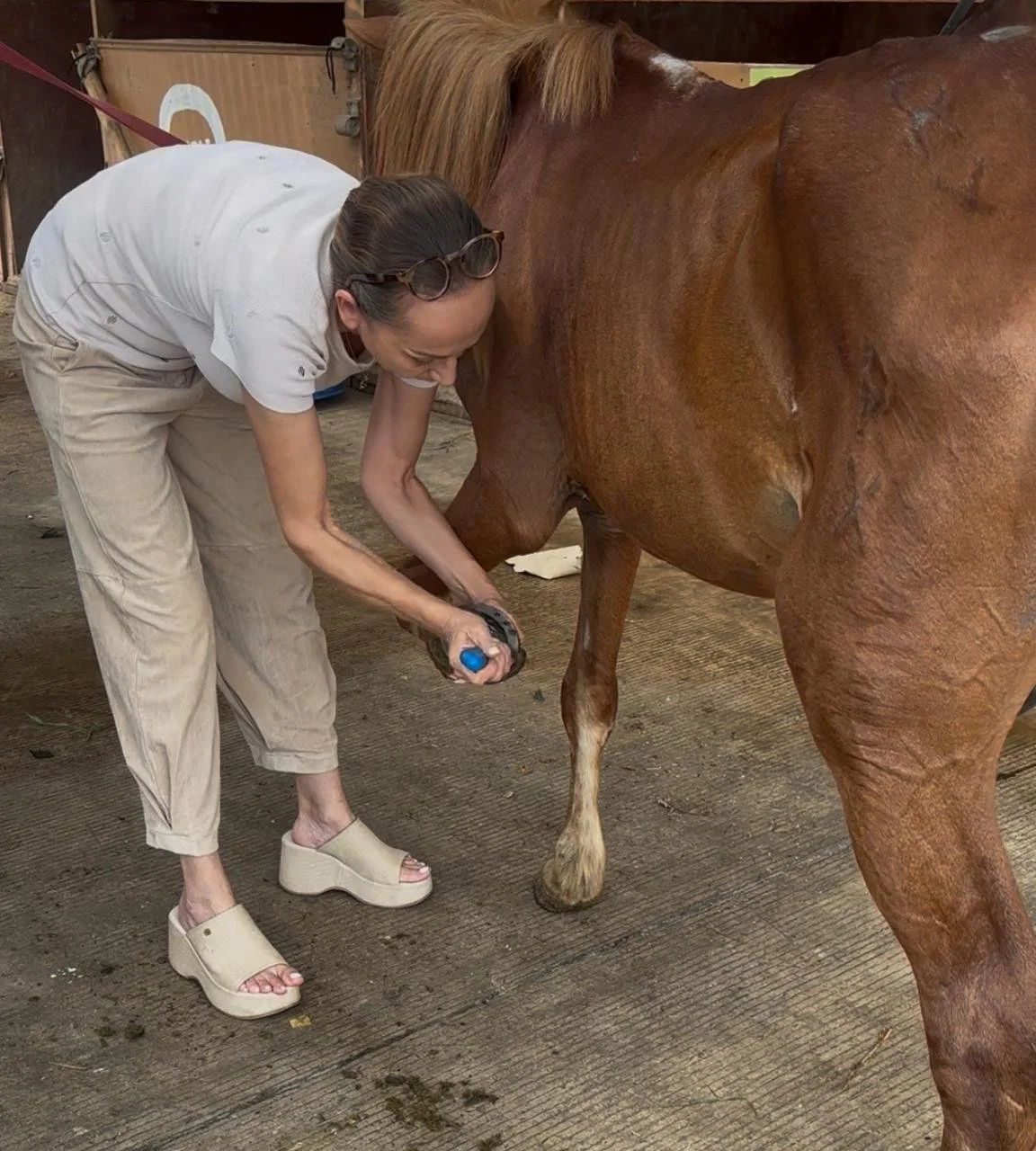
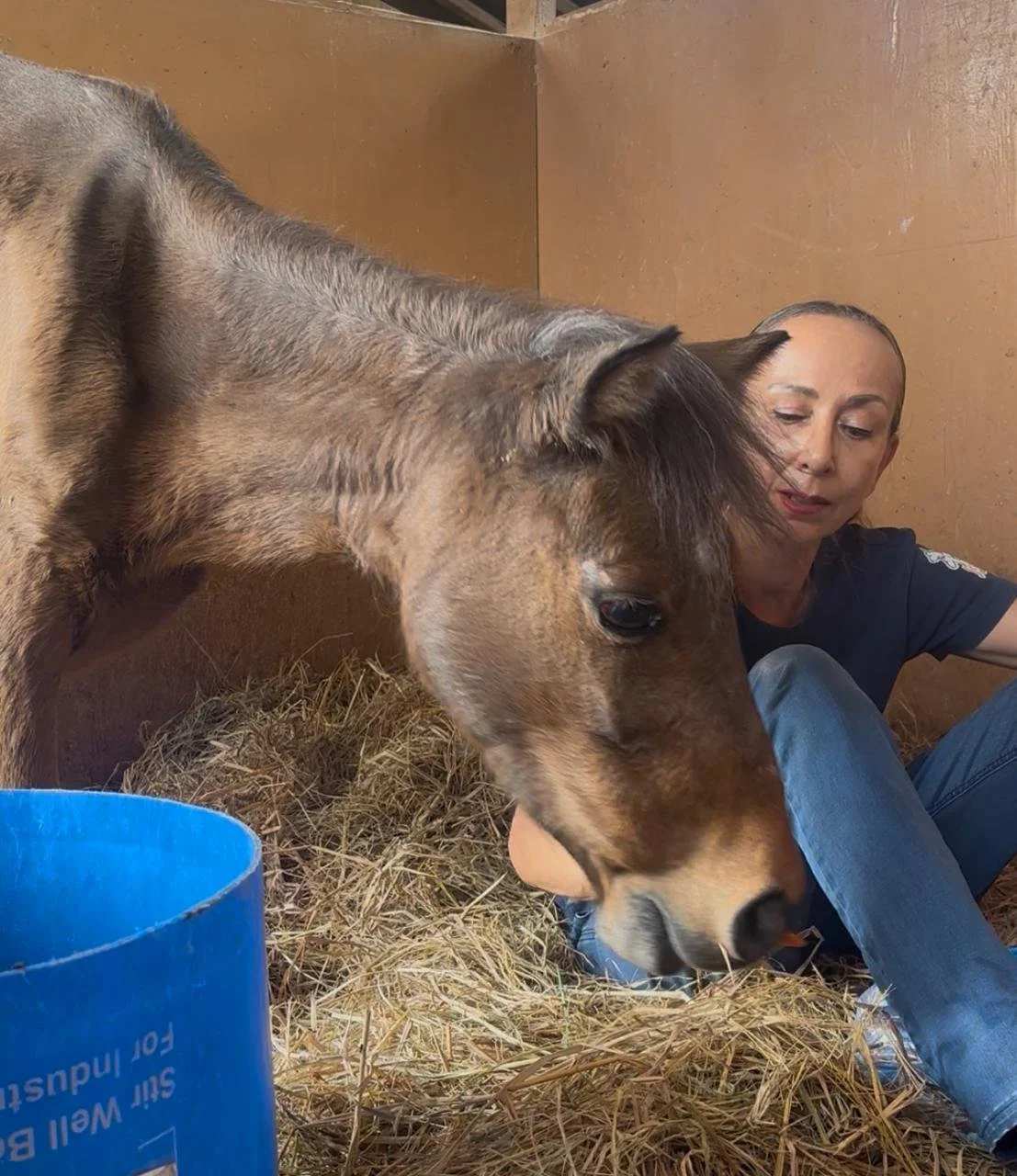
Throughout all 11 stable visits, veterinarians engaged 43 horse owners and drivers in practical guidance covering clean forage storage to prevent feed-borne colic, adequate drinking water and cooling during extreme heat, proper hoof hygiene and horseshoe fitting, and early recognition of clinical warning signs.
Key Field Findings & Challenges
General Condition of the Horses
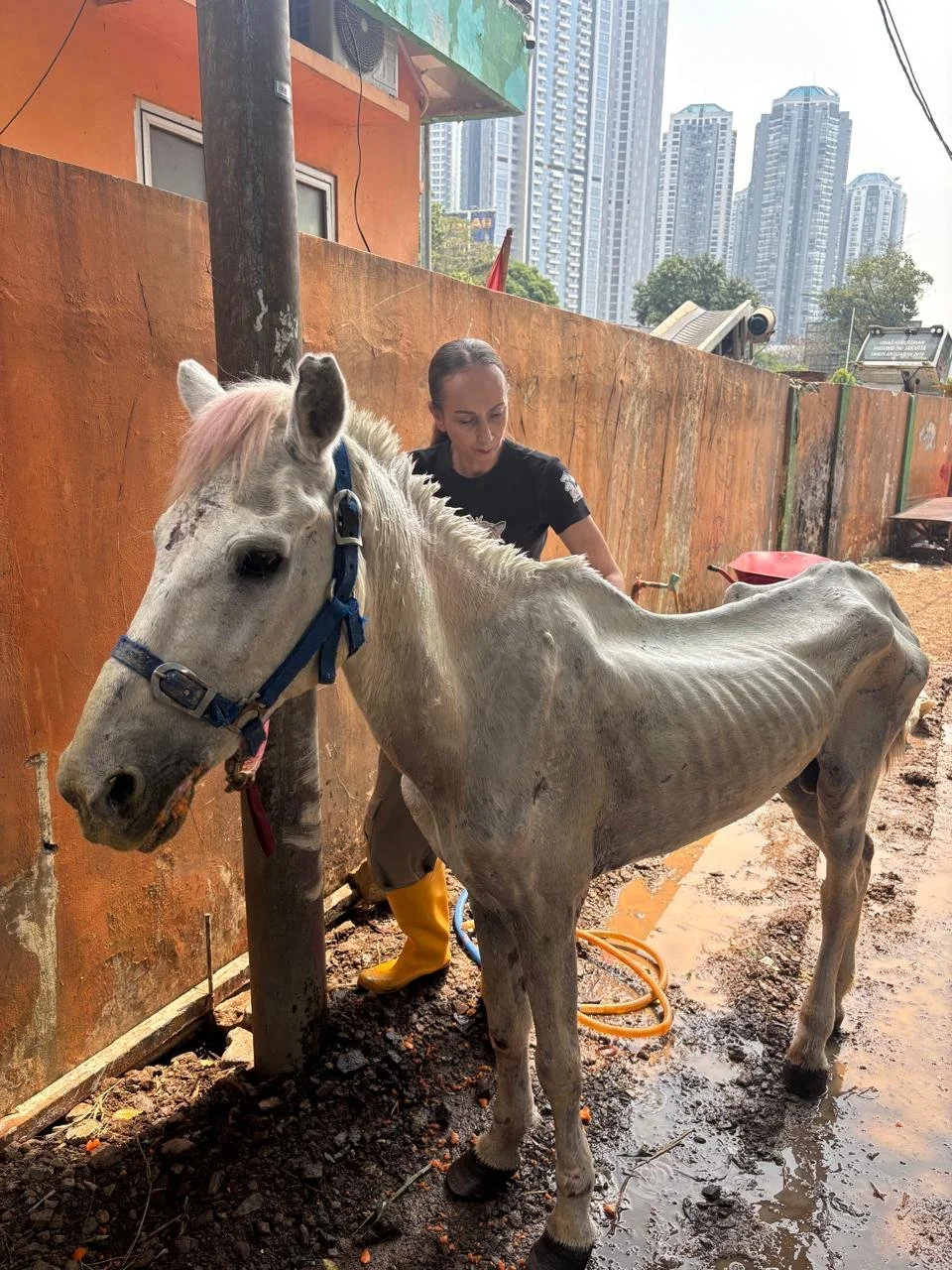
Many examined horses presented with open wounds, diarrhoea associated with contaminated feed and/or internal parasite infestations, and low body condition scores (15 horses) resulting from suboptimal feeding practices and general husbandry.
Housing & Care Conditions
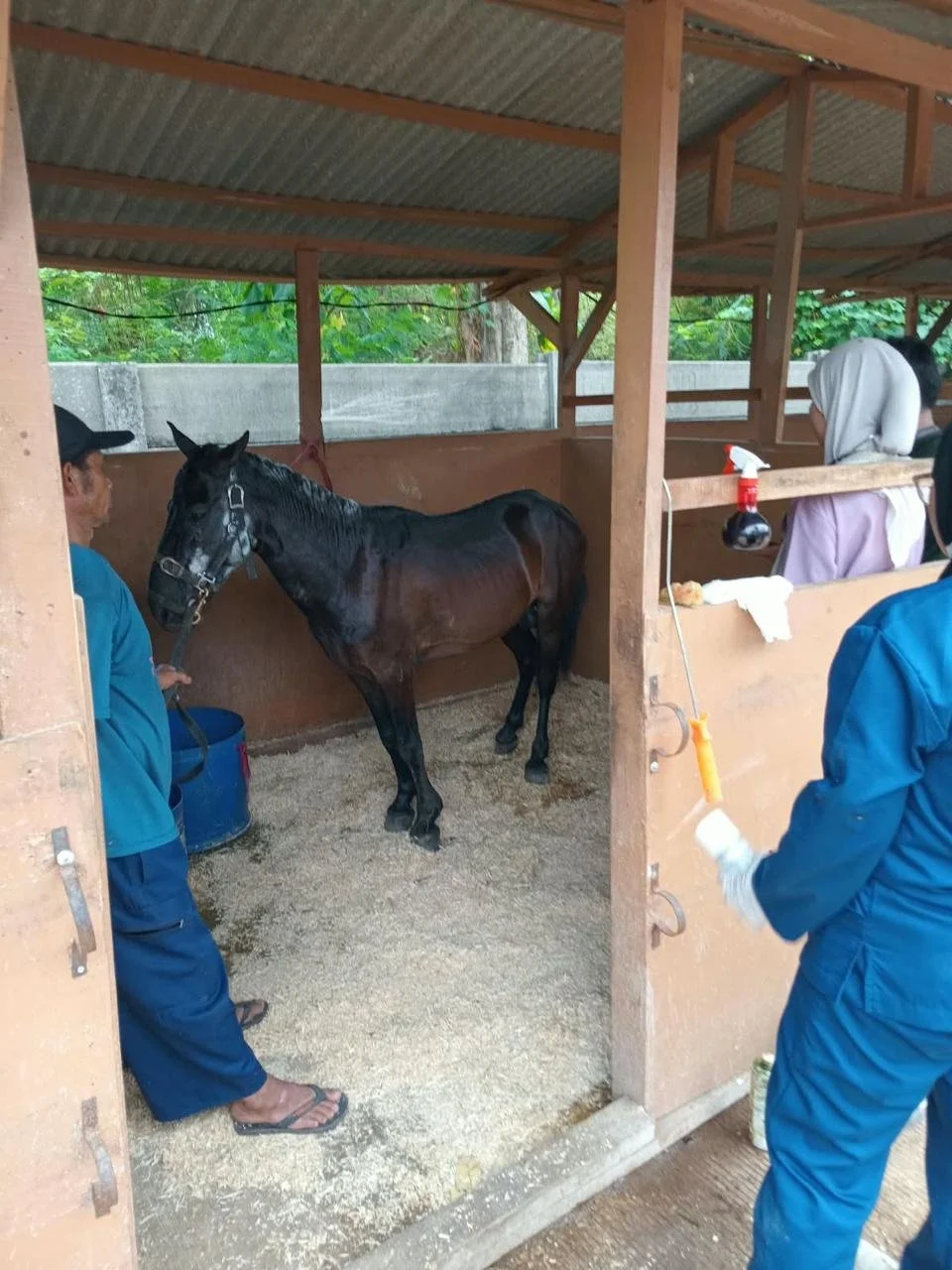
Numerous stables remained unsuitable for equine welfare, characterised by low roofs, accumulated manure, cramped living spaces, and damp, slippery floors. Extreme hot weather combined with inadequate cooling and hydration left horses vulnerable to heat stress, marked by rapid breathing and elevated body temperature, which serves as an early trigger for secondary health conditions such as colic.
Specific Problems Identified
Mass Colic Incident: A mass colic incident occurred in Bintaro, South Tangerang, with contaminated or spoiled feed identified as the leading suspected cause.
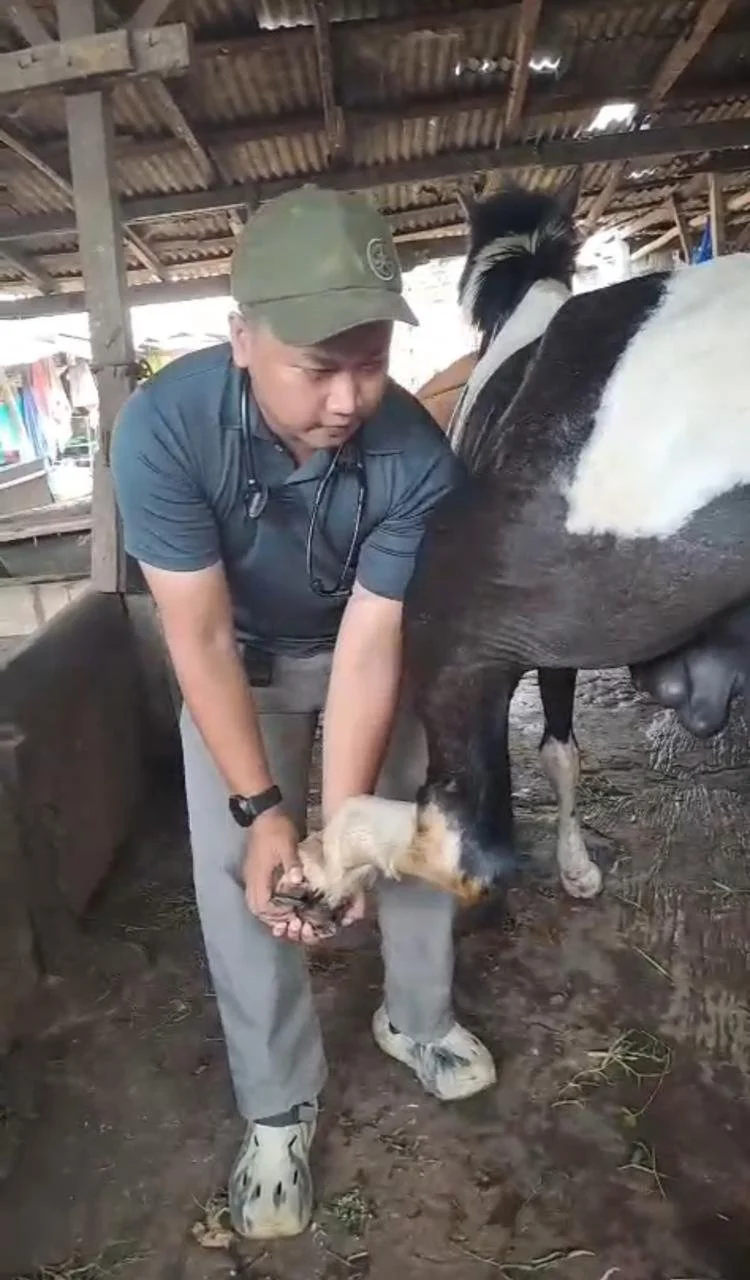
Improper Farriery Practices: Some carriage drivers and horse owners demonstrated limited understanding of proper horseshoe fitting. At Kemanggisan (Golkar), West Jakarta, one horse (Reza) was found with multiple horseshoe nails left embedded in the outer hoof walls after his shoes had come off.
Conclusion & Next Steps
Examinations were conducted across 11 locations, involving 43 owners/households and 54 horses. Based on clinical examination results, all 54 horses required and received medical treatment according to clinical indications, and seven horses were recommended for ongoing monitoring or further examination.
The team plan to prioritise follow-up assessments for the seven monitored horses, continue preventative tetanus and deworming outreach, and strengthen owner education on safe feed storage, heat-stress mitigation, and proper farriery care.
We look forward to continuing to update you on our partnership with JAAN. Together, we can improve the health, welfare and lives of carriage horses in Indonesia.