camels & other animals find relief from pain, illness and suffering
The hard-working team at the Camel Rescue Centre (CRC) in Bassi, India, helped no less than 265 camels last month. Thanks to your donations, they also provided essential veterinary care for 550 animals other than camels.
A few cases are outlined below:
Case One
One day, a camel working in a brick kiln became stuck whilst carrying a heavy load. His owner noticed a thorn in the side of his foot pad, removed it, and the camel resumed work.
A few days later, swelling developed on the side of the foot pad. The owner ignored it and the camel continued working. Eventually, pus started oozing from the wound, and the camel showed slight lameness and difficulty carrying heavy loads. The owner called our mobile ambulance for help.
We examined the wound, removed debris, and cleaned it with an antiseptic solution. Anti-inflammatory medicines and antibiotics were administered to reduce pain, inflammation, and infection. The owner was advised to give the camel rest, maintain wound hygiene, and provide nutritious food to support healing.
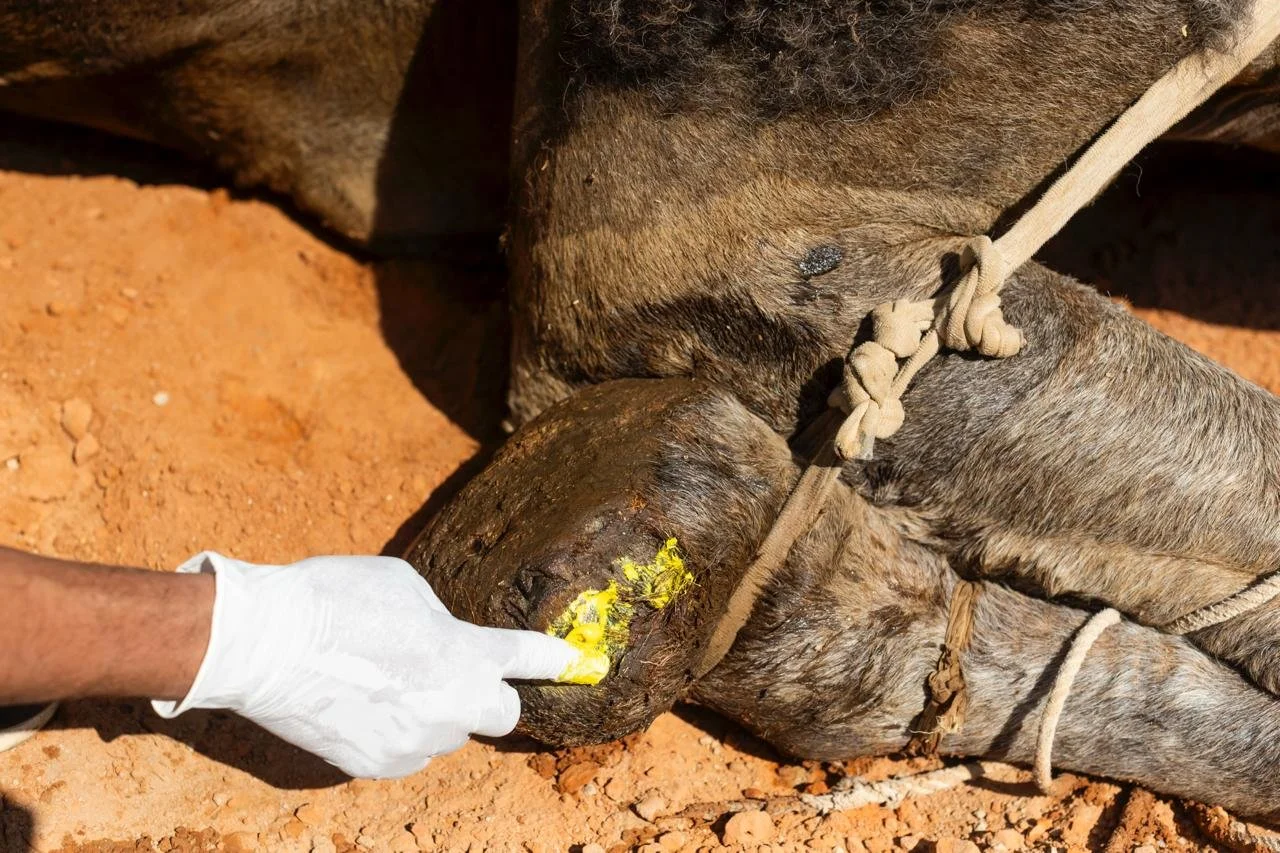
Applying antiseptic ointment after cleaning the wound
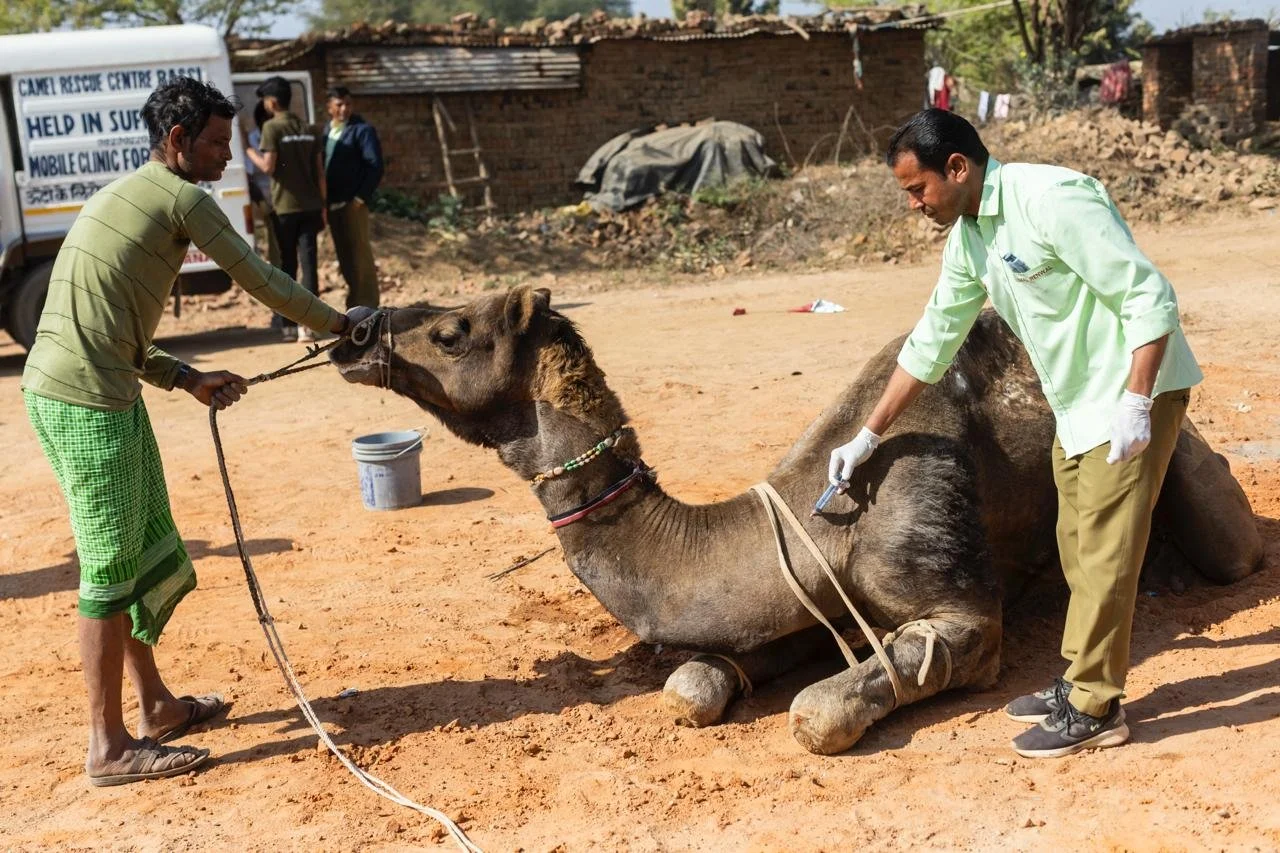
Administering injectable medicines
Case Two
An owner arrived at the CRC with his camel. He said that his camel had not been eating well for a few days and also had foul-smelling breath.
Upon examination, Dr Himanshu diagnosed the camel with digestive disturbances and stomatitis.
We gave him appropriate medications and advised the owner to wash the camel’s mouth with a light oral antiseptic solution. We also gave him some digestive boluses and powers for further use.
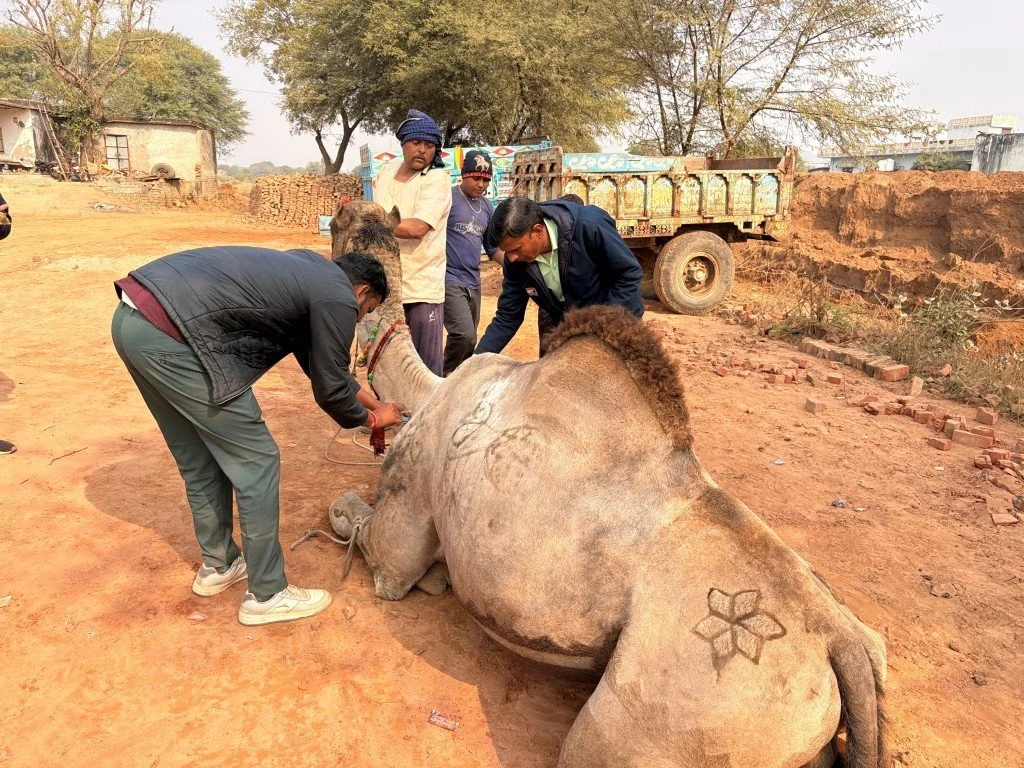
Daily Clinics / Monthly Camp
In January, we saw many working horses, goats, dogs, cows, sheep and goats suffering from different ailments. Some came in for deworming and vaccination.
In the daily clinics and monthly camp we treated 550 animals other than camels.
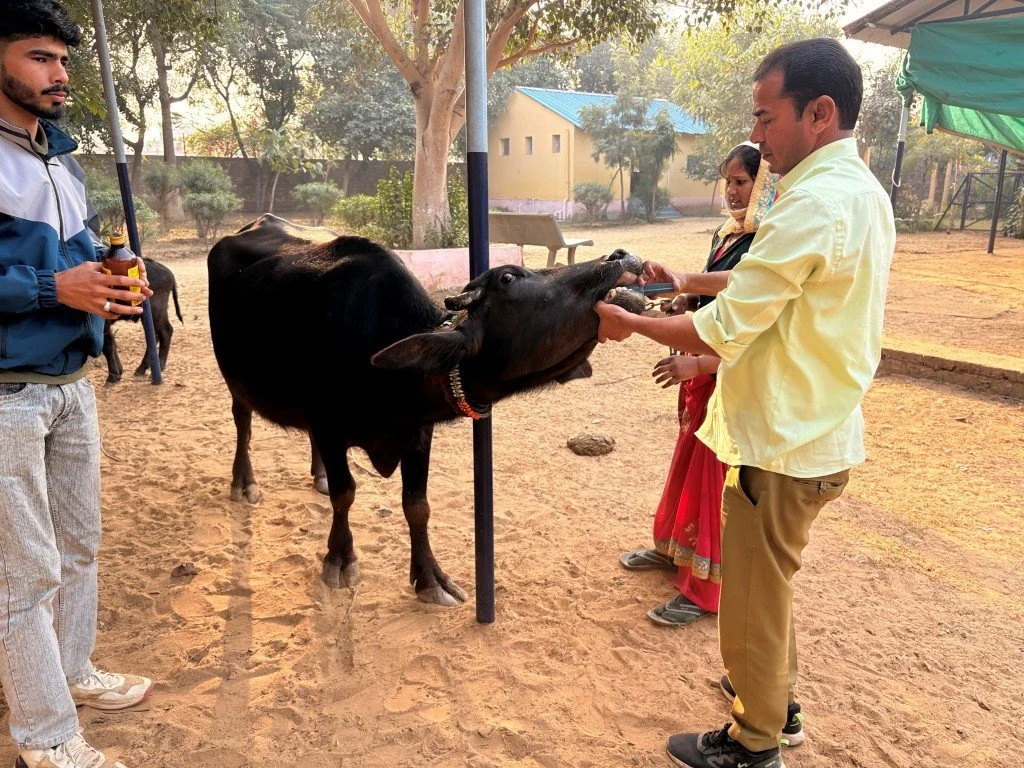
Buffalo Case
An owner visited the CRC site as her buffalo had been showing signs of weakness, reduced appetite, weight loss, and intermittent diarrhoea for a few days.
On clinical examination, the animal appeared dull with a rough coat and mild dehydration. Based on history and symptoms, a diagnosis of heavy worm infestation was made.
The buffalo was treated with appropriate deworming medication and supportive therapy.
The owner was advised to use regular deworming schedules, clean feeding practices, and proper shed hygiene to prevent re-infestation.
With your compassionate support, the CRC team will continue to relieve the suffering of hundreds of camels and other animals in India.