WORKING HORSES FREE STATE PROVINCE
Animal Aid Abroad supports Blind Love in carrying out the working horse program in Thaba Nchu, Botshabelo, Cart Horse Rank & Surrounding Rural Villages. In September, a total of 47 horses were treated for various conditions.
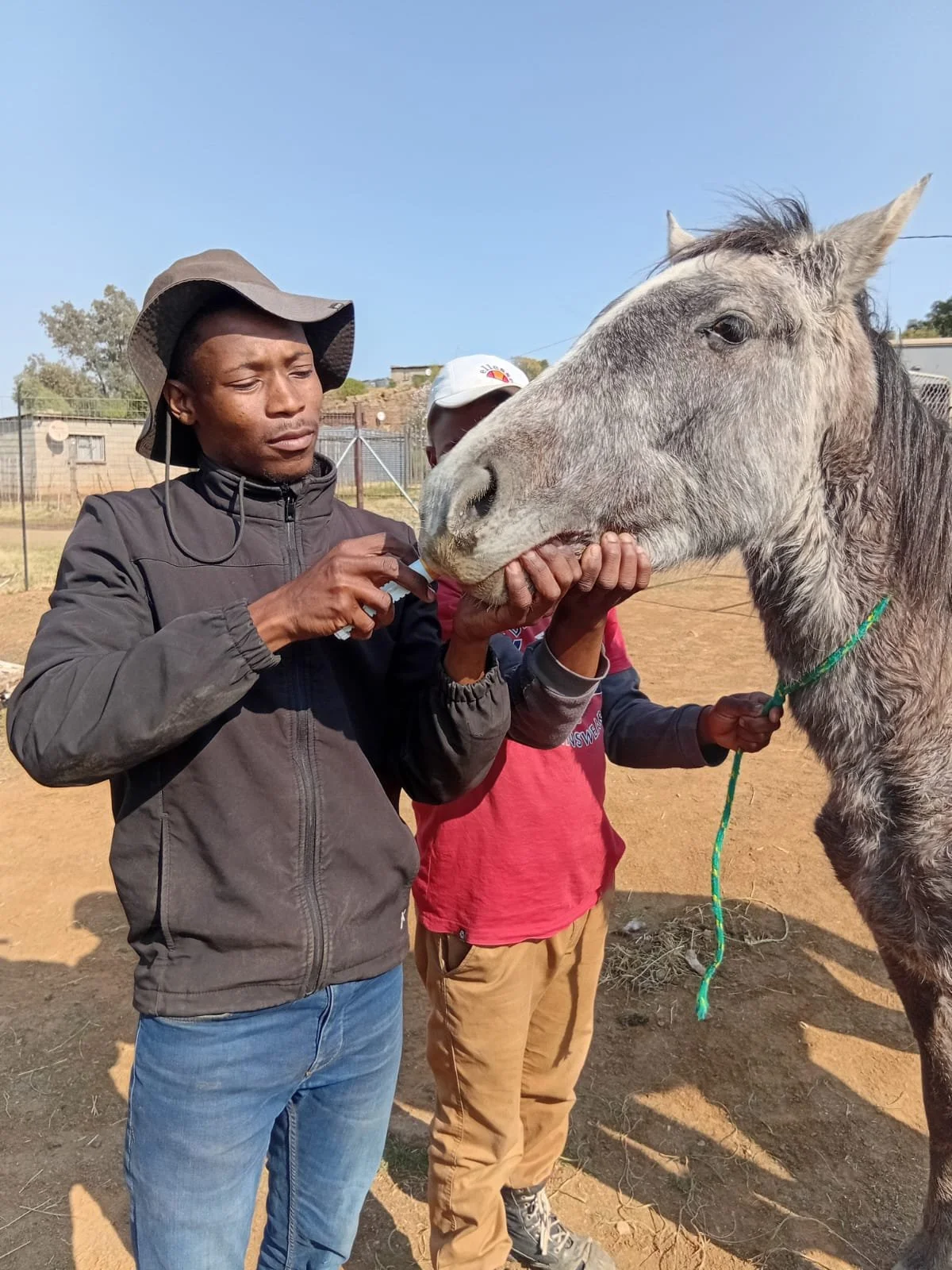
Outreach Activities: September was another busy month for the Free State Working Horse Program, with outreach activities taking place on 1, 2, 5, 6, 12, 16 and 22 September. Outreaches were held at the Horse Care Station, the Thaba Nchu Horse Rank, and in the rural village of Paradys.
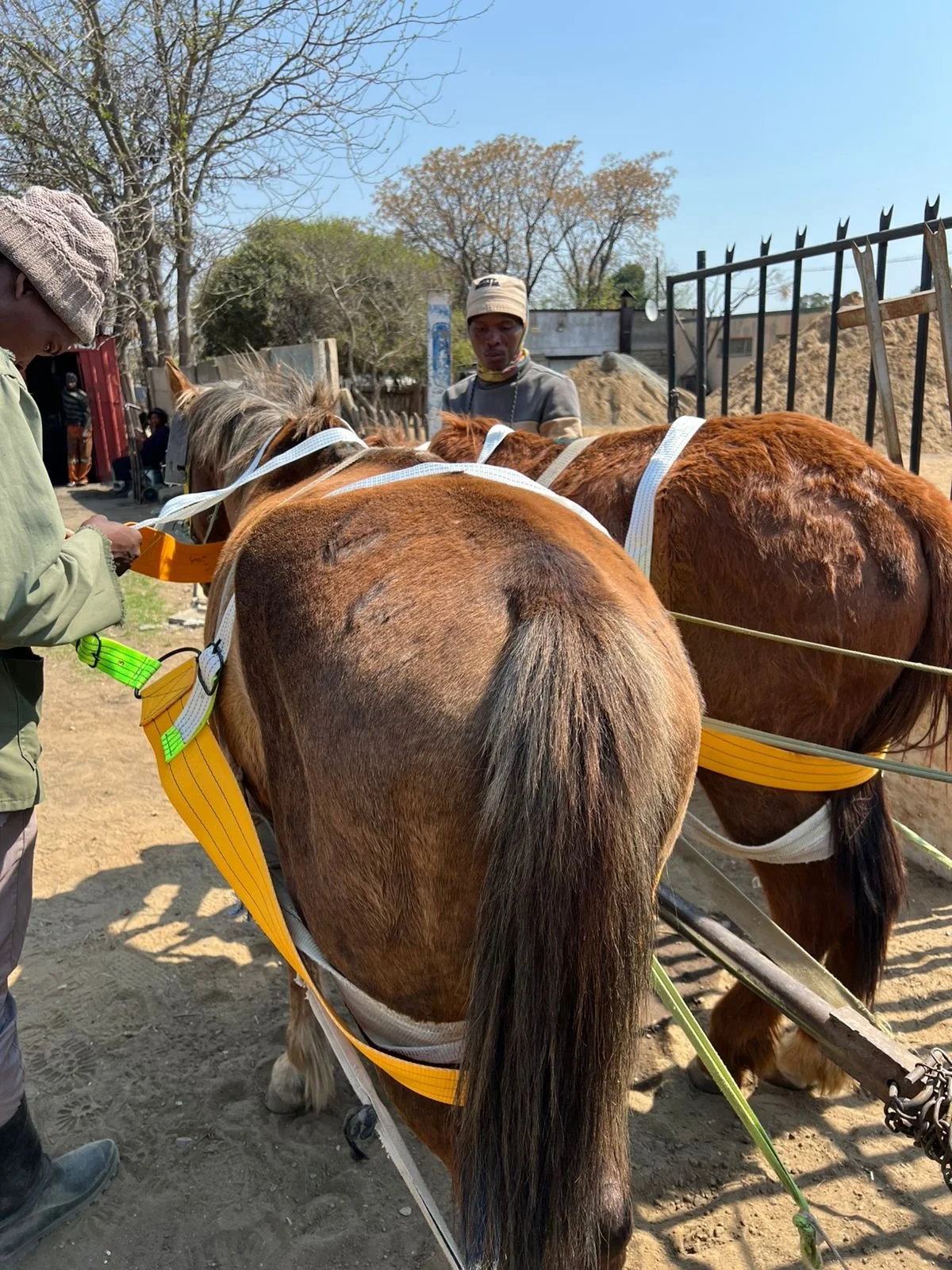
Across the month, horses received the usual range of preventative and primary healthcare, including: • General health assessments • Internal and external parasite control • Cleaning and treatment of minor wounds and injuries • Hoof and general welfare checks • Tack and harness inspections • Replacement of unsuitable harnesses where required • Supaboost supplementation where needed.
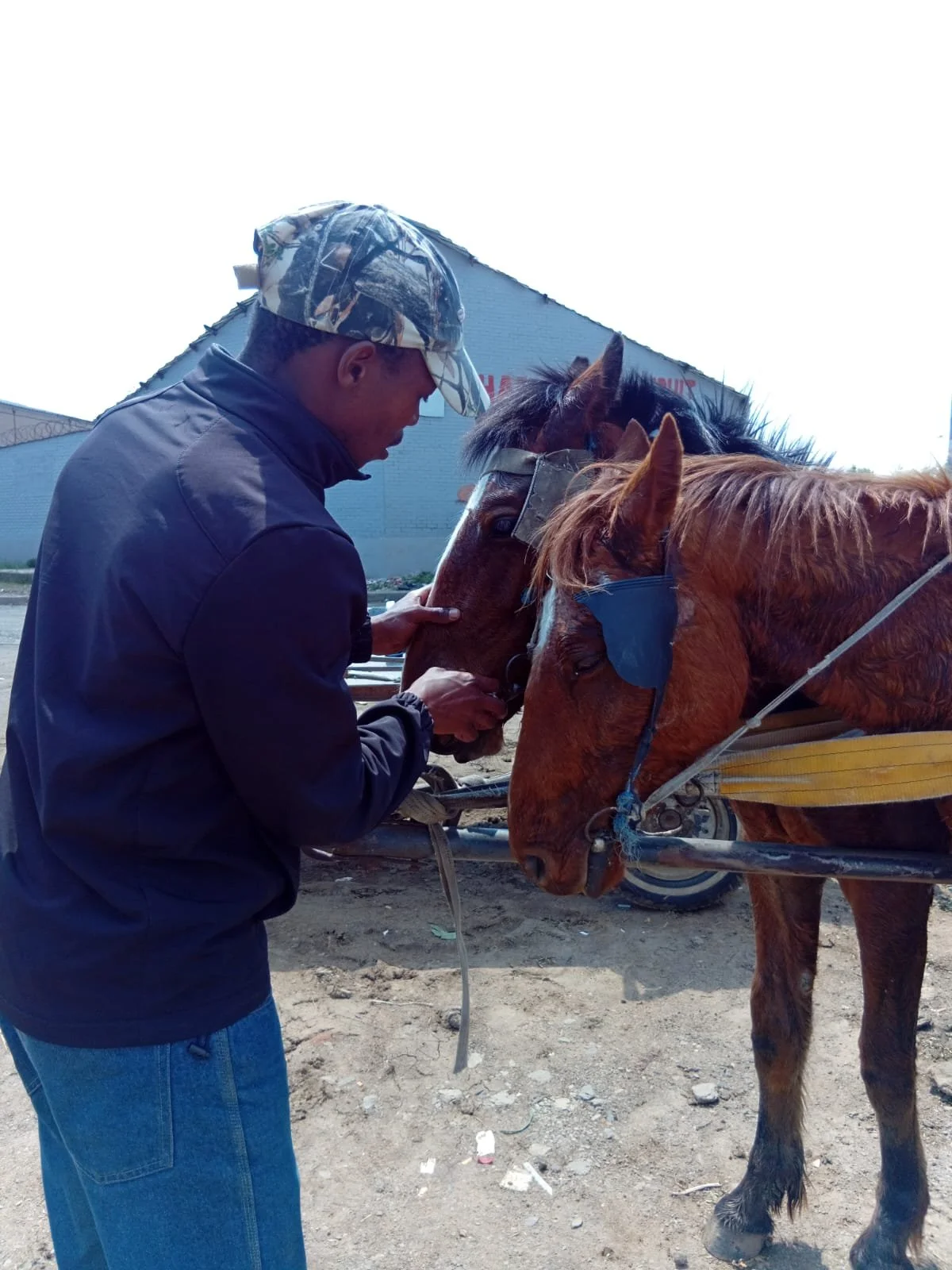
On 12 September, in addition to activities at the Care Station, the team carried out a home visit to a horse named Label, whose owner had contacted the team asking that he be checked and given Supaboost. It is encouraging to see owners increasingly making use of the Horse Care Station between scheduled outreach days, bringing their horses in for treatment and assistance when needed. This is exactly what we hoped the Care Station would achieve by making basic equine healthcare more readily accessible within the community.
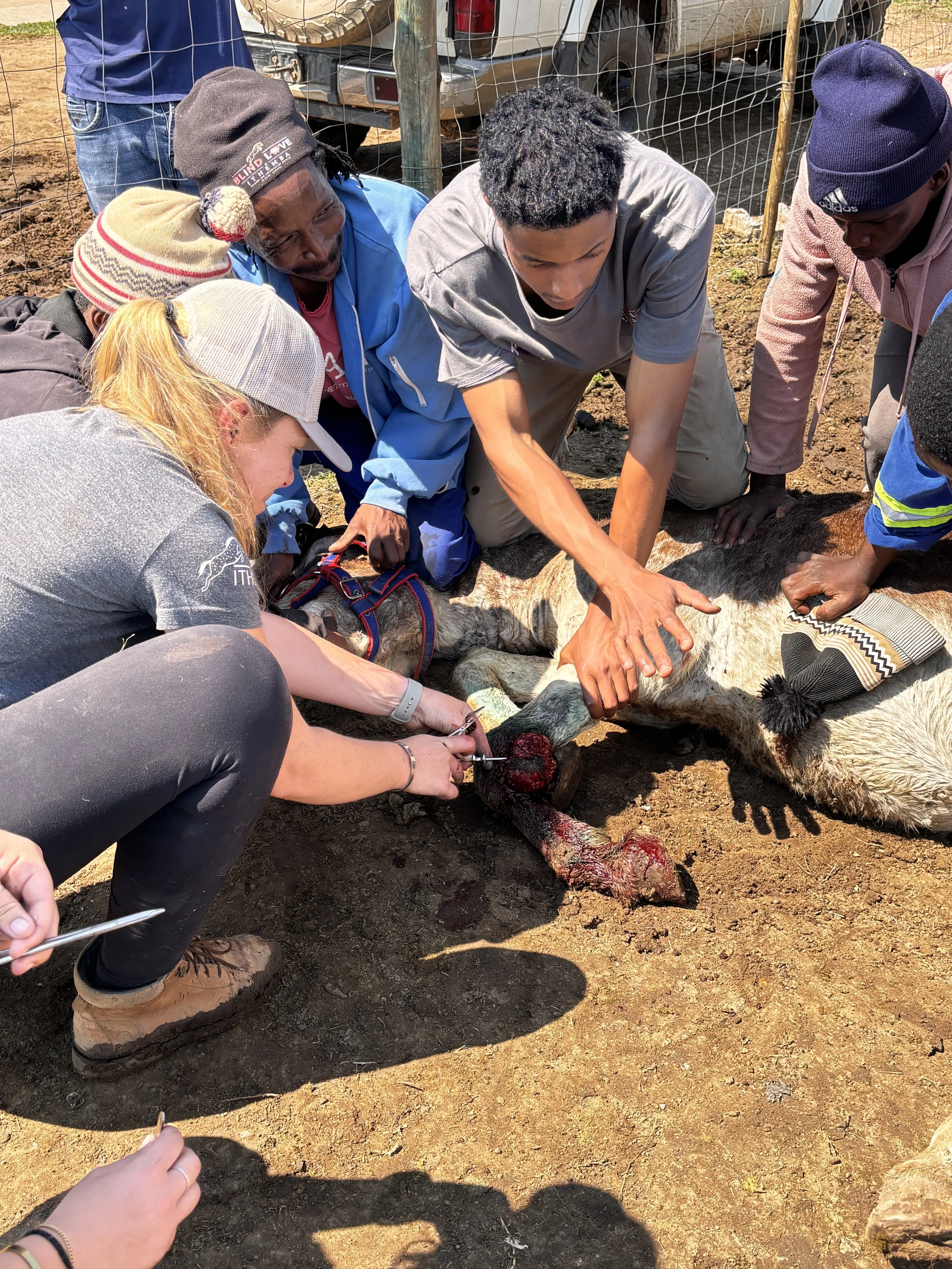
Sadly, on 16 September, the team dealt with a mare who tragically died during labour. On 25 September, the young CCS veterinarian attended to another horse after the owner sought assistance. The horse was found to be suffering from colic but fortunately responded to treatment and recovered.
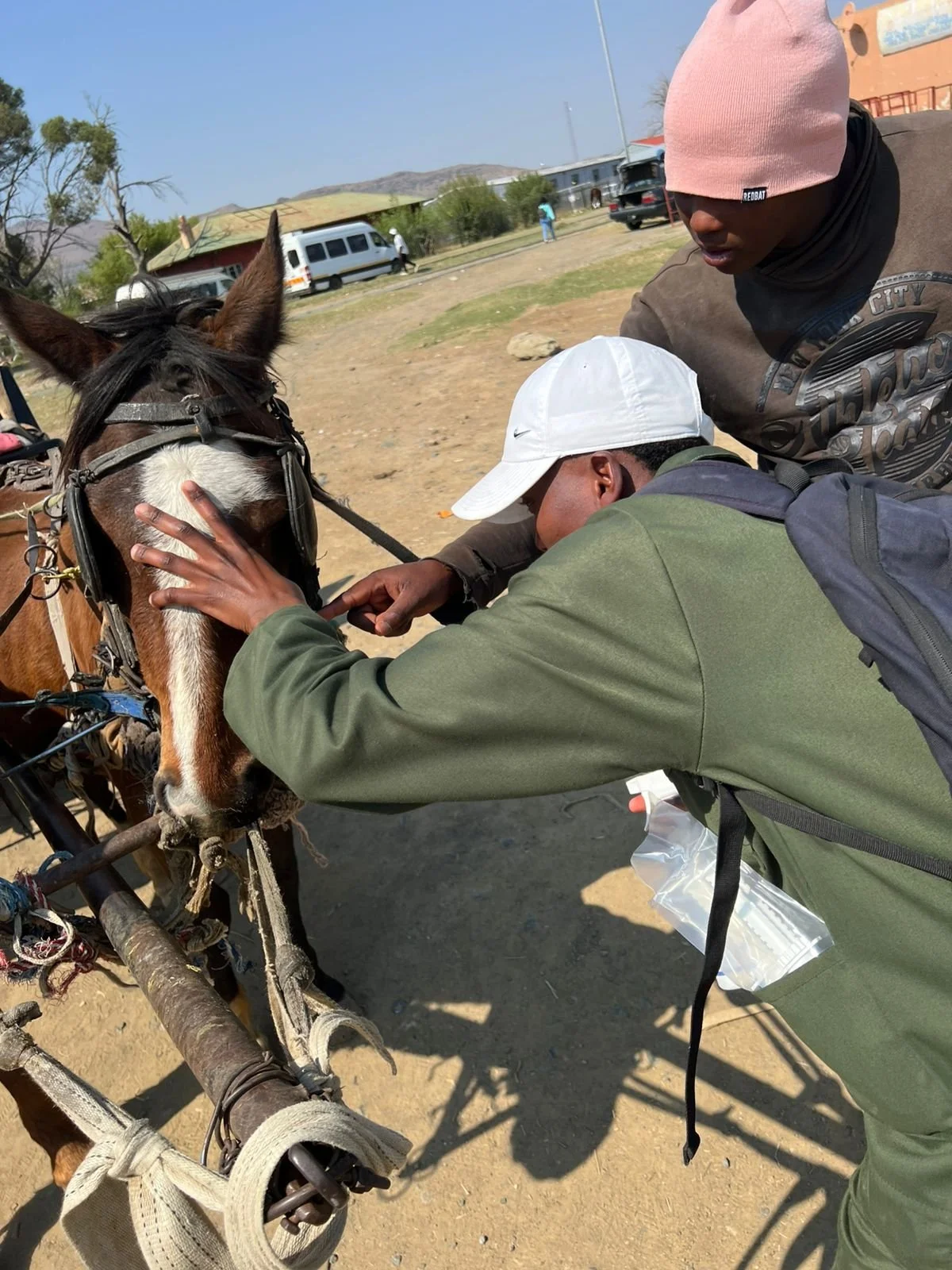
African Horse Sickness Vaccination Campaign – Preparations A major focus during September was preparation for Blind Love’s forthcoming 500-horse African Horse Sickness vaccination campaign. Funding for the campaign was received at the beginning of September, allowing preparations to move ahead. The team has since been working hard within the surrounding rural villages to identify and record horses ahead of the vaccination rollout. Particular attention has been given to communities that were badly affected by African Horse Sickness during the previous season. Owner education has formed an important part of these preparations. The team has again been discussing African Horse Sickness with owners, including the importance of vaccination while also making it clear that vaccination does not provide complete protection and that vaccinated horses may still become ill and, in some cases, die from the disease. The vaccination campaign is due to begin in early October.
WORKING DONKEY PROGRAM
Makhanda (Grahamstown), Eastern Cape Population Donkey Campaign – 8 September
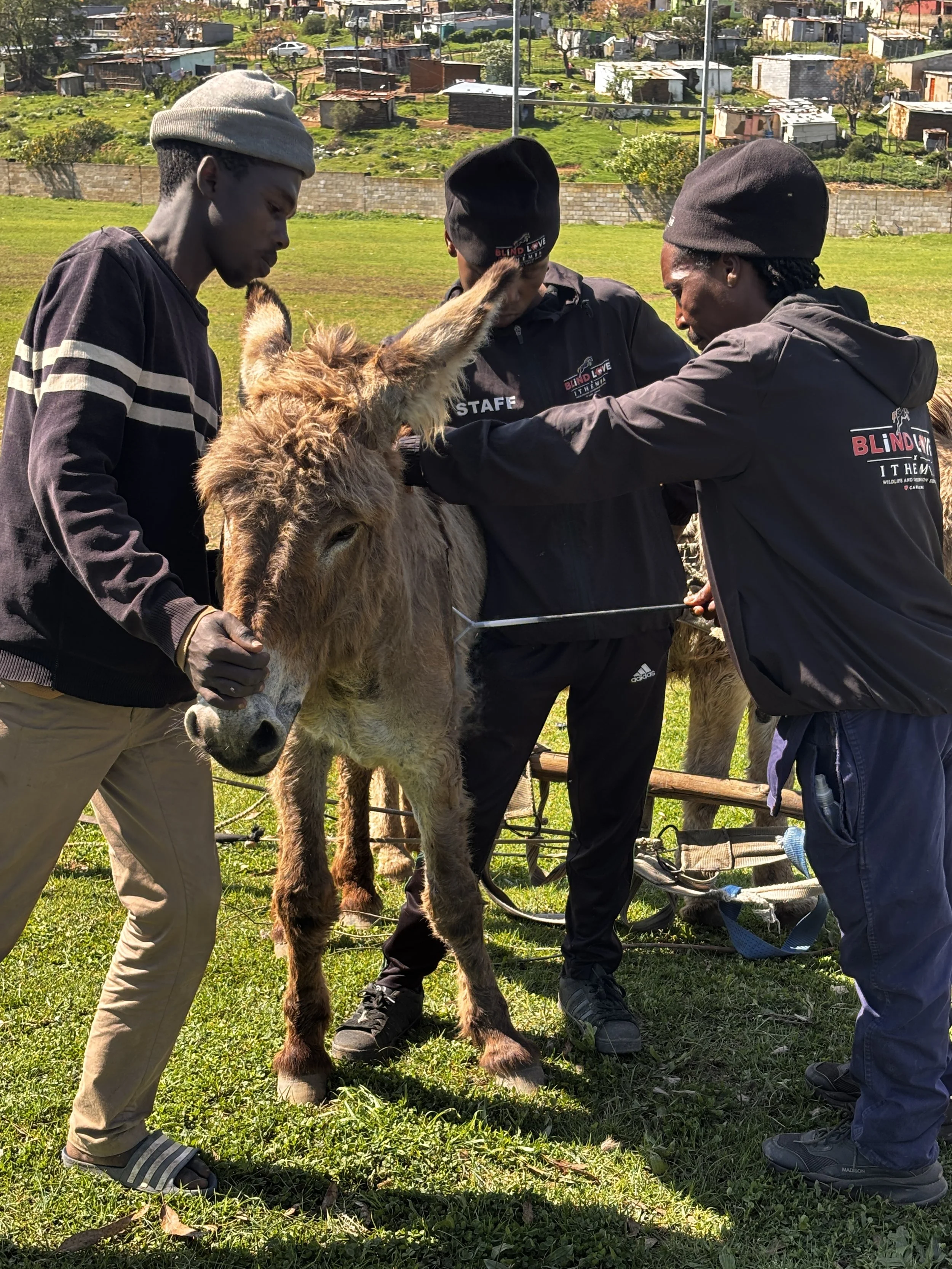
Another important program that AAA supports is the Working Donkey Program run by Blind Love. In September, another Population Donkey campaign day was held on 8 September, with a further small number of donkeys branded. We then drove through the industrial area following complaints from residents regarding unruly behaviour involving some donkey owners. Encouragingly, when we visited the area, everything was orderly, the donkeys encountered were already branded, and the animals appeared well cared for. This was a particularly positive outcome and demonstrated some of the progress being made through ongoing engagement, identification and education within the donkey-owning community.
A New Arrival at the Donkey Care Station. On 4 September, a new donkey foal was born at the Donkey Care Station! The little foal belongs to Michael’s son, Fanta, and provided a very welcome happy moment at the Care Station during another busy month.
Sarcoid Cases: On 6 September, Blind Love received a message through our Facebook page regarding a donkey with an extremely large growth on its knee. The owner was advised to take the donkey to the Donkey Care Station, where Michael sent photographs to Dr Annie for assessment. At the same time, we were still trying to locate the donkey with the severe sarcoid on his rump that had been reported during August. Before his planned treatment could take place, the donkey had disappeared, and his owner had been unable to find him. Quite unexpectedly, a photograph of a donkey with an apparent injury appeared on one of the local Grahamstown WhatsApp groups. Dr Annie recognised him as the missing sarcoid case, and Michael was able to locate him and bring him back to the Care Station. This meant that we now had two significant sarcoid cases requiring veterinary treatment. On 22 September, Dr Annie attended to both donkeys. She was able to completely remove the sarcoid from the first donkey. The growth on the second donkey’s knee was far too extensive to remove safely at this stage. Dr Annie had therefore ordered chemotherapy beads, which she implanted beneath the tumour. The hope is that the chemotherapy will substantially reduce the size of the growth over the following weeks, allowing it to be surgically removed and the resulting wound to close and heal successfully.
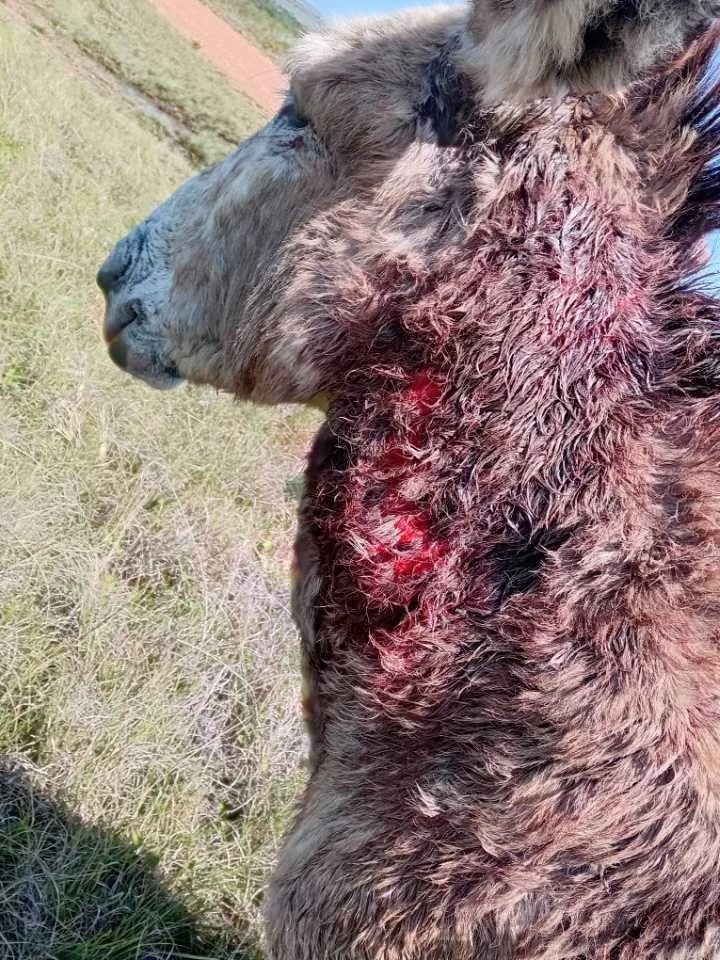
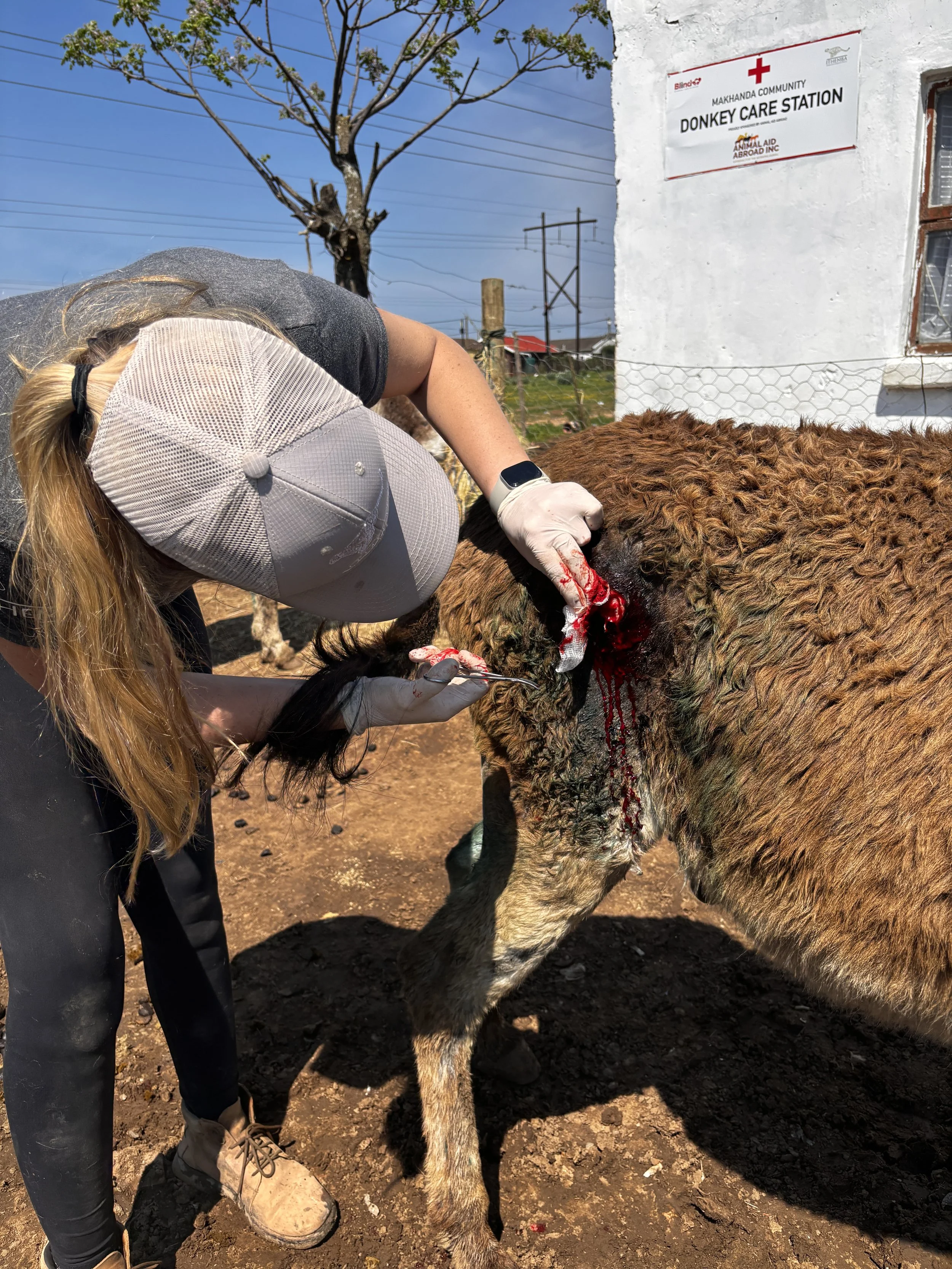
Emergency and Care Station Cases: On 9 September, another donkey was involved in a serious fight. His owner brought him directly to the Donkey Care Station, where Michael cleaned and treated bite wounds to the donkey’s neck and hind legs. On 19 September, a donkey arrived at the Care Station with an injured leg after the leg had become trapped in a pipe. The owner had managed to cut the pipe away using a hacksaw blade. Photographs were sent to Dr Annie, who advised that the donkey remain at the Care Station until she could examine him on 22 September. By the time Dr Annie attended, Michael had kept the injury clean and it was healing well. The donkey was therefore able to return home! These cases once again demonstrate the increasingly important role of the Donkey Care Station in providing owners with somewhere to take injured animals immediately, allowing Michael to provide first-response care while veterinary advice and treatment are arranged where necessary. On 28 September, Michael was alerted to a donkey lying amongst rubbish with a severely broken leg. Unfortunately, the injury was beyond treatment. As Dr Annie was unavailable at the time, we contacted the SPCA and the donkey was humanely euthanised to prevent further suffering.
Monthly Outreach – 26 September The regular monthly donkey outreach was held on 26 September in bitterly cold, wet and rainy conditions. Despite the weather, 17 donkeys pulling carts attended the outreach, with all animals checked and treated for parasites. Harnesses were inspected and new harnesses were distributed to owners whose donkeys required replacements. A further 5 donkeys were brought directly to the Donkey Care Station, where they were checked and treated for parasites. Despite the difficult weather conditions, it was another productive outreach and encouraging to see owners continuing to bring their animals forward for preventative treatment and assistance.
Overall Summary
Working Horse Program • 47 horses were seen during September. • Outreach activities took place on 1, 2, 5, 6, 12, 16 and 22 September, covering the Horse Care Station, Thaba Nchu Horse Rank and the rural village of Paradys. • Routine health assessments, parasite control, wound care, hoof checks and harness/tack assessments continued throughout the month. • Harnesses were replaced where required and Supaboost supplementation provided where needed. • A home visit was made to Label on 12 September at the request of his owner. • Owners are increasingly making use of the Horse Care Station between scheduled outreaches. • Sadly, a mare died during labour on 16 September. • A horse suffering from colic was attended by the CCS veterinarian on 25 September and fortunately recovered. • Significant work was undertaken in preparation for the forthcoming 500-horse African Horse Sickness vaccination campaign, including identifying horses in rural villages and providing owner education around African Horse Sickness and vaccination.
Working Donkey Program • A further Population Donkey branding day was held on 8 September. • A follow-up visit through the industrial area found the donkey owners were behaving responsibly, with animals branded and well cared for. • A new donkey foal was born at the Donkey Care Station on 4 September. • The previously missing sarcoid case was successfully located and returned to the Care Station. • Two donkeys with significant sarcoids were treated by Dr Annie on 22 September. One growth was completely removed, while chemotherapy beads were implanted beneath the second, much larger tumour in an attempt to shrink it ahead of surgical removal. • A donkey injured during a serious fight received wound care at the Care Station. • Another donkey with a leg injury after becoming trapped in a pipe received daily care and recovered sufficiently to return home. • 17 cart donkeys attended the monthly outreach on 26 September, despite extremely cold and wet weather. • A further 5 donkeys were brought to the Care Station for checks and parasite treatment. • Harnesses were inspected during the outreach and replacements distributed where required. • On 28 September, Michael responded to a donkey found with a severely broken leg. With the injury beyond treatment and Dr Annie unavailable, the SPCA was contacted and the donkey was humanely euthanised to prevent further suffering.