Thanks to the vital support of our generous donors, Animal Aid Abroad continues to fund the Lilongwe Society for the Protection and Care of Animals (LSPCA) in their outreach work across Malawi.
During September 2026, the LSPCA team carried out donkey veterinary outreach activities in the Mponela and Mitundu communities. The main activities included clinical examinations, medical treatments, hoof care, and animal welfare education for donkey owners. The outreach visits gave the team a valuable chance to interact with donkey owners to hear current welfare concerns affecting donkeys in their communities. We were able to give owners clear and practical advice on how to improve the daily care of their donkeys. The work focused on both treating current problems and preventing future ones through education. This month’s work was particularly impactful because we reached new farmers whose donkeys had never received veterinary attention or welfare education before, as we visited different locations in the same areas we normally visit. Many expressed gratitude for the services and knowledge shared, noting that the clinic would improve the health of donkeys and would change the way they handle their animals.
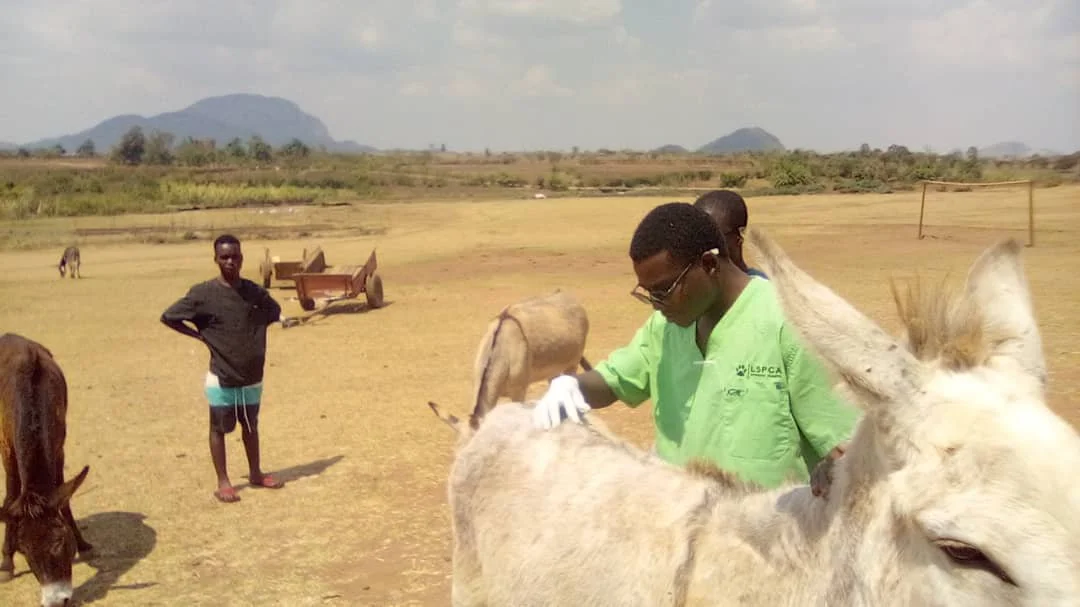
Mobile Clinics and Field Activities: The mobile clinic visited different centres within the wider communities of Mponela and Mitundu. Although the team has visited these areas before, the communities are large. This time we met many new donkey farmers whose animals had never been dewormed, treated, or received welfare education. As a result, we saw a high number of donkeys.
In total, we examined and assisted 147 donkeys across both communities. We carried out full physical examinations on the donkeys. We dewormed 74 donkeys to control parasites and treated 3 cases of eye infection. Several donkeys with fever and general body weakness were tentatively diagnosed and treated with appropriate antibiotics and multivitamins to support their recovery and boost immunity. We also found many minor and major wounds on donkeys in both areas, most of them in animals belonging to new farmers who had not received welfare education before. We also saw many cases of overgrown and uneven hooves. Because clinic visits are not very frequent, some donkeys had developed lameness. The team trimmed the overgrown hooves and corrected the uneven ones to improve comfort and movement. Because of the many serious wounds found, animal welfare education became a central part of the outreach. Farmers were taught humane ways to handle donkeys, the importance of proper harnesses and pack saddles to prevent injuries, and the need to report donkey illnesses early so that help can be given in time. They were also advised against overworking any donkey and against using young donkeys to pull heavy loads, and were given the basics of proper feeding and housing to keep donkeys healthy and strong. The farmers understood the advice and thanked the team. Many said both the clinic and the welfare education are essential for their donkeys’ health and would improve their working capacity.
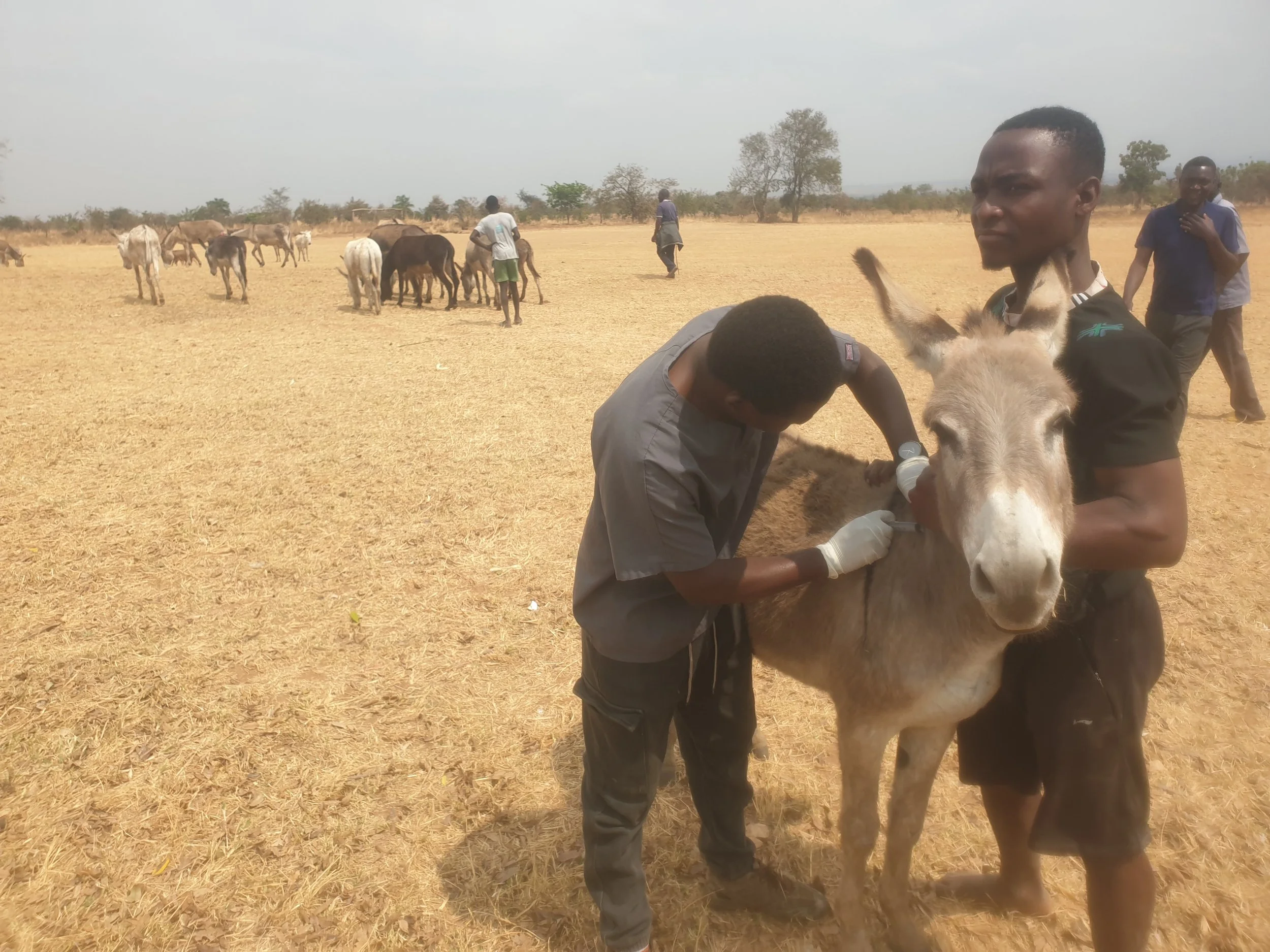
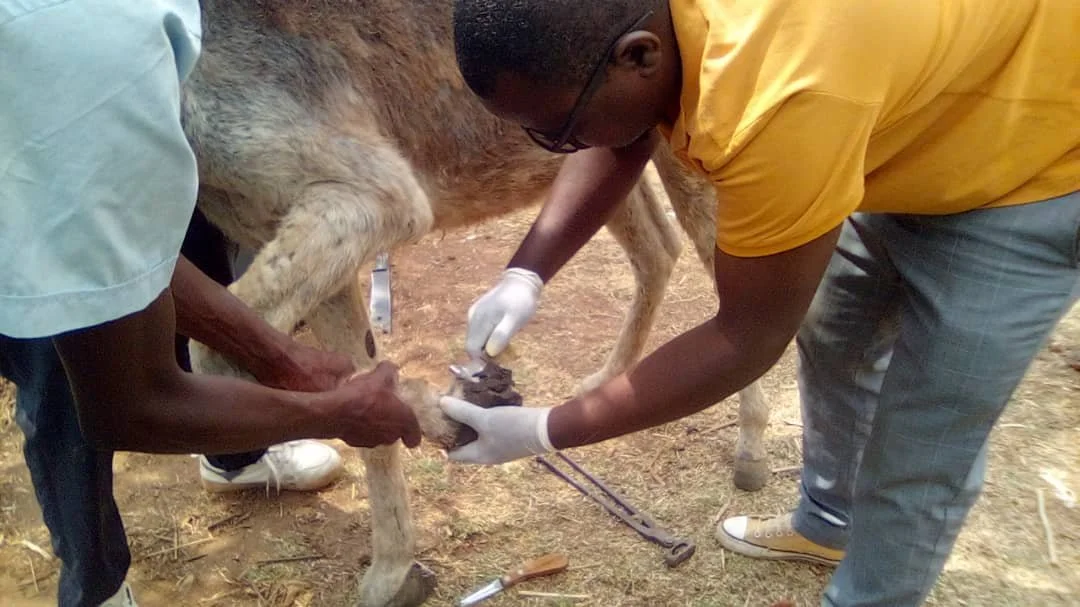
Donkey hoof trimming and rasping. The team examined donkeys for overgrown hooves. We found that a high number of donkeys in the parts of Mitundu we visited had this problem. In some cases, the overgrown hooves had caused wounds between the edge of the hoof and the skin. Because of limited time, we selected and treated 17 donkeys that needed urgent help. We plan to return to treat the remaining animals. One serious case stood out. A donkey had been struggling to walk because its overgrown hooves had curved backwards. This made movement uncomfortable and painful. Pressure sores between the hooves and the skin had turned into deep wounds over time. The owner had kept the donkey for four years without reporting the problem, and the animal became lame. It also looked weak and was losing weight upon physical assessment. The LSPCA team trimmed the curved edges of the hooves, cleaned and treated the wounds on the soles, and gave antibiotics because of possible infection through the wounds. The team also gave an anti-inflammatory drug and multivitamins. The owner was advised on the importance of regular hoof checks and of reporting problems early to veterinary staff. He was told to watch the donkey carefully at home, limit its movement while it recovers, and provide enough food and proper shelter. The team promised to check on this donkey again during the next clinic visit to the area.

1. Case Study: Severe Deep Wound Caused by Poor Harness and Harsh Handling. During the visit to farmers in the Dzoole community (Mponela area), the team found a serious case involving one farmer and his donkey. On closer examination, the donkey had a very deep wound with pus coming from inside the wound pockets. The donkey was fearful of people, likely because of the harsh beating it had received from the owner over a long period. The animal was aggressive and difficult to handle during examination and treatment because of severe pain & clear signs of emotional trauma. The wound assessment showed that the injury had been present for several months without proper treatment. The owners told us the donkey was stubborn, so they had forced it to work by beating it hard. This treatment caused the injuries and goes against basic animal welfare standards. The team carefully cleaned the wound. Beginning with debridement, washed it with clean water, then applied iodine, and finally used wound spray on the edges. We also gave a long-acting antibiotic, multivitamins, an anti-inflammatory drug, and dewormed the donkey. The goal was to control infection, reduce pain and swelling, and support healing. The farmer was strongly advised to care for all his donkeys. We explained that harsh treatment is wrong and that positive training methods work better. We also spoke about proper feeding and housing. The farmer was encouraged to change his approach so that his animals can work without unnecessary suffering.
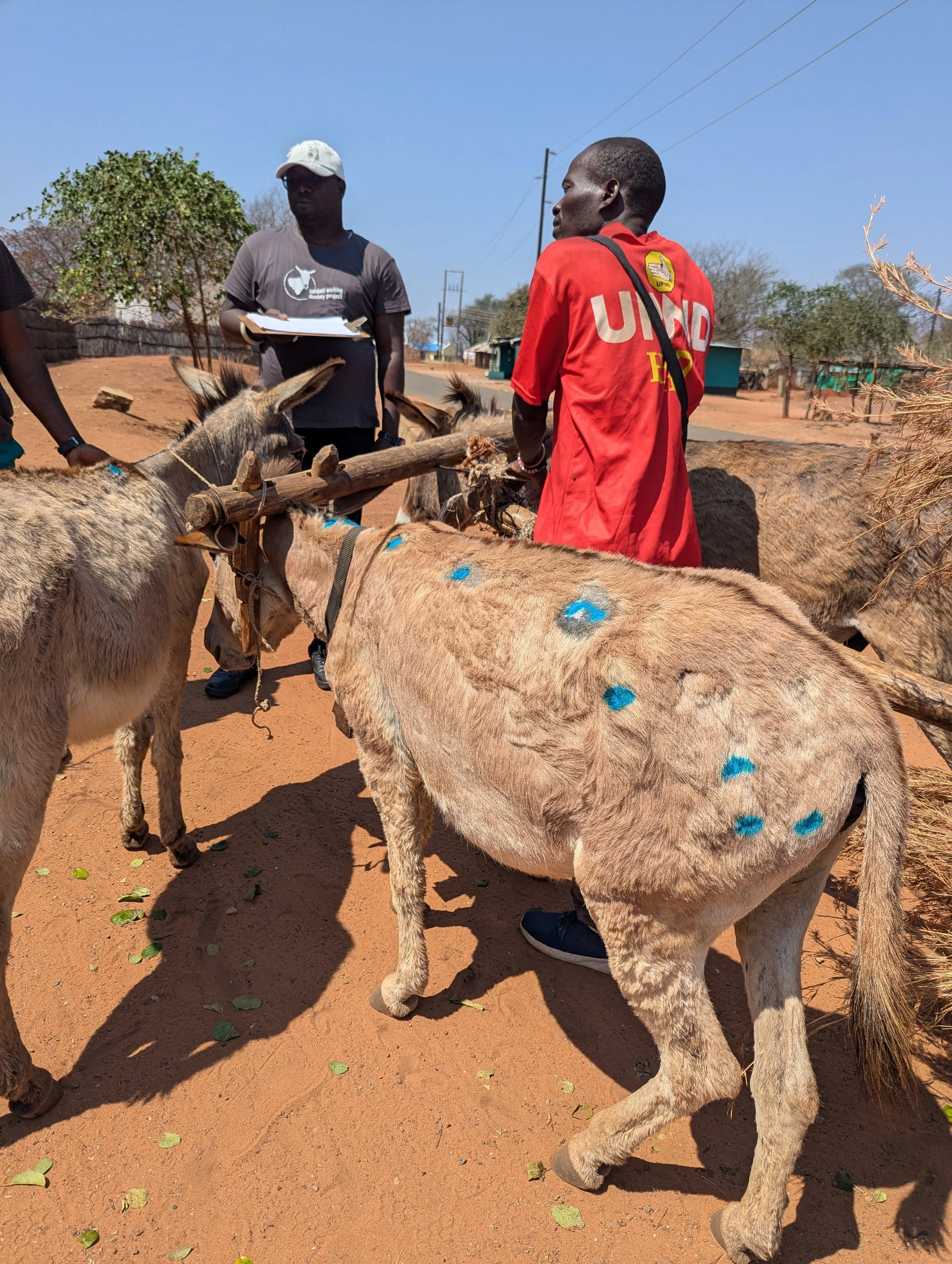
Practical Demonstration of Simple Pack Saddle Making in Mitundu: Farmers In Mitundu were taught how to make simple pack saddles for donkeys. Proper pack saddles help spread the weight of loads evenly and reduce sores and injuries on the animals’ backs. During the session, five pack saddles were made and given to different farmers. The farmers who took part were encouraged to teach the same skill to other donkey owners in the area. We hope that wider use of good pack saddles will lead to fewer injuries when we next visit the community.

Challenges: Mponela and Mitundu cover wide areas, so it is not possible to reach every donkey in one visit, and some animals that needed hoof care had to be left for a later visit in another month. This calls for frequent visits to these areas within a month to achieve complete success. Many of the donkeys belonged to new farmers who had never received welfare training, which led to a high number of wounds, overgrown hooves, and poor handling practices. Because the team cannot visit often enough, some problems, such as overgrown hooves and untreated wounds, become more serious before help arrives. Some owners also wait a long time before seeking help; in one case, a donkey had been lame for years, and early reporting would make treatment easier and more successful. Finally, despite previous visits, some owners still use unsuitable harnesses or beat their donkeys, and changing long-held habits takes repeated education and follow-up.
Conclusion: The September 2026 outreach in Mponela and Mitundu reached 147 donkeys and delivered important clinical care and welfare education. The team administered dewormers, treated eye infections, wounds, and general weakness, and provided urgent hoof care to working donkeys. A serious case of long-term neglect and injury was addressed, and practical skills in making pack saddles were shared with farmers. The high number of new farmers and untreated problems shows that regular visits and continuous education remain essential. Farmers responded positively to the advice and expressed appreciation for the services. Follow-up visits are planned so that remaining cases can be treated and the recovery of the most affected animals can be checked. LSPCA remains committed to improving the welfare of working donkeys in these communities. Through treatment, education, and practical demonstrations, we aim to reduce suffering and help owners care for their animals in a more humane and effective way.