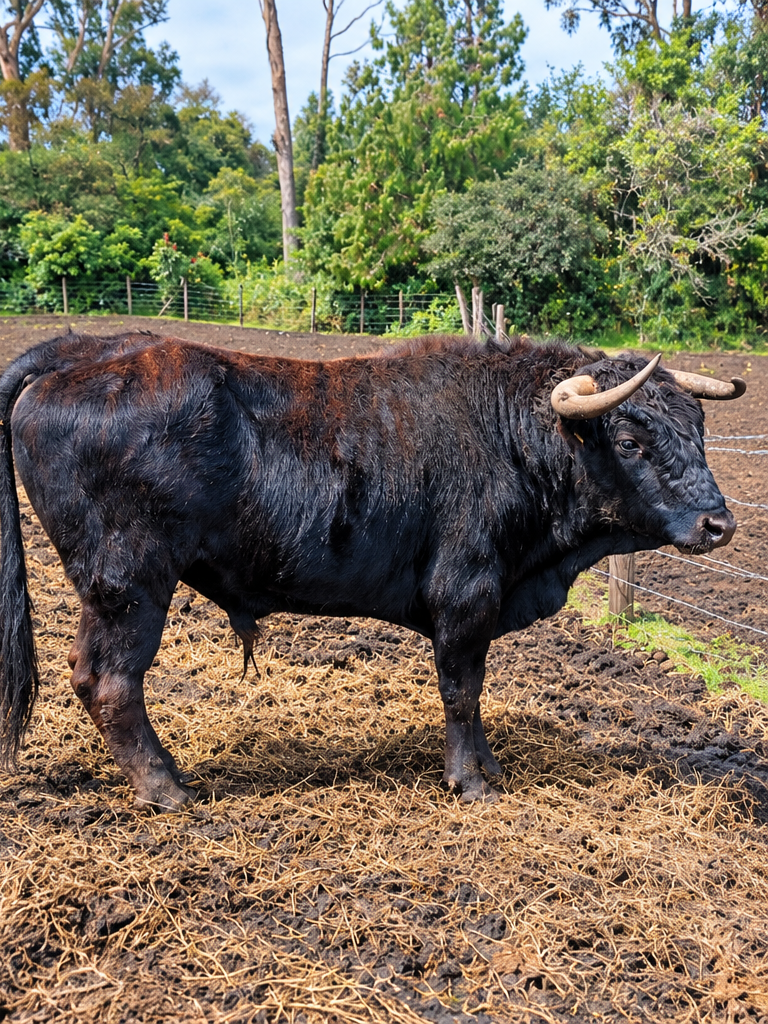
Throughout September, Animal Aid Abroad proudly supported the Working Animal Outreach Clinic Program and funded vital feed supplies for the rescued equines and Spanish fighting bulls at Namigni.
This month, the Mobile veterinary clinic provided treatment to working animals in response to the El Niño emergency and sanctuary operations.
Lead veterinarian: Dr Carlos Mario Jaramillo
Veterinary team: Dr Jaramillo with veterinary students, Universidad Antonio Nariño (field training placement)
Locations: La Calera, Cundinamarca (mobile clinic) · Guasca, Cundinamarca (sanctuary)
Executive summary
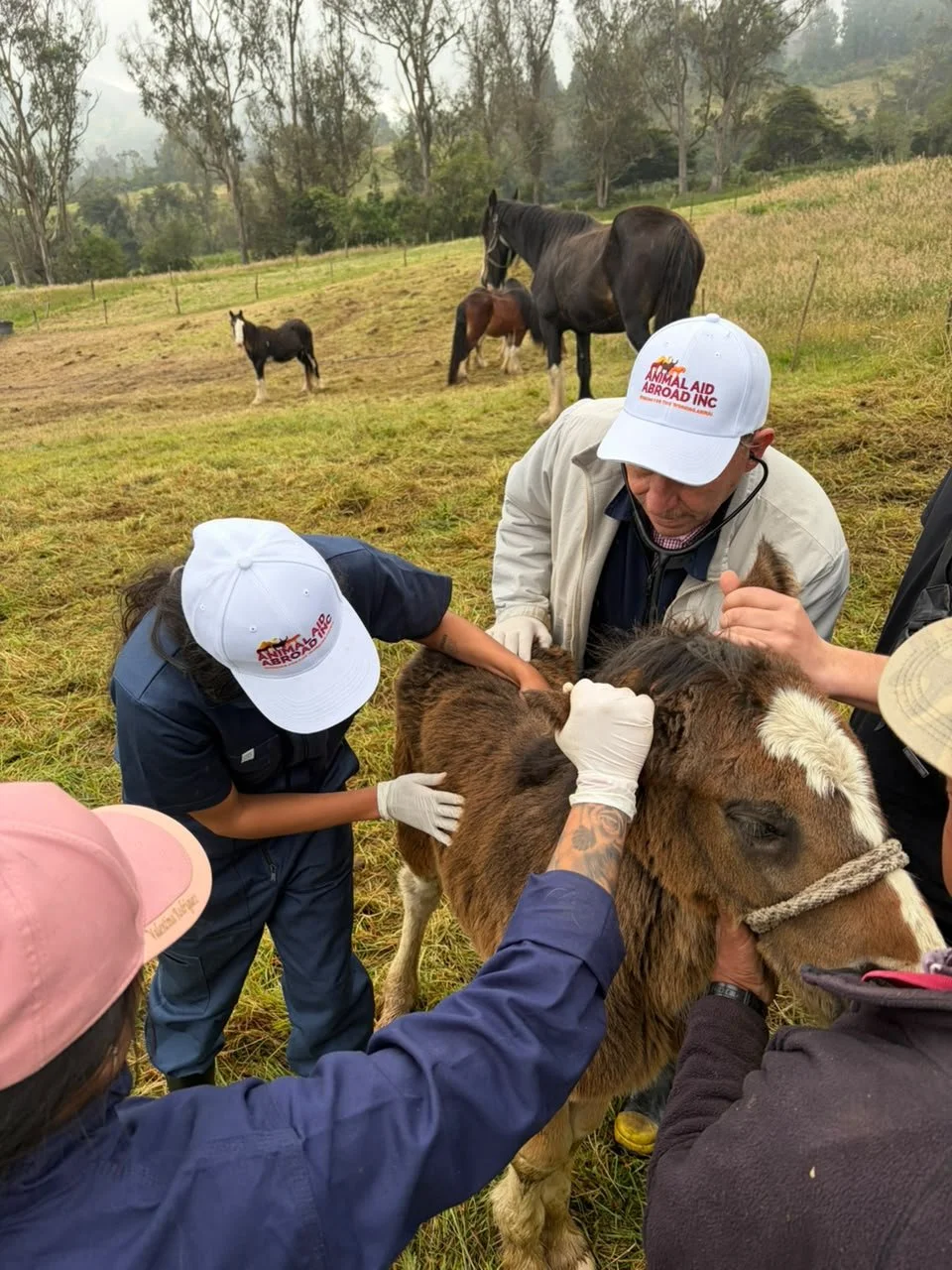
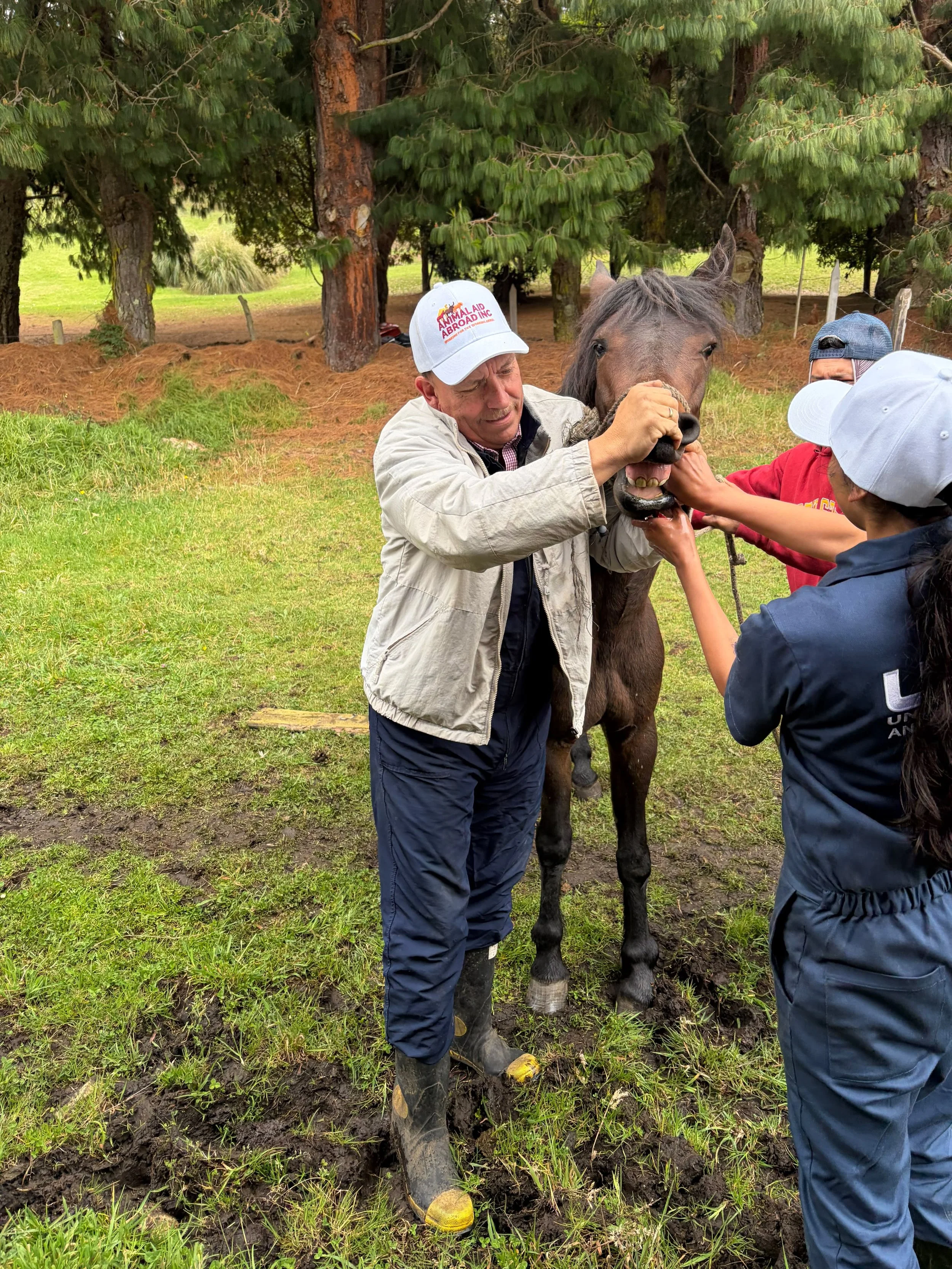
In September, the Namigni/AAA veterinary team delivered a mobile clinic to a single large working-equid holding in La Calera, Cundinamarca, examining and treating 27 equids (18 draft horses, 6 donkeys, 2 small mares and 1 foal). Herd-level preventive care — strategic anthelmintic treatment, parenteral vitamin supplementation, and functional hoof care to all 26 adults — was combined with individual clinical management of four notable presentations: angular limb deviations secondary to poor conformation and hoof overgrowth, facial dermatophytosis, laminitis, and a chronic consolidated forelimb fracture. The clinic also served as a supervised clinical-training environment for veterinary undergraduates.
Concurrently, the sanctuary at Guasca faced converging climatic extremes: at national level, the El Niño phenomenon continues to drive drought and wildfire across Colombia’s principal hay-producing regions, with severe knock-on effects on hay availability and price; locally, a prolonged cold, wet winter has transitioned sharply into unseasonable extreme heat, compounding physiological stress on the resident herds. Feed and supply of hay remain by far the largest and most volatile cost line. Continued AAA support and Philip Wollen remain critical to sustaining both the mobile-clinic cadence and sanctuary operations.
Mobile clinic — La Calera, Cundinamarca
2.1 Context and objectives
The clinic was conducted at a large farm maintaining a substantial population of working equids. The visit had three objectives: deliver routine preventive medicine at herd level; identify and manage individual clinical cases; and provide owner and handler education to reduce the recurrence of preventable conditions. The session doubled as a supervised clinical-training placement for veterinary students from Universidad Antonio Nariño, extending the program’s capacity-building value.
2.2 Caseload / census
Class
Number
Draft horses (adult) -18
Donkeys (adult) - 6
Small mares (adult) - 2
Foal - 1
Total examined - 27
Adult equids receiving hoof care: 26 (all adults; the foal was exempt given age).
2.3 Herd-level interventions
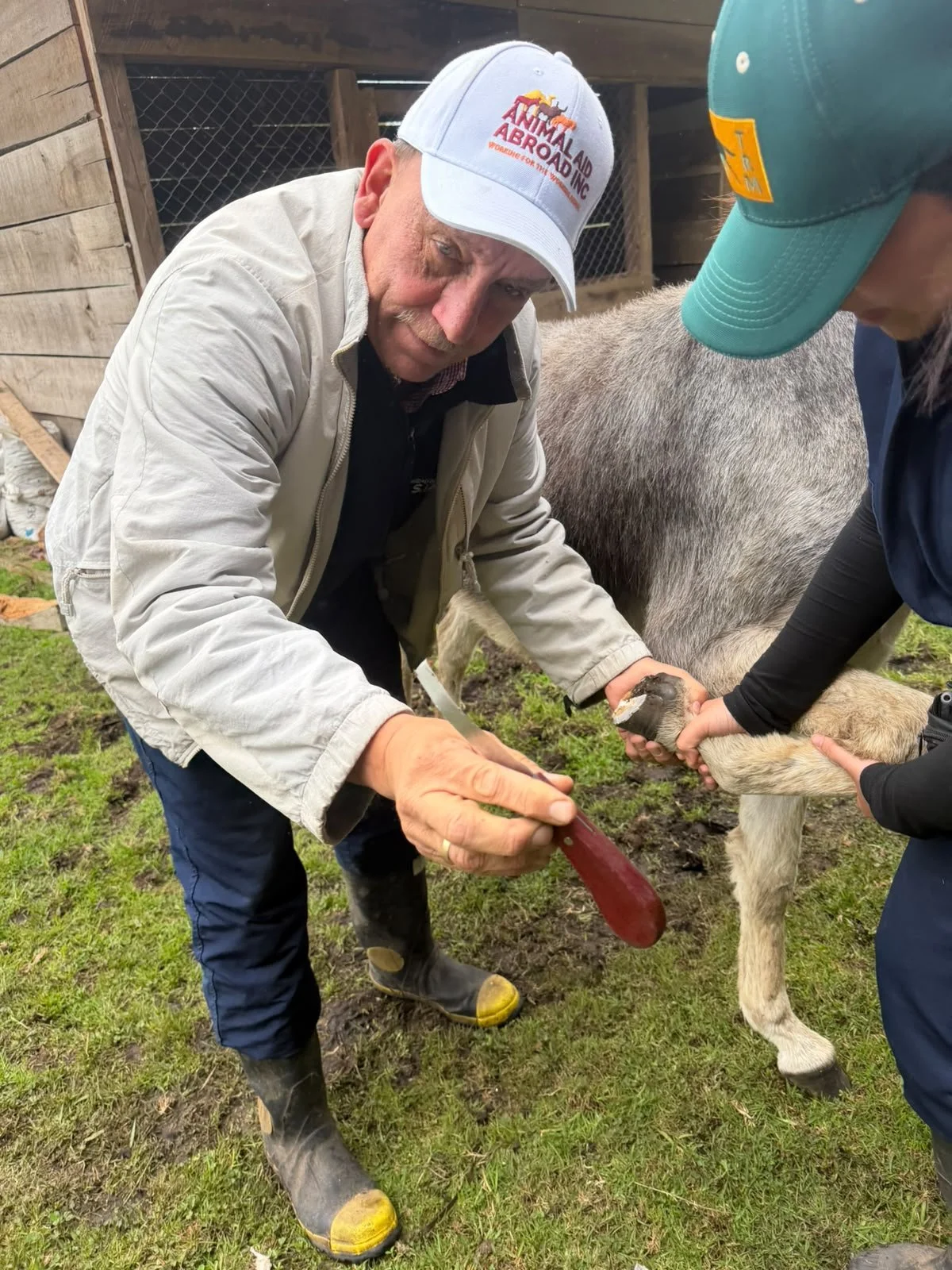
All 27 equids received a clinical examination. The team administered strategic anthelmintic (deworming) treatment and parenteral vitamin/mineral supplementation across the group. The team performed functional hoof trimming and corrective farriery on all 26 adult equids, addressing medial-lateral and dorsopalmar hoof balance and removing excess horn.
2.4 Individual clinical findings
Angular limb deviations — multiple equids
Several animals presented with angular limb deviations attributable to poor conformation (faulty aplomb) compounded by chronic hoof overgrowth and neglected hoof balance. These were managed with corrective trimming and the immediate corrective techniques feasible under field conditions. Because durable correction requires an ongoing, scheduled farriery program rather than a single intervention, the team delivered targeted guidance to the owner and farm workers on preventive hoof management, and provided contacts for several vetted, trustworthy farriers to establish continuity of care and prevent recurrence.
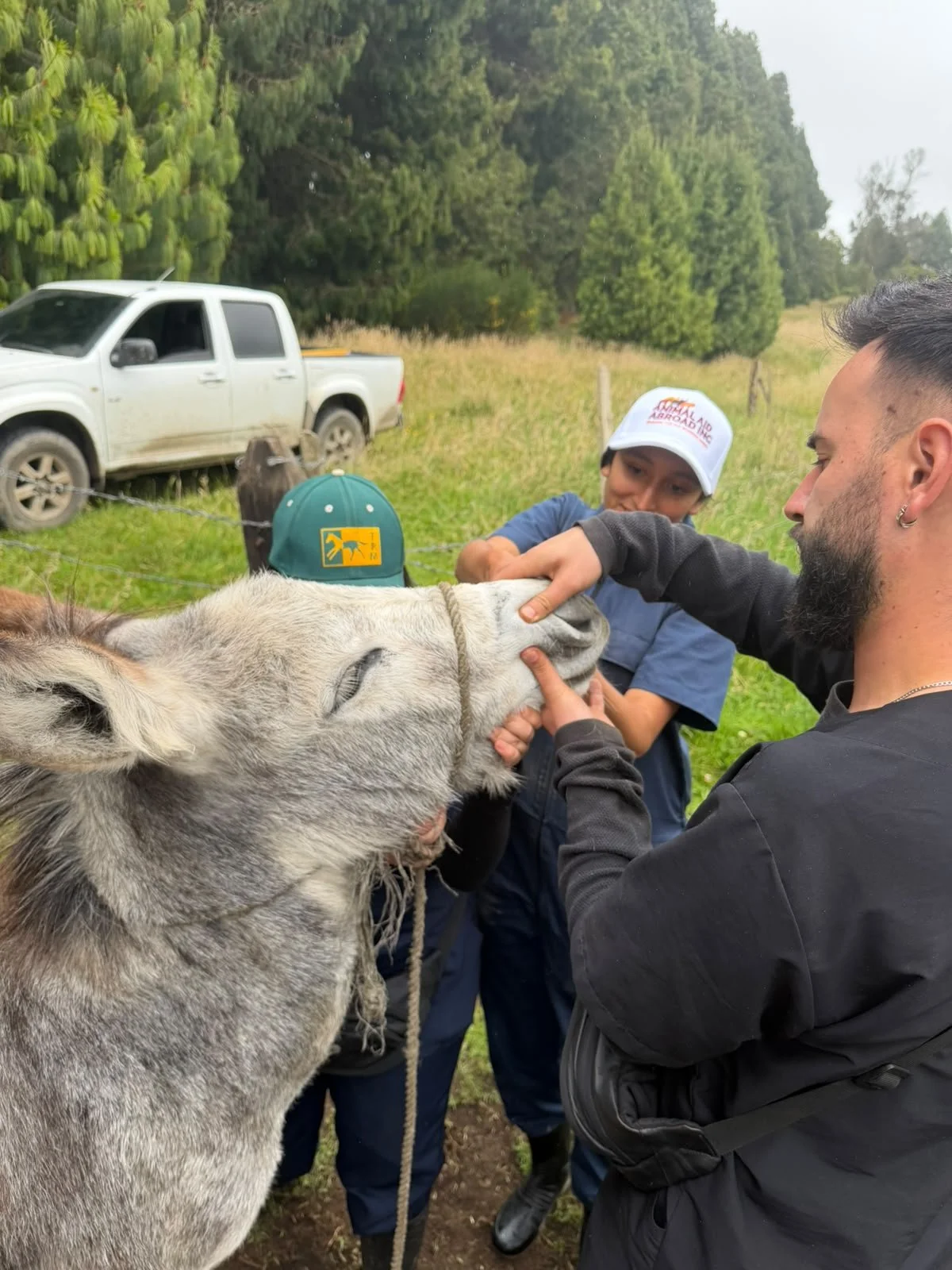
Facial dermatophytosis — one horse
One horse presented with facial fungal dermatitis (dermatophytosis). The affected region was cleaned and topical antifungal therapy applied. Owners were advised on hygiene and the contagious, zoonotic potential of dermatophytosis, including segregation of shared tack and grooming equipment to limit transmission within the herd.
Laminitis — one horse
A case of laminitis was identified and managed clinically by Dr. Jaramillo with pharmacologic therapy (anti-inflammatory / analgesic) alongside detailed husbandry and nutritional recommendations, given the strong association between dietary and metabolic factors and laminitis. Emphasis was placed on dietary management and monitoring to reduce the risk of recurrence and of progression to chronic laminitic change.
Chronic consolidated forelimb fracture — one horse
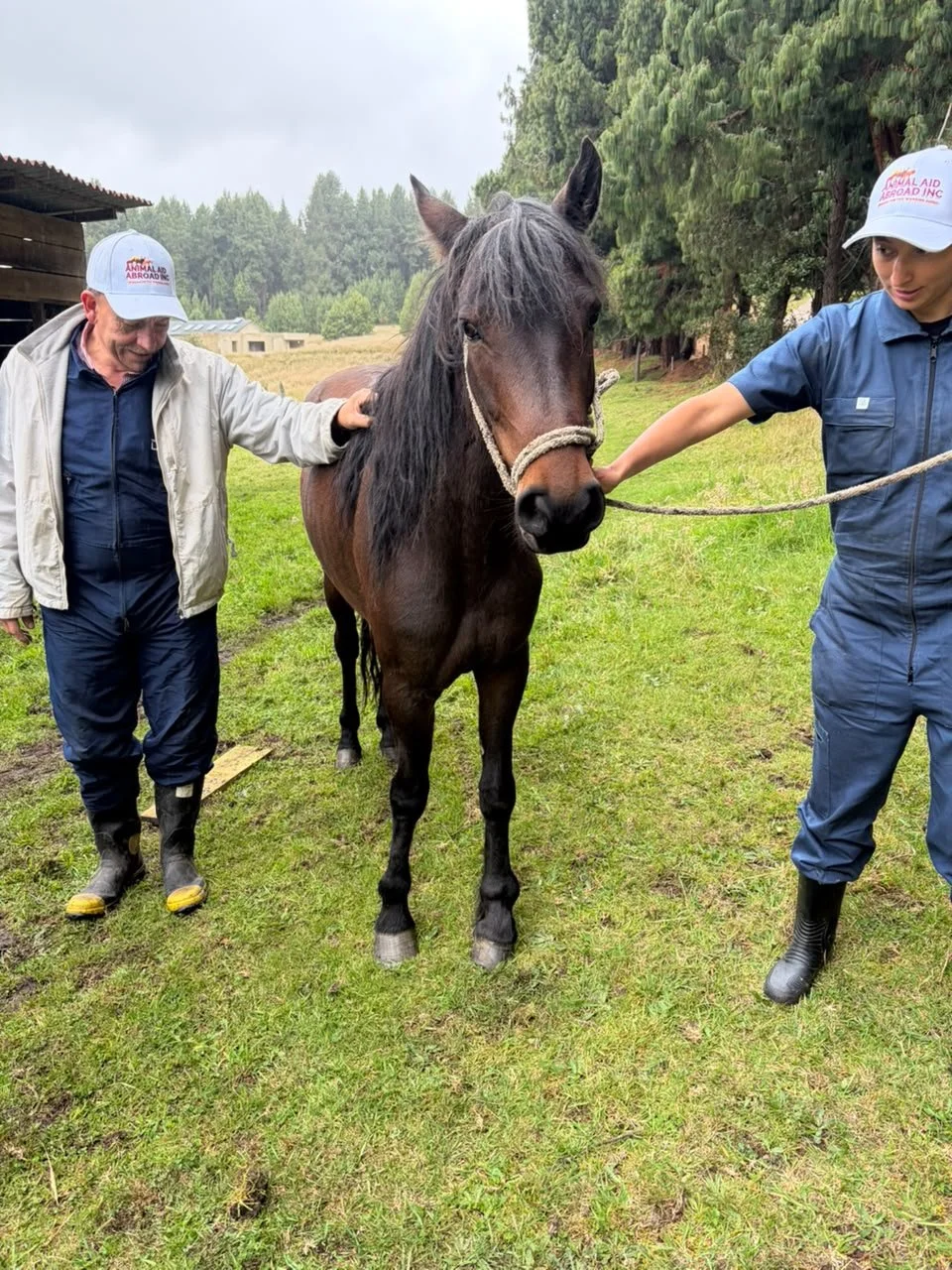
One horse presented with an old but well-consolidated (stabilized) fracture of the right forelimb. The injury required no acute intervention; conservative-management guidance was provided to the owner to prevent deterioration and to protect the animal from inappropriate workloads. The team formally flagged Namigni’s standing offer to receive this animal into sanctuary care should the owners at any point deem it non-operational and consider discarding it — securing a dignified outcome rather than abandonment.
2.5 Preventive medicine and owner education
Across the clinic, the team reinforced best-practice guidance on routine hoof care and scheduled farriery, workload management appropriate to each animal’s conformation and soundness, and nutritional practices to mitigate metabolic risk. Establishing reliable local farriery contacts was a deliberate step toward sustainable, owner-led prevention between clinic visits.
3. Continued El Niño emergency response
3.1 Situation analysis
The El Niño phenomenon continues to drive drought and wildfire across Colombia, including the country’s principal hay-producing regions. The resulting forage scarcity has pushed hay prices sharply upward and, for many owners, out of reach. The downstream effect on working equids is severe and is expected to worsen materially in the coming months: deteriorating body condition, increased surrender and abandonment, and reduced owner capacity to fund even basic veterinary and nutritional care.
3.2 Namigni’s mitigation strategy
Namigni is managing this through a two-tier capacity strategy. First, we continue developing a network of pre-vetted adoptive homes that allows healthy equids who are surrendered or abandoned to be relocated directly, without consuming sanctuary resources. Second, this deliberately reserves Namigni’s finite intake capacity for the most critical cases — emaciated, injured or otherwise compromised animals who cannot be placed through the adoption network and who require intensive veterinary rehabilitation.
3.3 Forward outlook
Conditions are projected to deteriorate before they improve. Sustained AAA support is critical to maintaining both the mobile-clinic cadence and the emergency-intake capacity that these climatic and economic pressures demand.
4. Sanctuary update — Rescued equines & Spanish fighting bulls
Extreme weather — from an extreme winter to extreme heat
Guasca, where the sanctuary is located, has experienced a climatic whiplash. From early June, the sanctuary endured an unusually prolonged, cold and wet winter — persistent, near-continuous rainfall and low temperatures that saturated and churned the paddocks. Through September these conditions reversed sharply into unseasonable extreme heat and dryness. This rapid thermal swing — waterlogged, muddy ground giving way to hard, dry, dusty terrain — imposes compounding physiological stress on the herds (elevated thermoregulatory demand, hydration and electrolyte pressure, and changes in footing and forage quality), and demands continual adjustment of feeding, hydration and paddock management.
Rescued equines
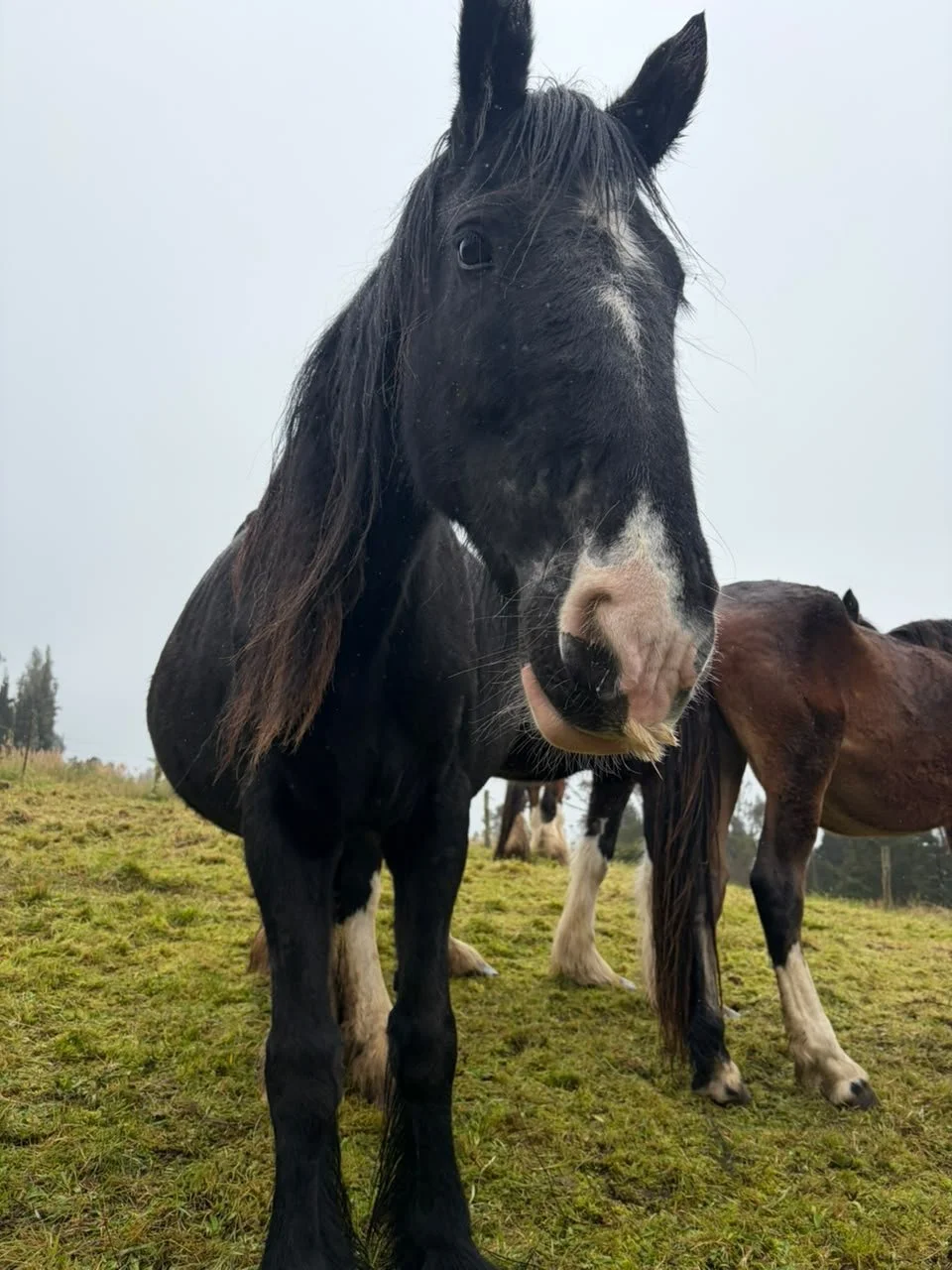
The prolonged cold, wet period caused weight loss across the rescued equine herd despite increased caloric supplementation. The subsequent transition to extreme heat introduces a distinct set of challenges — maintaining hydration and electrolyte balance, protecting condition as pasture quality declines, and close monitoring of the most vulnerable animals — all against a backdrop of rising feed costs that constrain how far supplementation can be scaled.
Spanish fighting bulls & cows (AAA program)
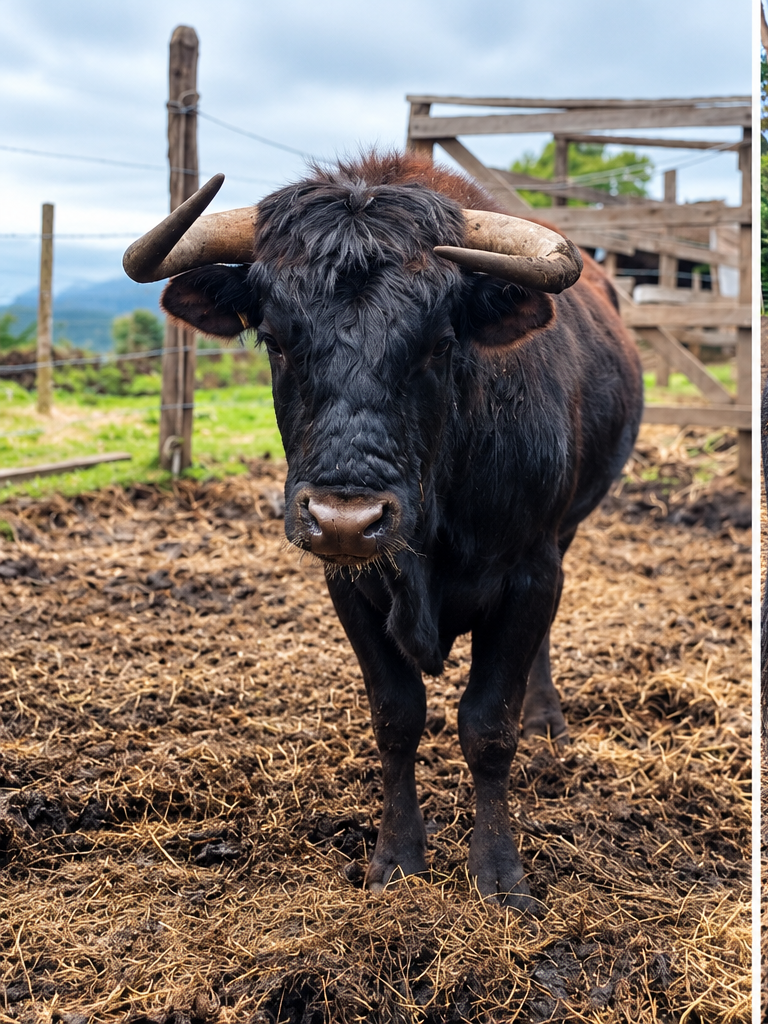
Despite the adverse and rapidly changing weather, the herd of rescued Spanish fighting bulls and cows has demonstrated notable resilience, maintaining stable body condition. The thermal swing and escalating feed costs nonetheless require ongoing vigilance to sustain nutrition and welfare through the months ahead.
5. Feed & supply costs (September)
Hay remains the sanctuary’s single largest and most volatile expense, driven directly by the El Niño-induced scarcity described above.
• Hay: AUD $13.00 per bale (primary expense) — $3,900 for 300 bales.
• Specialised feed & supplements: AUD $1,323.
• Medical supplies: AUD $289 (dewormers, vitamins, routine care).
• Contingency buffer: AUD $300 deployed to offset escalating hay prices.
6. Conclusions
September 2026 represented a continued and intensifying operational challenge for Namigni Animal Sanctuary and AAA in Colombia. The month was defined by converging climatic extremes: at national level, El Niño-driven drought and wildfire in the primary hay-producing regions sustained acute forage scarcity and drove hay prices sharply higher; locally, the sanctuary at Guasca endured a severe weather transition from a prolonged cold, wet winter into unseasonable extreme heat, compounding stress on the resident herds. Together, these pressures place the welfare of working equids across Colombia — and the sanctuary’s own operating costs — under significant and rising strain.
Without AAA’s support and Philip Wollen, sustaining these veterinary interventions and sanctuary operations would not be possible. This collaboration remains critical as Colombia faces further months of climatic volatility and escalating animal-welfare needs.