Camels in India’s Tourism Industry Receive Vital Veterinary Care
Animal Aid Abroad, together with our local partner Help in Suffering (HIS), is bringing much‑needed relief to camels working in India’s tourism industry.
In February, HIS held a special camel treatment camp in Jaisalmer — the “Golden City” of the Thar Desert — where camels are central to tourism and livelihoods but often lack access to veterinary care. Thanks to your support, hundreds of camels received treatment, education, and dignity.
Background
Camel rides are a major attraction in Jaisalmer, and local families depend on these animals for income. Yet in remote desert areas, veterinary services are scarce. For eight years, HIS has been conducting camel camps to provide care to animals whose owners cannot afford treatment.
Camel Treatment Camp
In February, HIS organized a camp in the sand dunes of Jaisalmer. Led by Dr. Abhinav Swami and Dr. Himanshu Burman, with veterinary assistants Rajendar, Bhagwandas, and Suresh, the team welcomed camel owners informed through pamphlets and loudspeaker announcements.
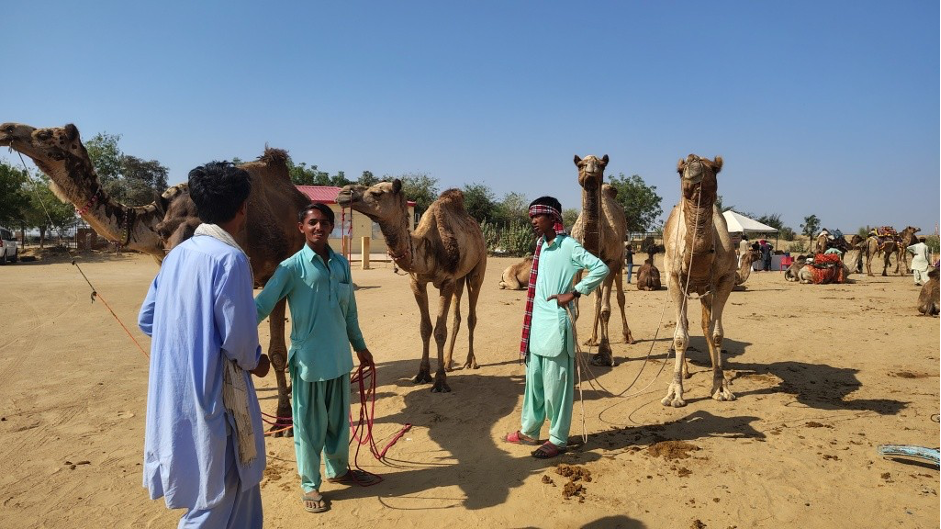
By the next morning, camels had already begun gathering — a clear sign of the community’s trust and anticipation. The HIS stall provided educational materials alongside veterinary services, ensuring owners learned humane practices while their animals received care.
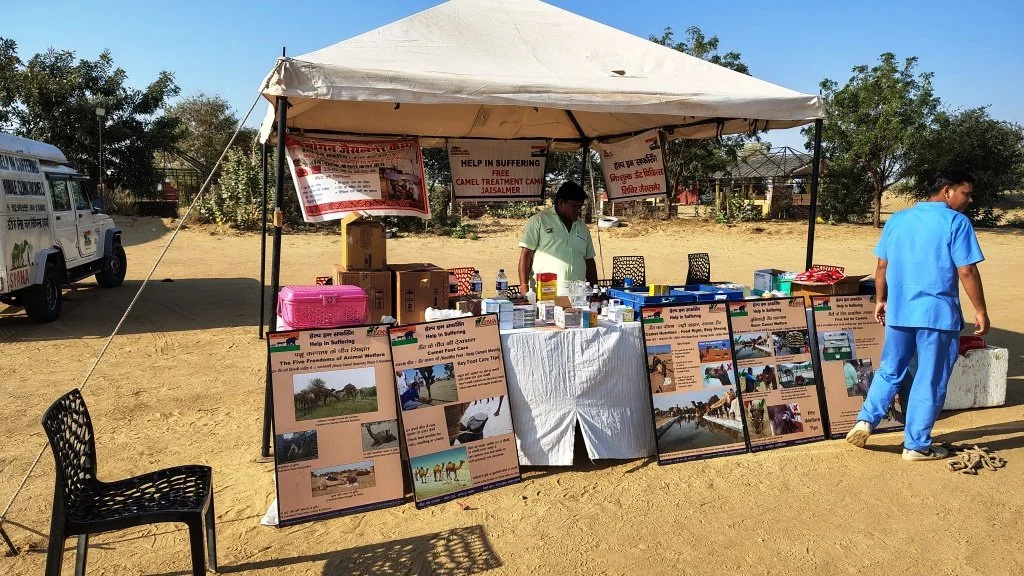
The HIS stall had plenty of educational and veterinary materials for camel owners.
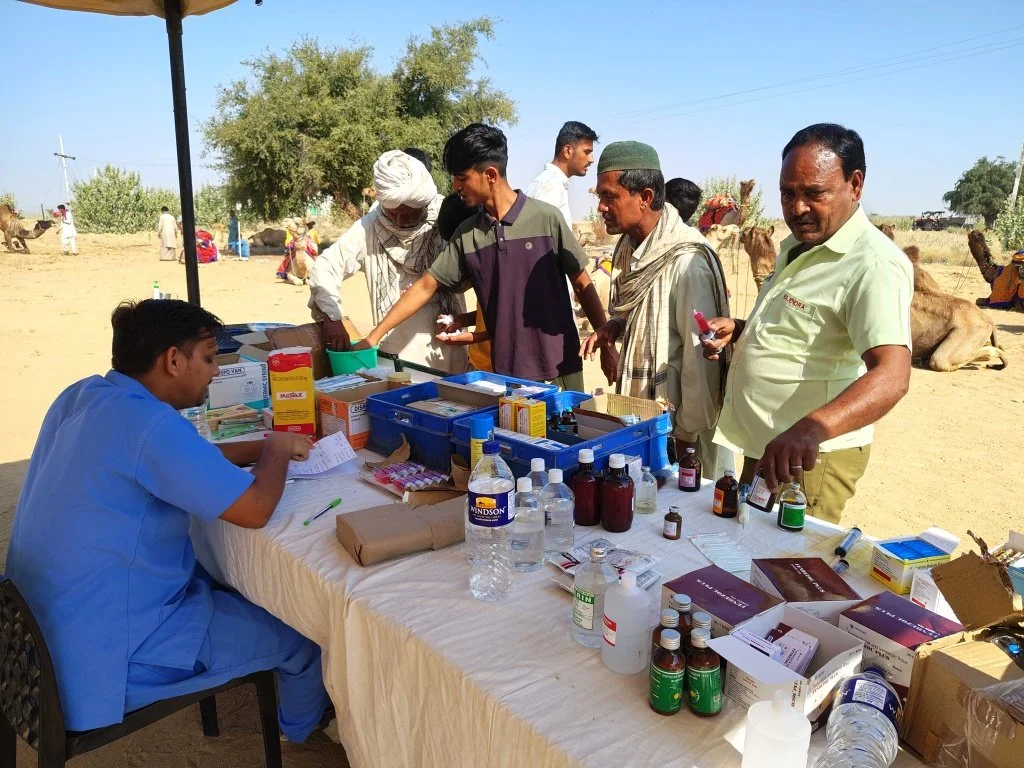
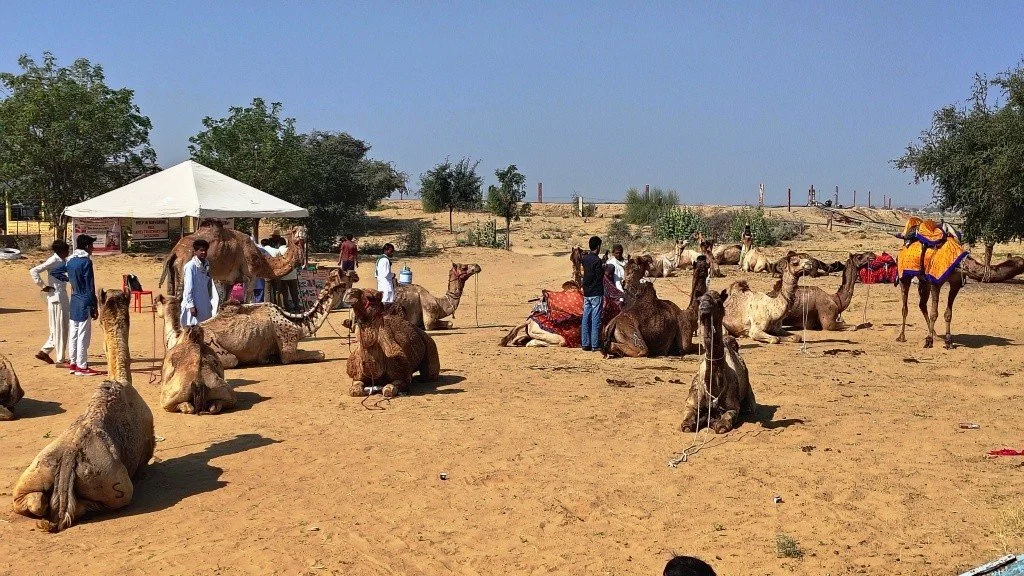
Large numbers of camels gathered at the treatment camp.
Veterinary Care
Camels presented with a wide range of conditions, including mange, lameness, diarrhoea, colic, impaction, trypanosomiasis, urinary and respiratory issues, and wounds. Treatments included:
Surgical repair of a torn nostril
Fluid therapy for diarrhoea
Sub‑conjunctival injections for corneal opacity
Bandaging and wound cleaning
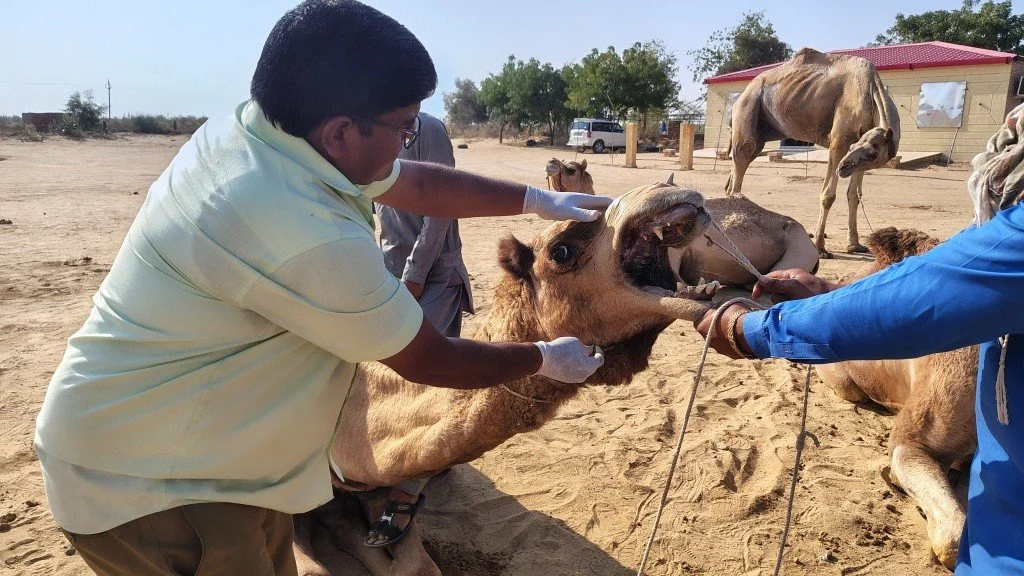
A camel being treated for a jaw wound.
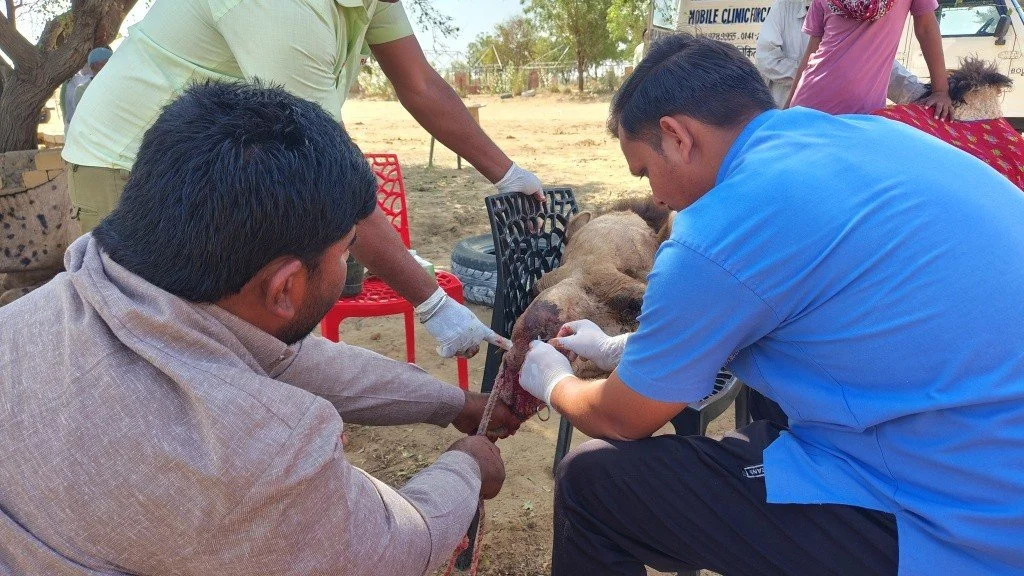
Vet, Dr Himanshu, surgically repairing a camel’s torn nostril.
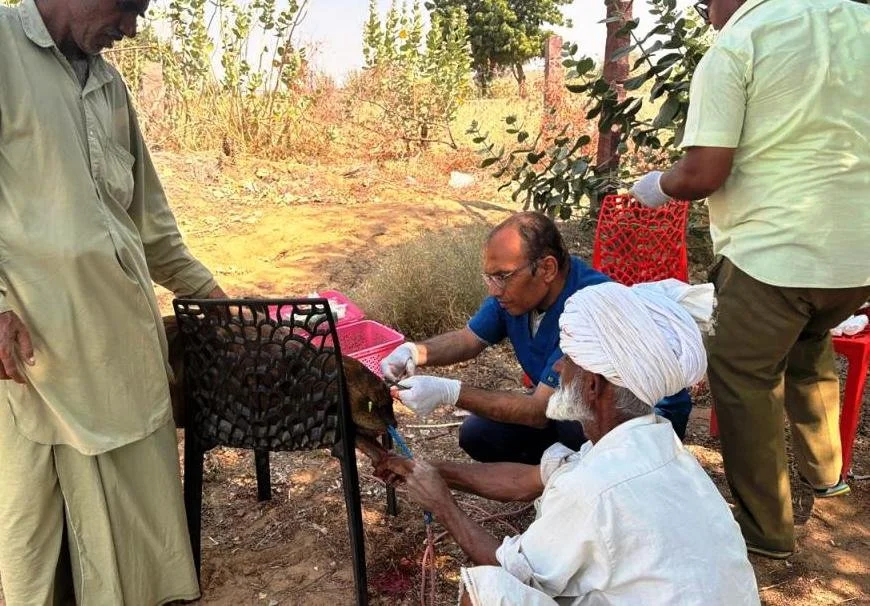
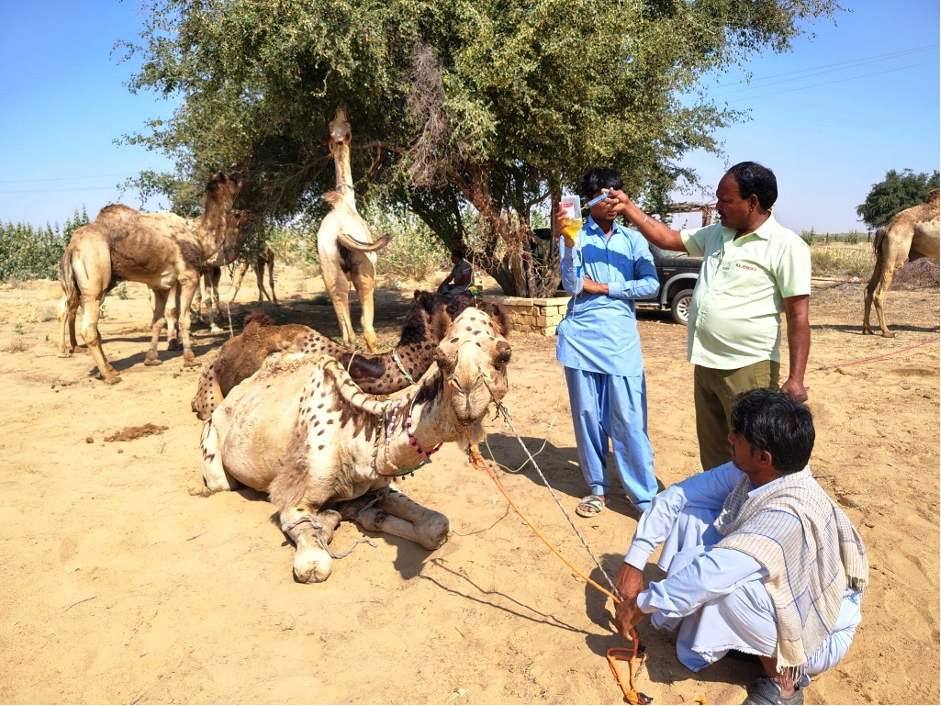
Fluid therapy for a camel with diarrhoea.
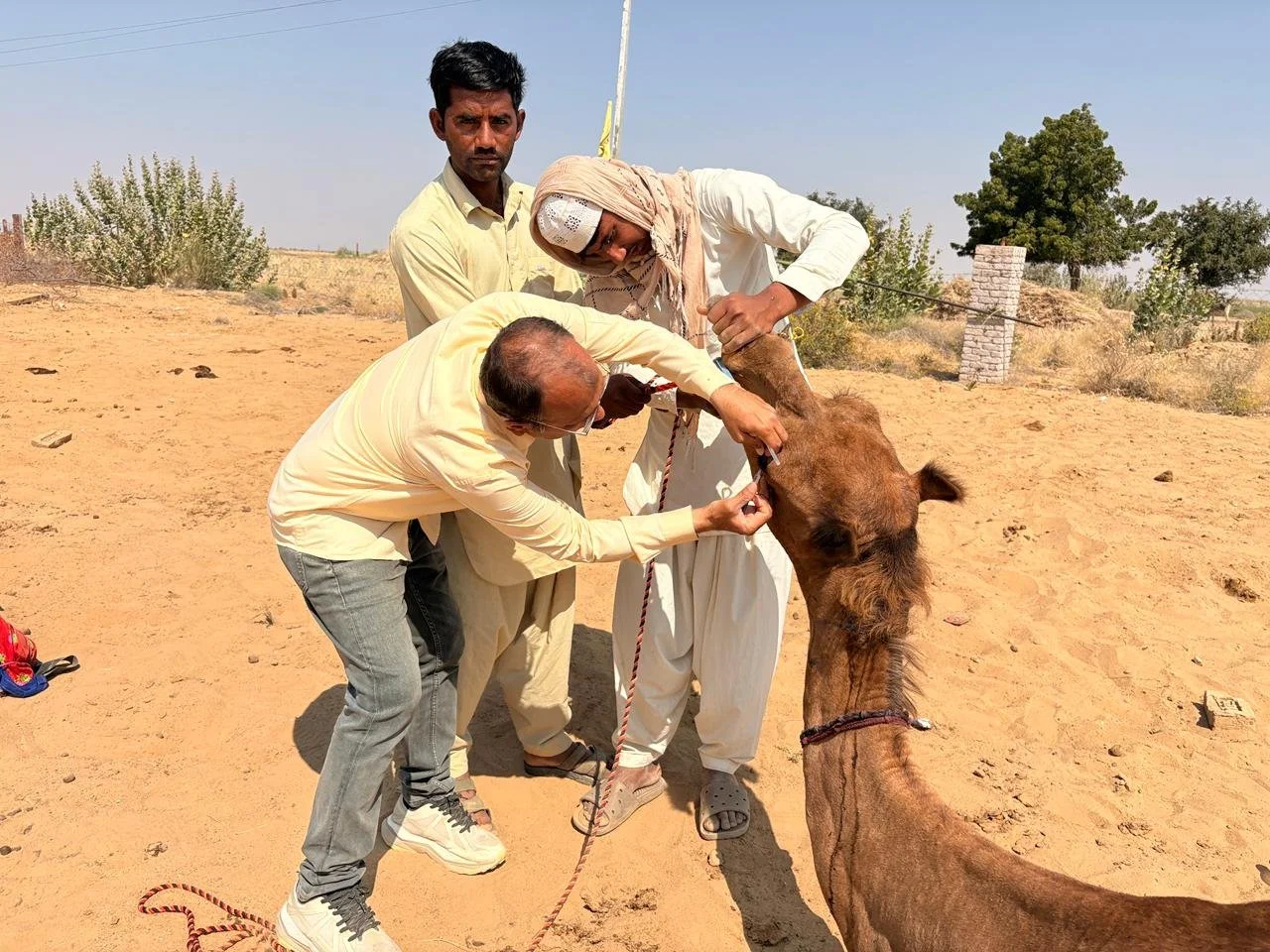
Giving a sub-conjunctival injection to a camel with corneal opacity.
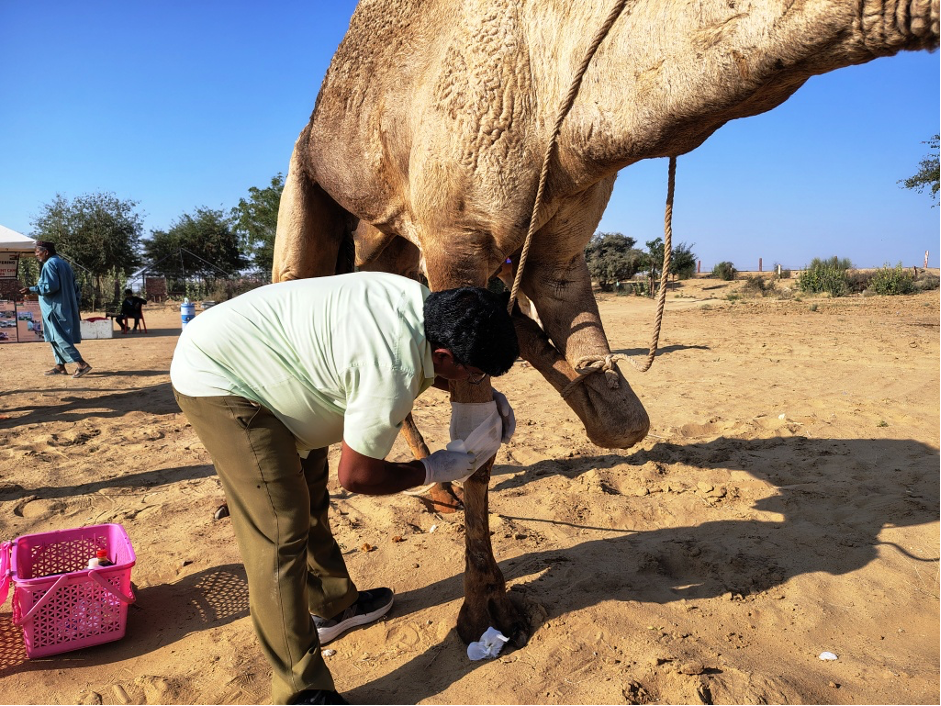
Bandaging a leg wound.
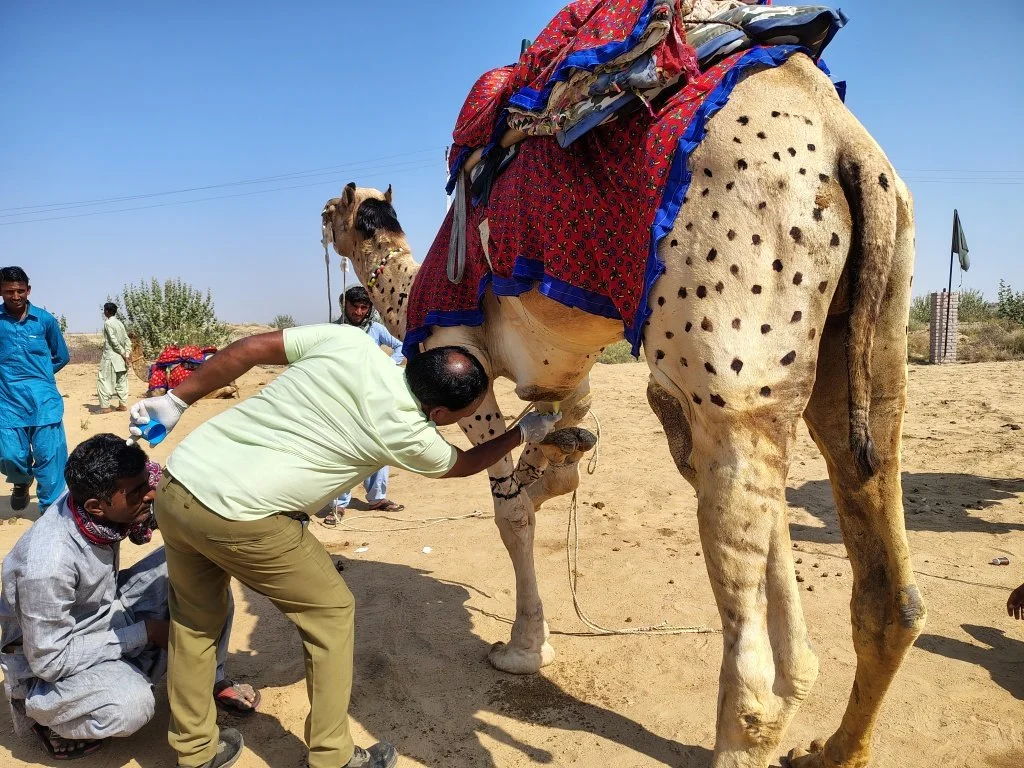
Cleaning a chest pad wound.
Camp Achievements
Camels treated: 268
Camels dewormed: 160
Mange treatments: 121
Nose pegs distributed: 300
Educational leaflets distributed: 700
Emergency cases attended: 1
Surgeries performed: 3
Educating owners was a key part of the camp, ensuring long‑term welfare improvements alongside immediate veterinary relief.
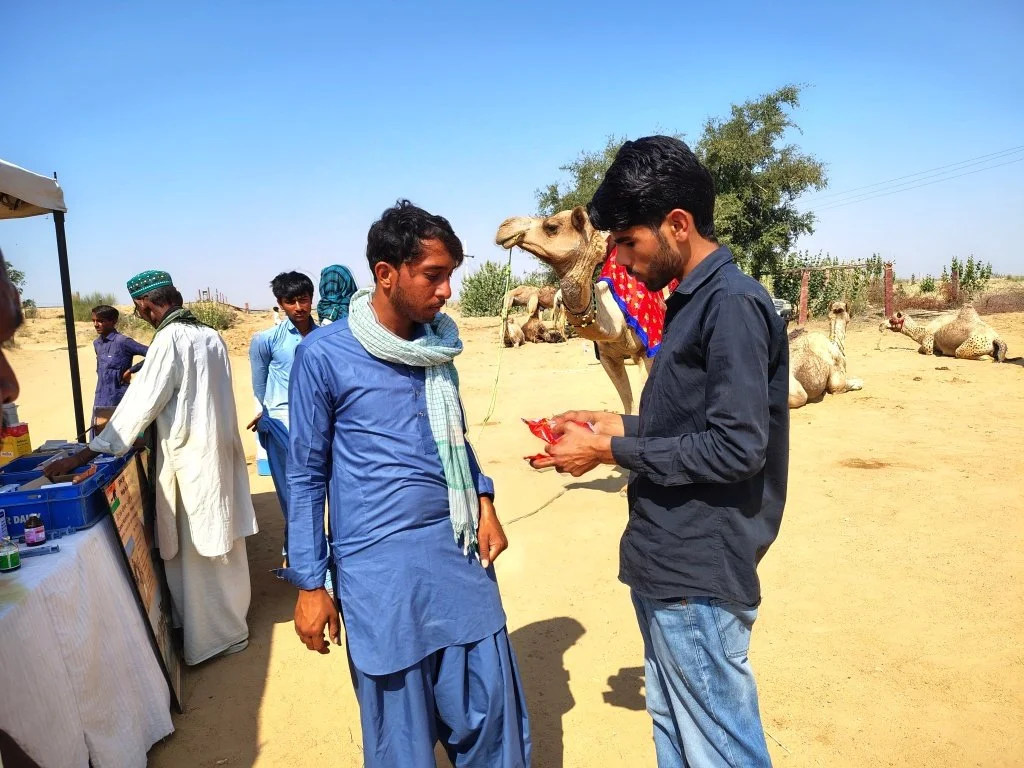
Educating owners was a key part of the camel camp.
Conclusion and Appreciation
The Jaisalmer camel camp was highly successful, improving the health of camels and empowering owners with knowledge. Through the partnership between HIS and Animal Aid Abroad, working camels in India’s tourism industry are no longer forgotten.
Your support makes this possible. Together, we are turning burden into care and proving that local partnerships are the key to global change.