
From July to September 2026, our partner the Wildlife Rescue and Rehabilitation Centre (WRRC) cared for seven rescued elephants at its Elephant Care Facility in Karnataka, India. Each elephant received veterinary care tailored to her own history and needs, alongside careful nutrition, foot care and enrichment. The quarter brought real milestones: Champakali went four months without a seizure, Gowri was free of foot pain and Rani's eye injury healed fully.
The quarter at a glance
Partner: Wildlife Rescue and Rehabilitation Centre (WRRC), India
Period: July to September 2026
Elephants in care: seven, each with an individual veterinary plan
Milestones: Champakali four months seizure-free, Gowri free of foot pain, Rani’s eye injury healed, Gayathri settled into the herd
Improvements: new foraging enrichment for Durga, new welfare measures for Lakshmi and safety barricading across the facility
Veterinary highlights
This update was prepared with veterinary input from WRRC's Chief Veterinarian, Dr Suranjana Ganguly.
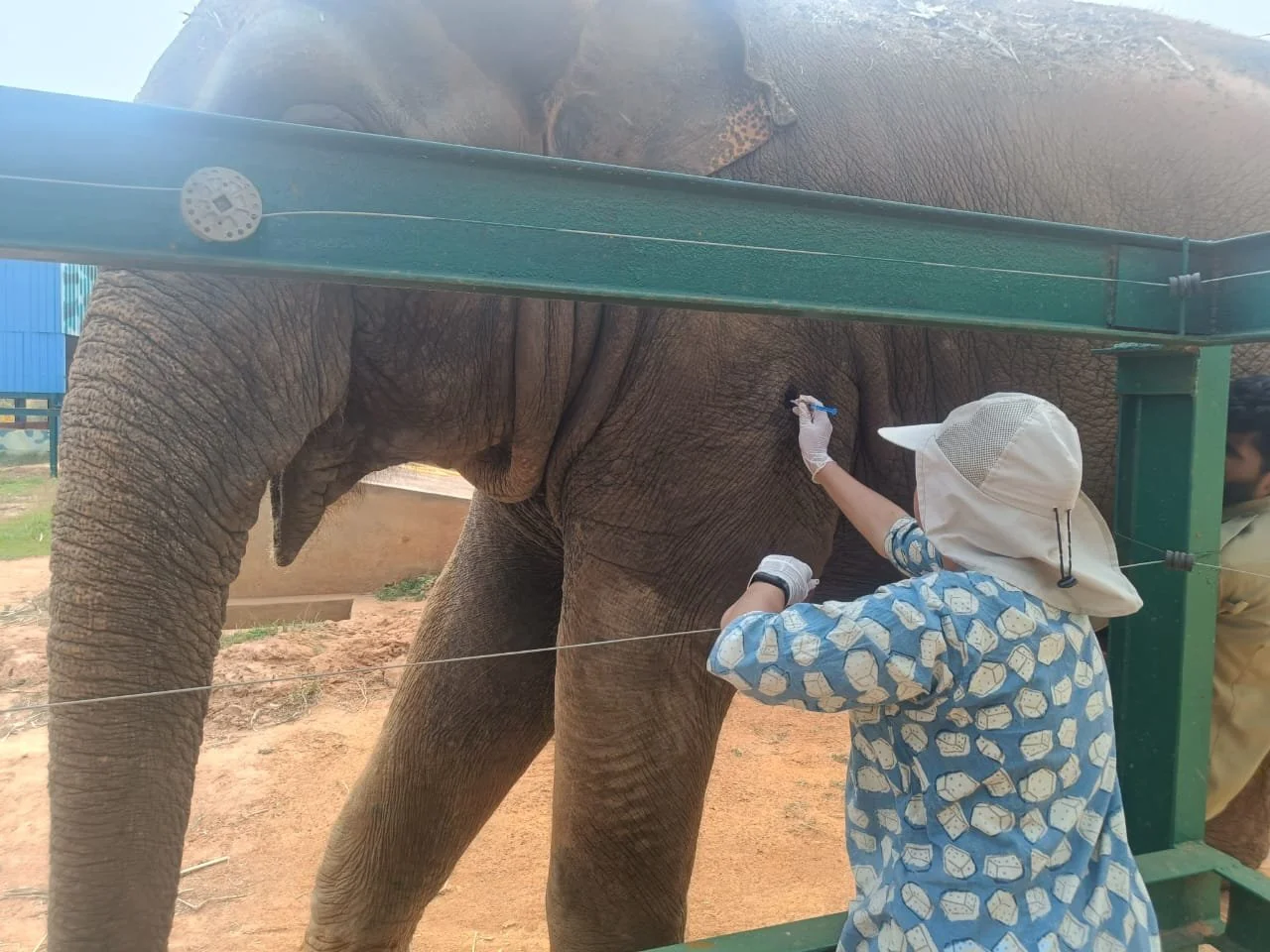
All seven elephants received individual veterinary care throughout the quarter, with each plan tailored to her own history and needs.
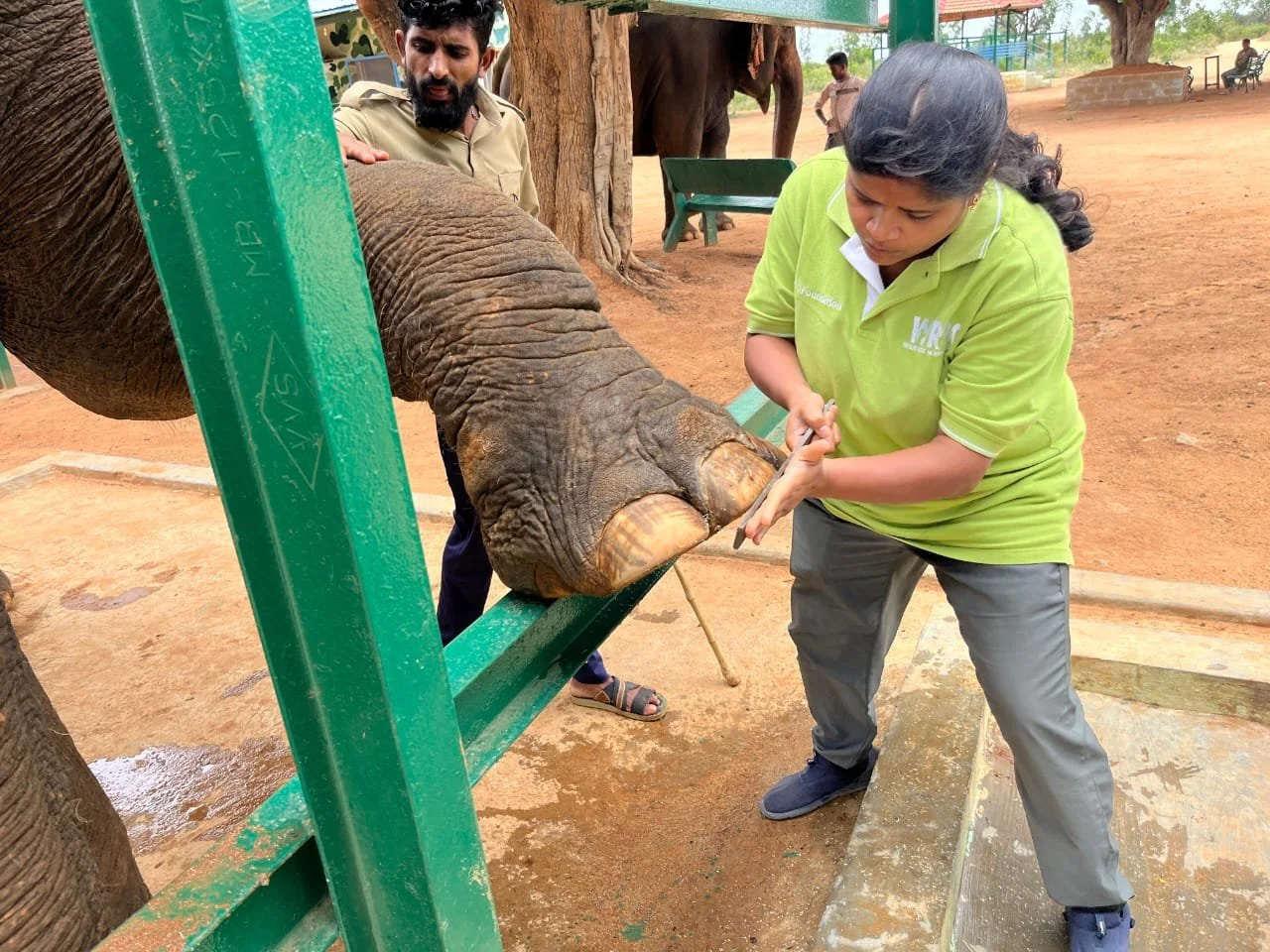
Foot and joint care remains the backbone of their rehabilitation. Corrective nail trimming, sole care, laser therapy and daily joint supplements help ease the long-term effects of years spent standing on hard ground before rescue.
After routine blood tests, several elephants are now receiving vitamin D supplements. In September, a daily joint supplement, probiotics and ashwagandha, a traditional herbal tonic, were added to some of their diets.
Champakali has gone four months without a seizure, Gowri showed no foot pain this quarter, Rani’s eye injury has fully healed and Gayathri has settled in well with the herd.
New welfare measures are being introduced for Lakshmi, including a leaning bar to help her rest and an overnight molasses block to encourage her to eat better.
Daily feeding at the Elephant Care Facility
Every elephant follows a structured, balanced daily feeding schedule designed to meet her nutritional and behavioural needs. Lakshmi receives extra fruit, vegetables and grass to suit her size and health, including an additional afternoon feed.
7.00 am: 6 kg of sprouts (green gram and Bengal gram on alternate days)
7.15 am: jaggery and coconut
7.30 am: fresh seasonal fruit and vegetables
8.00 am to 4.00 pm: green fodder such as grass or banana stems
4.20 pm: fruit and vegetables (Lakshmi only)
6.15 pm: ragi balls
6.30 pm to 10.30 pm: grass for night feeding, while fresh fruit and vegetables are chopped ready for the morning
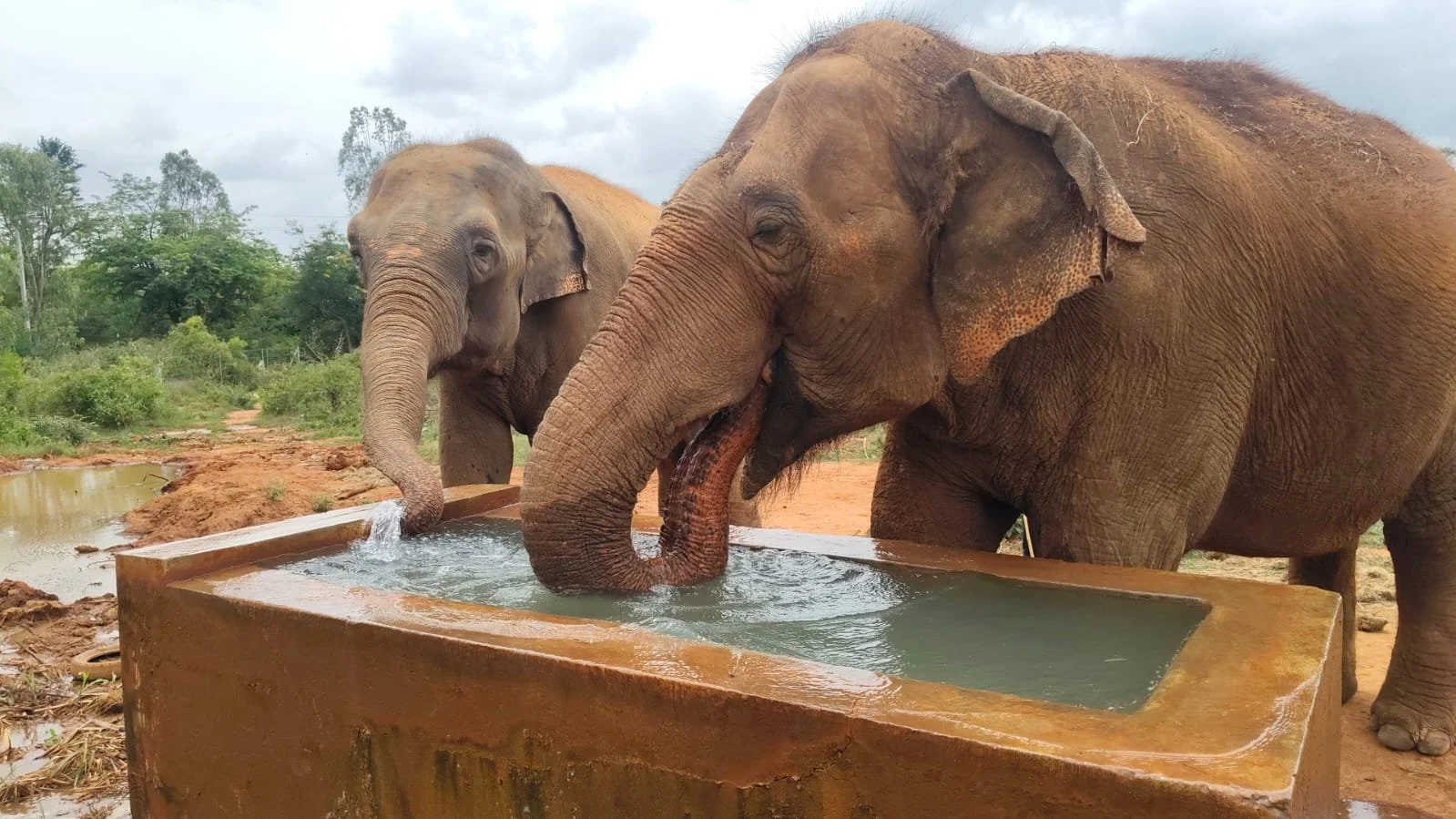
Clean drinking water is always available at the troughs, a quiet but vital part of everyday care.
Enrichment for elephant rehabilitation
Enrichment at the facility is planned and structured to improve the elephants' physical health and psychological wellbeing, and to encourage natural behaviour. This matters most for elephants recovering from long periods of neglect, injury, abuse or poor care.
In the wild, elephants spend most of the day grazing, socialising, walking, bathing and exploring a varied environment. Captivity often limits these behaviours through lack of space, predictable routines and the lasting effects of trauma. Enrichment helps bridge that gap. The elephants enjoy free-roaming time in tall green grass, where they can graze, explore and move at their own pace, and cooling-off time together as a herd, building the social bonds that are central to their recovery.
A foraging puzzle for Durga
This quarter, the team set up new foraging enrichment for Durga. Sugarcane was wedged into a stack of old tyres under the pergola, and pieces of fruit were tucked into the forks of a tree with sugarcane bundled around its trunk. Instead of simply being handed her food, Durga now has to reach, search, pull and work it out for herself, much as a wild elephant would while foraging. Simple feeders like these keep her moving through the day and give her welcome mental stimulation.
Facility improvements
Barricading works were completed across several key areas of the Elephant Care Facility:
around the pergola
along the stretch from the fruit stand to the quarters
around the treatment area
behind the new mahout quarters
Sturdy steel barricades create safe, clearly defined spaces where the care team can feed, treat and work closely with the elephants while keeping both the herd and staff safe.
World Elephant Day
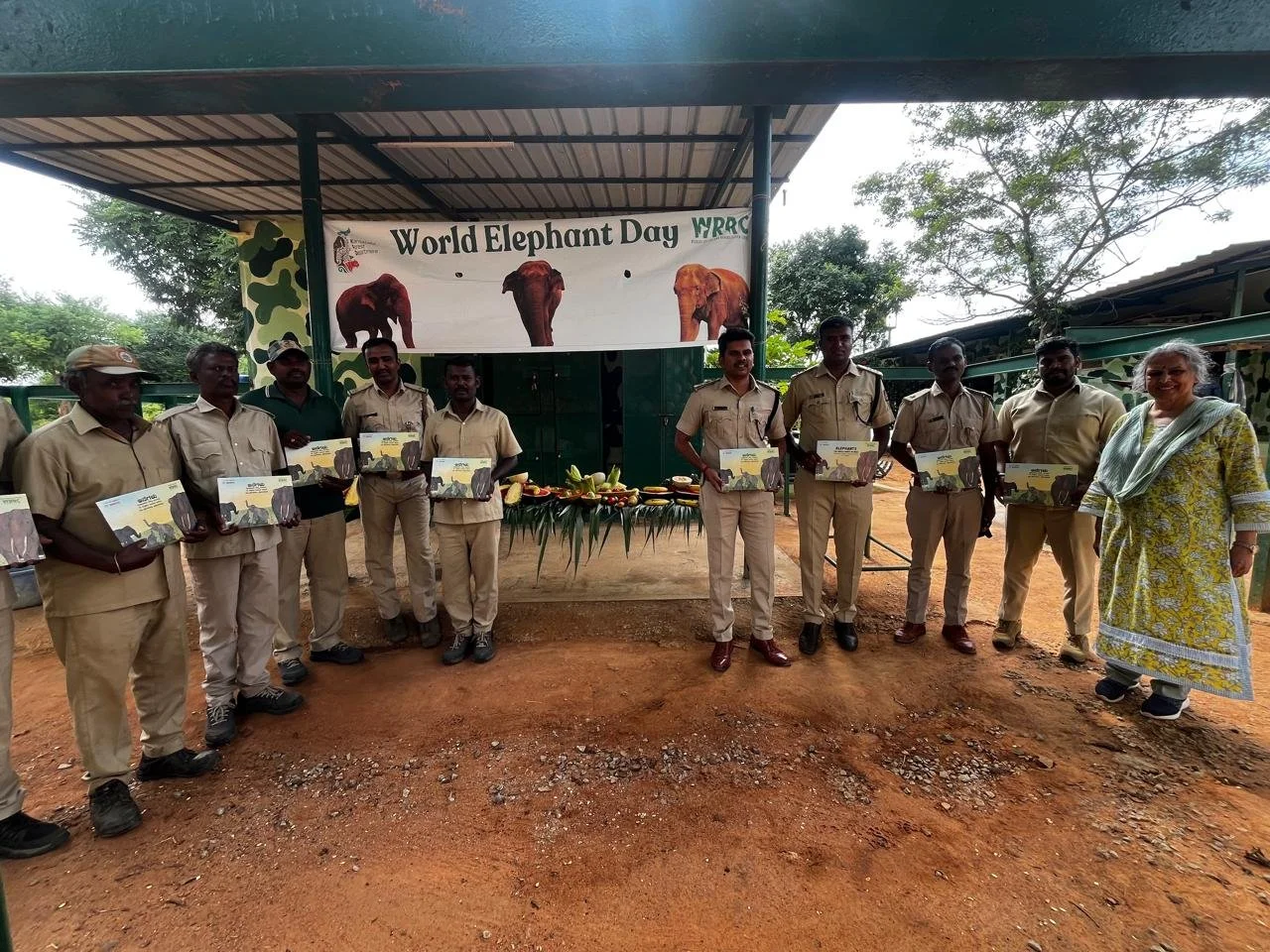
To mark World Elephant Day in August, officers and frontline staff from the Karnataka Forest Department joined the WRRC team at the Elephant Care Facility. The elephants enjoyed a special spread of fresh fruit, and staff received an illustrated booklet on elephants in Kannada and English. The day celebrated the herd and the people who care for them, and shared a simple message: every captive elephant deserves a life of dignity and good welfare.
Conclusion
From July to September 2026, the Elephant Care Facility continued to grow as a place of recovery and rehabilitation. Alongside daily veterinary attention, tailored nutrition, regular foot care and structured enrichment, the facility itself improved, with barricading completed across key areas, new foraging enrichment for Durga and a World Elephant Day celebration with the Karnataka Forest Department.
Across the herd, the quarter brought real milestones, while long-term conditions such as arthritis and foot problems, the legacies of past captivity, continue to be managed with patience and care. WRRC remains committed to improving the lives of captive elephants through individual, compassionate and humane care, made possible by the continued support of Animal Aid Abroad and our donors.
Help rescued elephants keep healing
A monthly gift helps WRRC provide foot care, veterinary treatment and enrichment for rescued elephants in India. Donate to Animal Aid Abroad today.
Animal Aid Abroad (AAA) is an Australian charity, founded in 2007 and run entirely by volunteers, that supports local partner organisations caring for working animals across Africa, Asia, Latin America and the Middle East.